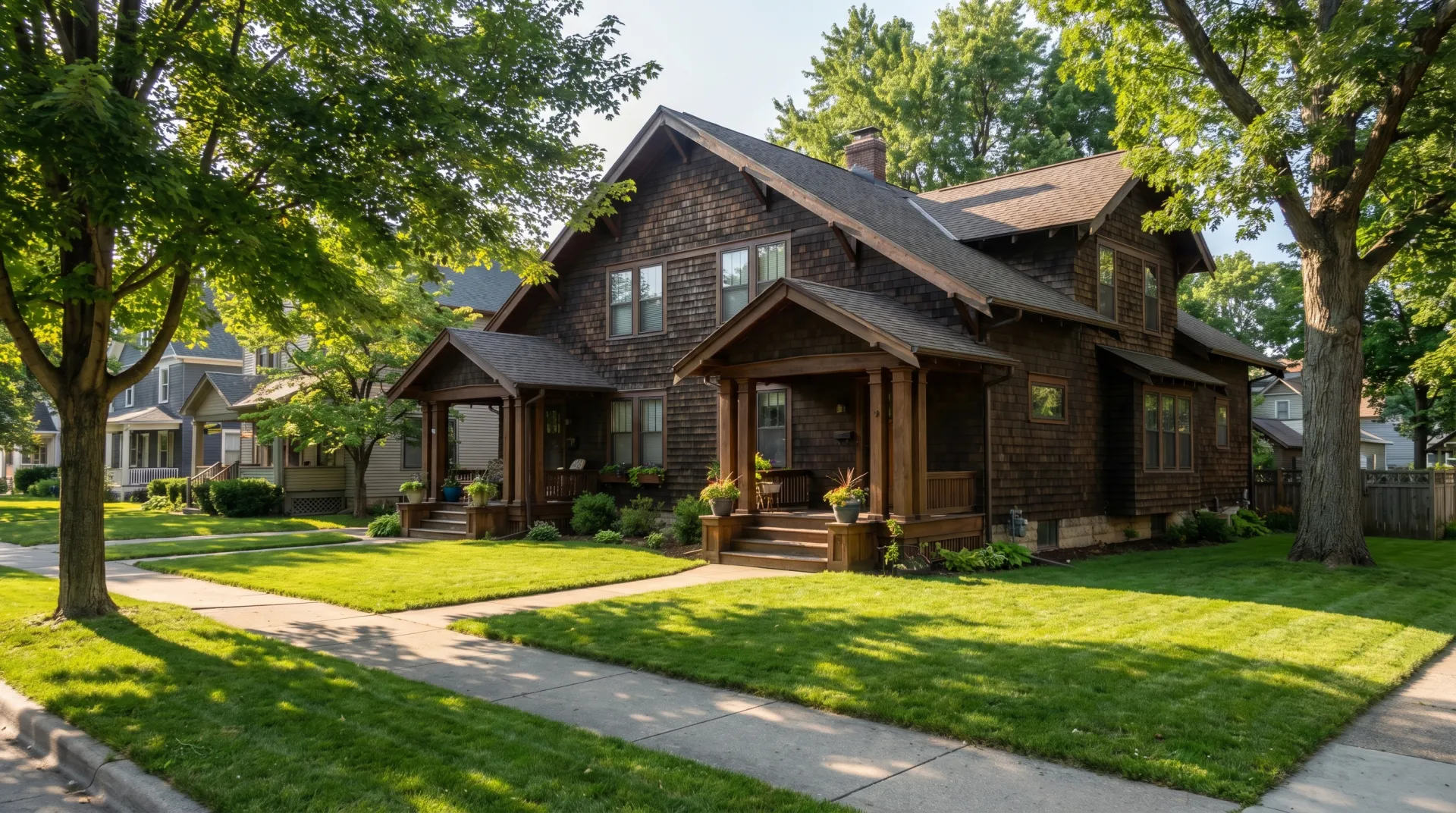
Heritage Hill
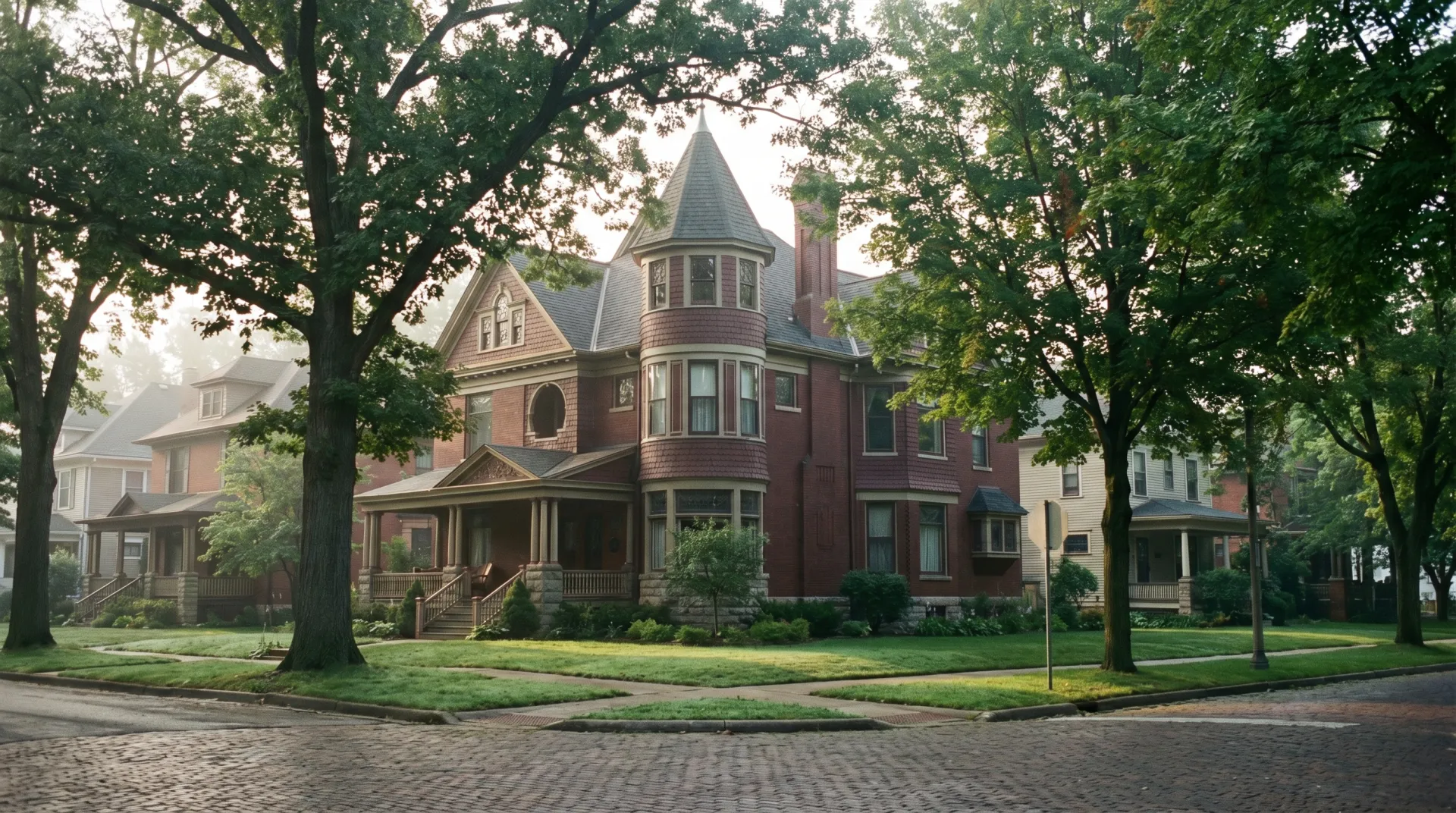
$175K to $700KGrand Rapids' oldest neighborhood and one of the largest urban historic districts in the U.S., with 1,300 homes spanning 60+ architectural styles.
Michigan's best-kept big city
City · Kent County
West Michigan's largest city and cultural hub, home to 37 neighborhoods, 80+ craft breweries, ArtPrize, and a diversified economy anchored by healthcare and manufacturing.
Market data as of 2026-03. Population: U.S. Census Bureau, 2020 Census; estimated 200,808 in 2026.
Overview
Grand Rapids is the second-largest city in Michigan and the economic and cultural center of West Michigan. The city straddles the Grand River, Michigan's longest river, and developed around the rapids that gave it its name. The urban core features a compact, walkable downtown with a mix of historic commercial architecture and contemporary development, including high-rise office buildings, a convention center, a 10,834-seat arena, and an expanding portfolio of loft apartments and mixed-use projects. The downtown skyline has grown substantially since 2010, with new hotel, residential, and office construction reshaping the riverfront.
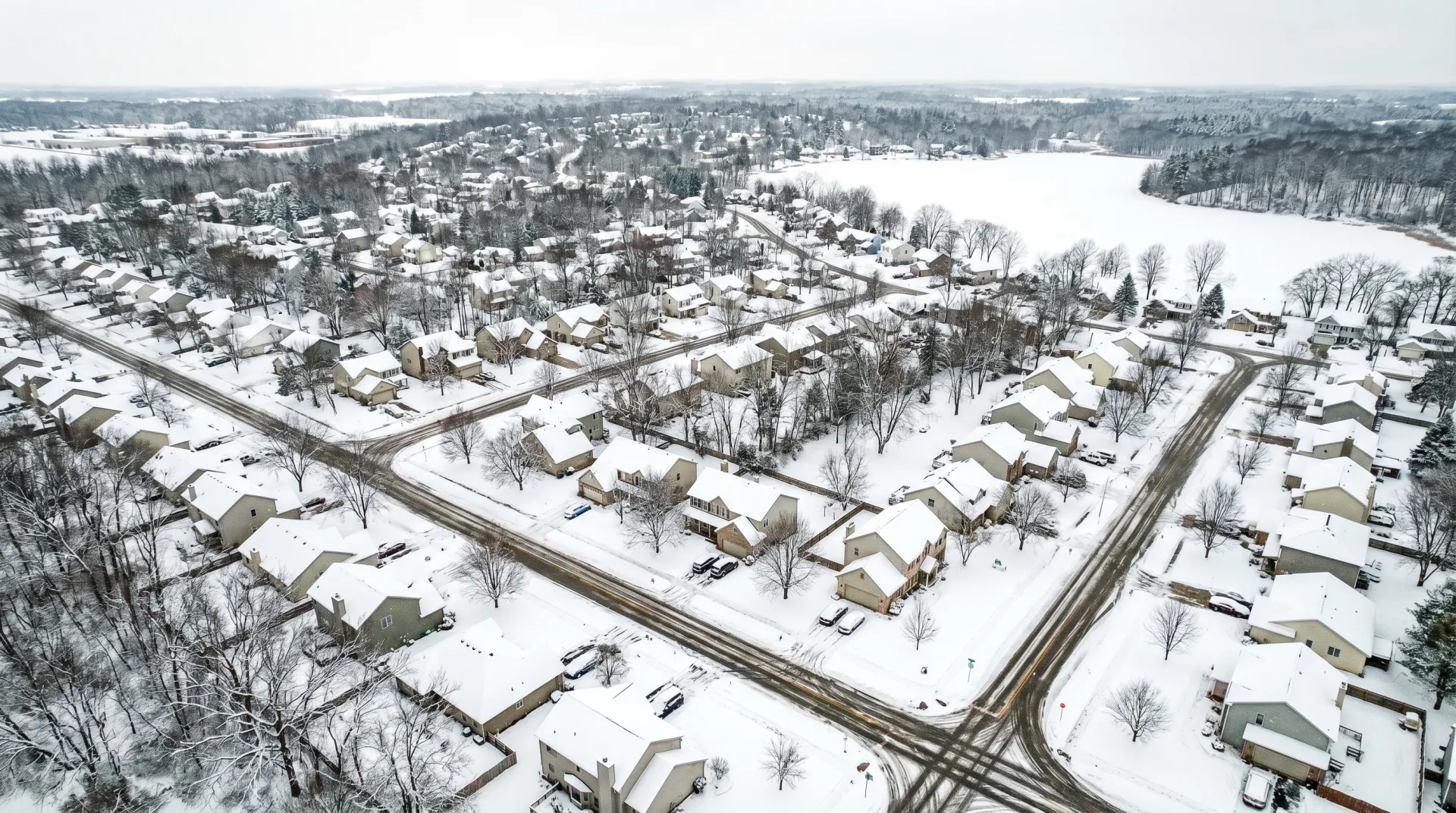
Beyond downtown, Grand Rapids comprises 37 distinct neighborhoods, each with its own character and commercial identity. The east side features established neighborhoods such as Heritage Hill (one of the largest urban historic districts in the United States), East Hills, Eastown, and Midtown, known for walkable commercial corridors, historic architecture, and proximity to downtown. The west side includes neighborhoods such as West Grand, John Ball Park, and Westside Connection, characterized by Craftsman-era housing stock, park amenities (including John Ball Zoo), and the revitalized Leonard Street and Bridge Street commercial corridors. The south side includes Garfield Park, Alger Heights, and Burton Heights, offering larger lots, lower entry-level prices, and access to the Silver Line BRT along Division Avenue. The north side features Creston, Belknap Lookout, and Highland Park with hilltop terrain and views of the city skyline.
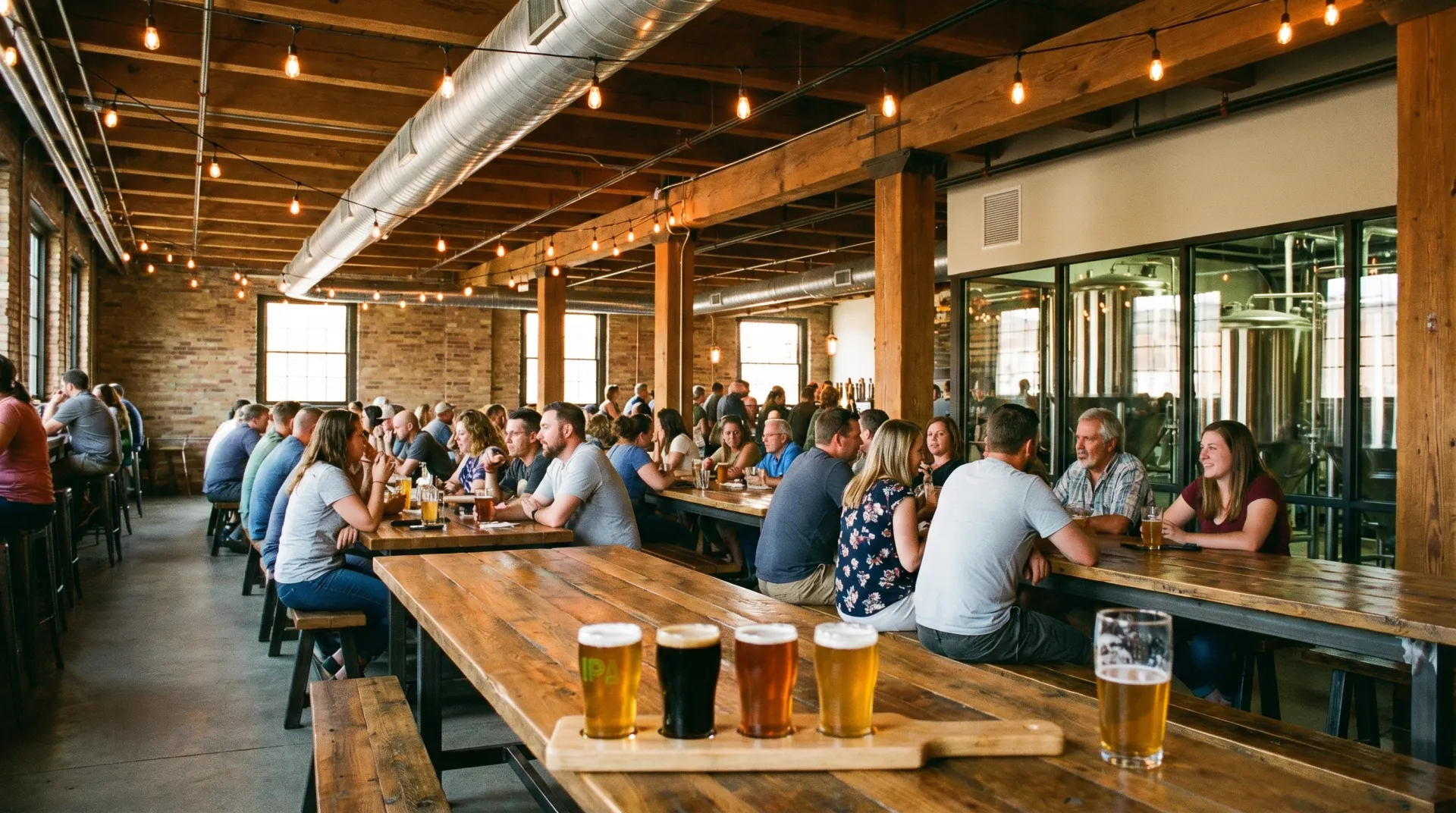
Grand Rapids holds the "Beer City USA" designation and has more than 80 craft breweries in the metro area. The city's dining scene has expanded rapidly, with more than 40 new restaurants opening in 2025 alone. The annual ArtPrize competition (19 days each September/October, $500,000 in prizes) draws hundreds of thousands of visitors and has established Grand Rapids as a nationally recognized arts destination. Frederik Meijer Gardens and Sculpture Park, a 158-acre botanical garden and sculpture collection ranked among the most-visited art museums worldwide, anchors the region's cultural landscape.
Real Estate
Grand Rapids' real estate market reflects the dynamics of Michigan's fastest-growing metro area, which has added approximately 33,600 residents since 2020 (a 3% increase). The median sale price sits in the $285,000 to $308,000 range depending on source and measurement period, representing approximately 4% to 8% year-over-year appreciation. Housing prices surged roughly 251% over the past decade, reflecting high demand relative to supply.
What to expect:
Architecture
Grand Rapids' housing stock spans the full range of American residential architecture from the 1840s to the present. Dominant styles by neighborhood include Greek Revival, Italianate, Queen Anne, Shingle, Colonial Revival, Craftsman, American Foursquare, Tudor Revival, Dutch Colonial Revival, mid-century ranch, Cape Cod, and contemporary new construction.
The city's oldest neighborhoods (Heritage Hill, Heartside) date to the 1840s through 1920s. West-side neighborhoods (West Grand, John Ball Park) developed primarily from 1900 to 1950. South-side neighborhoods (Garfield Park, Alger Heights) span 1900 to 1970. Suburban-edge neighborhoods and new construction date from the 1970s to present.
Grand Rapids has multiple designated historic districts, including Heritage Hill Historic District (National Register, 1971; approximately 1,300 structures, 60+ architectural styles), Heartside Historic District (National Register, 1982; 55 contributing warehouse and commercial buildings), and several locally designated districts under the City's Historic Preservation Ordinance.
Notable architectural landmarks include the Meyer May House (1908 to 1909), designed by Frank Lloyd Wright and considered one of the most completely restored Prairie Style residences in the country, with free public tours maintained by Steelcase. The Voigt House (1895) survives as a preserved Victorian-era time capsule operated by the Grand Rapids Public Museum. Heartside's commercial Italianate and Richardsonian Romanesque warehouses now serve as loft apartments. The Amway Grand Plaza Hotel (originally the Pantlind Hotel, 1913) and the Gerald R. Ford Presidential Museum (1981, Philip C. Johnson architect) anchor the downtown riverfront.
Schools
Grand Rapids Public Schools (GRPS) serves the majority of the city. GRPS is the eighth-largest district in Michigan with approximately 13,500 students across 50 schools. The district operates elementary, middle, and high schools on an attendance-area system with Schools of Choice options. The GRPS Attendance Area Finder tool determines school assignments by home address.
GRPS operates numerous elementary schools, including theme schools such as Coit Creative Arts Academy (arts-integrated curriculum) and Grand Rapids Montessori (PK-12 Montessori method). Middle school options include Harrison Park Academy and Dickinson Academy. High school programs include Innovation Central, City High/Middle, and Union High School. GRPS participates in Schools of Choice, meaning residents can apply to attend theme schools and Centers of Innovation beyond their assigned neighborhood school.
Private and charter options in the area include Grand Rapids Christian Schools (five campuses, approximately 2,300 students), Catholic Diocese of Grand Rapids schools (25 elementary and 5 high schools across West Michigan), Hope Academy of West Michigan (PK-12 charter), and West Michigan Academy of Environmental Science (charter). Higher education institutions within the city include Grand Rapids Community College (GRCC), Grand Valley State University (downtown campus), Western Michigan University (Grand Rapids campus), and Michigan State University College of Human Medicine.
The City of Grand Rapids is served primarily by GRPS, but portions of the city's edges overlap with adjacent districts. Forest Hills Public Schools (9,201 students, 18 schools) serves the southeastern suburbs and portions of Grand Rapids Township. East Grand Rapids Public Schools (2,946 students, 6 schools) serves the enclave city of East Grand Rapids. Kenowa Hills Public Schools (3,010 students, 7 schools) serves the northwestern area near Walker. All districts are part of the Kent Intermediate School District (KISD), which comprises 20 local districts.
Dining
Grand Rapids has multiple distinct commercial and dining districts. Downtown/Monroe Center serves as the central business district. Heartside features a concentration of arts, entertainment, and dining. Wealthy Street SE offers locally owned shops, galleries, and restaurants as part of Uptown Grand Rapids. Cherry Street SE is lined with restaurants and cafes. Leonard Street NW anchors the west side brewery and restaurant scene. Bridge Street NW provides additional dining and entertainment. Eastown/Lake Drive SE features boutiques and dining. The 28th Street SE corridor provides regional chain retail.
The Sovengard received the 2025 Grand Rapids Magazine Restaurant of the Year award for its Scandinavian-inspired cuisine with local ingredients. Grove (919 Cherry St SE) has won Grand Rapids Magazine's Restaurant of the Year six times, offering seasonal three- and five-course menus. San Chez (38 Fulton St W) is a Heartside landmark for tapas and cocktails. Founders Brewing Co. (235 Grandville Ave SW) is one of the largest craft breweries in the U.S. Brewery Vivant (925 Cherry St SE), housed in a refurbished historic funeral home, serves Belgian-inspired beers with locally sourced food. The Cherie Inn (969 Cherry St SE) is Grand Rapids' longest-running restaurant, operating since 1924.
The Grand Rapids Downtown Market (435 Ionia Ave SW) features 21 indoor food merchants, open year-round, seven days a week. The Fulton Street Market (established 1922), Grand Rapids' oldest farmers market, operates from May through April with over 200 vendors at peak season.
Grand Rapids holds the "Beer City USA" designation with 80+ craft breweries in the metro area. Major entertainment venues include Van Andel Arena (10,834 seats, home to the Grand Rapids Griffins AHL hockey team), The Intersection and The Stache (live music), The Pyramid Scheme (bar/music venue/pinball arcade), and the Acrisure Amphitheater (12,000-seat outdoor venue, $184 million, opening 2026) that will add 50+ ticketed performances per season.
Parks
Grand Rapids Parks and Recreation oversees 75+ city parks with playgrounds, sports fields, and free public WiFi at 35 locations.
Millennium Park (1,400 acres, shared with Walker, Grandville, and Wyoming) is one of the largest urban parks in the nation. It features a six-acre beach and splashpad, boat rentals at the DeVos Family Boathouse, nearly 18 miles of trails, six miles of Grand River frontage, basketball courts, sand volleyball courts, and picnic shelters. Winter activities include cross-country skiing and snowshoeing.
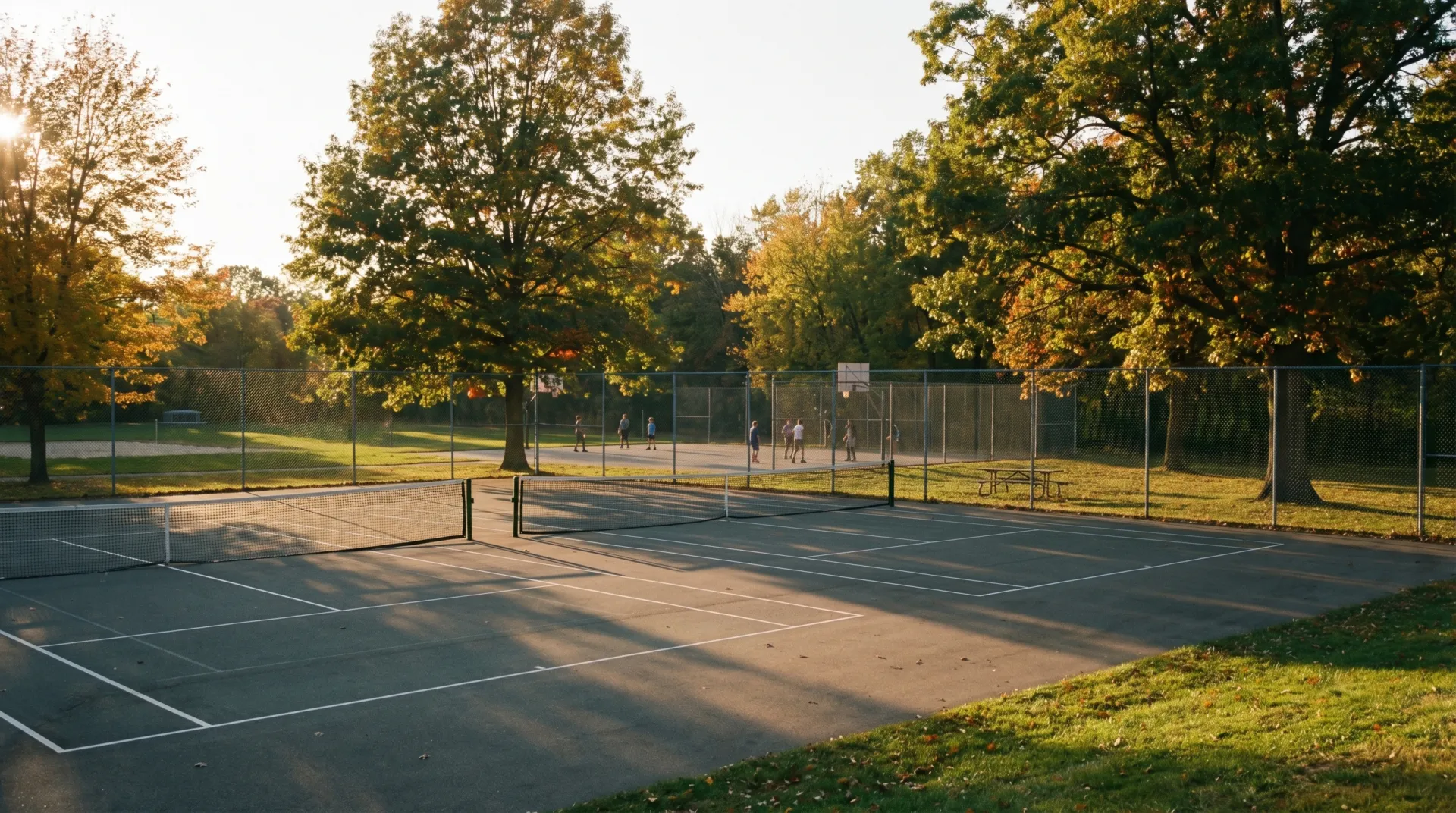
John Ball Park and Zoo (140 acres) is a neighborhood park and zoo with over 2,000 animals, wooded walking trails, playgrounds, and picnic areas. Riverside Park (Comstock Riverside Park) offers disc golf, walking and biking paths along the Grand River, playground facilities, and summer Food Truck Fridays. Richmond Park (57 acres) on the west side features a public swimming pool, water slides, a sledding hill, baseball diamonds, tennis courts, and a fishing pond. Garfield Park (20+ acres) on the south side includes two playgrounds, a splash pad, basketball, tennis, futsol courts, and disc golf. Ah-Nab-Awen Park on the downtown riverfront is undergoing a $55 million greenspace rehabilitation project.
The Grand River Greenway is an ongoing project to connect 80+ miles of trails from downtown Grand Rapids west to Lake Michigan and east to Ionia County. The Kent Trails system provides multi-use paved trails connecting Grand Rapids to surrounding communities. Blandford Nature Center (143 acres on the northwest side) offers nature trails, an animal hospital, and a heritage village. The Calvin Ecosystem Preserve provides 104 acres with 44 acres of public-access nature trails.
The Grand River, Michigan's longest river, flows through the center of the city. The Grand Rapids Whitewater project (construction beginning July 2026, approximately $30 million) will remove four low-head dams and restore natural rapids between I-196 and Fulton Street, creating whitewater recreation in the city center.
Getting Around
Grand Rapids is well-connected by freeway and arterial road networks. US-131 runs north-south through the city center. I-196 runs east-west along the northern edge of downtown, connecting to Holland and Lake Michigan. I-96 connects east to Lansing and Detroit. M-6 (Paul B. Henry Freeway) provides a southern bypass connecting I-196 to I-96. Major arterials include Division Avenue, 28th Street, Wealthy Street, Fulton Street, Leonard Street, and Alpine Avenue.
The Rapid (Interurban Transit Partnership) operates the city's public transit system with 26 fixed routes, including two BRT lines. The Silver Line BRT (Route 90) is a 9.6-mile route along Division Avenue from 60th Street (Wyoming/Kentwood) to downtown, with 34 stations and 10 to 15 minute peak headways. The Laker Line BRT is a 13.3-mile route connecting downtown Grand Rapids to Grand Valley State University in Allendale via Lake Michigan Drive, with 13 stations and 10-minute peak headways. Rapid Central Station (250 Grandville SW) is the system hub.
Grand Rapids has earned Bronze-level Bike-Friendly Community status from the League of American Bicyclists, with over 80 miles of bike lanes and an expanding network through the Bicycle Action Plan (2019).
Gerald R. Ford International Airport (GRR) is located 13 miles southeast of downtown, with a typical drive time of 16 to 20 minutes. The airport serves 21 nonstop destinations with major carriers including Delta, American, United, Allegiant, and Southwest.
The citywide Walk Score is 56 ("Somewhat Walkable"), though neighborhood scores range from 92 (Heartside-Downtown) to below 30 at the suburban edges.
Community
Grand Rapids operates under a council-manager form of government. The elected City Commission consists of a mayor and six commissioners (two from each of three wards), and the Commission appoints a City Manager who serves as the chief executive officer.
The city's population was 198,917 in the 2020 Census, with estimates reaching 200,808 in 2026. The Grand Rapids-Kentwood metropolitan area had approximately 614,000 residents in 2025. Grand Rapids has been Michigan's fastest-growing metropolitan area since 2020, adding approximately 33,600 residents (a 3% increase).
Grand Rapids has an extensive network of neighborhood organizations. Among the most active are the Heritage Hill Association (est. 1968), West Grand Neighborhood Organization (second-largest in the city), John Ball Area Neighbors, Garfield Park Neighborhoods Association, Heartside Business Association, Heartside Downtown Neighborhood Association, Eastown Community Association, and Uptown Grand Rapids (Wealthy Street/East Hills business association). The city recognizes 37 distinct neighborhood areas.
The Grand Rapids Public Library (GRPL) system operates 9 branches plus the Main Library at 111 Library Street NE. GRPL cardholders can also borrow from Kent District Library (KDL) locations throughout Kent County.
Signature annual events include ArtPrize (September/October, 19 days), an international art competition with $500,000 in prizes and 1,100+ artist entries across the city. The Festival of the Arts (June, 3 days) is a free art and performance festival in downtown. The Heritage Hill Weekend Tour of Homes (May, annually since 1969) opens private homes for public tours. The Fulton Street Market operates year-round (established 1922). The Grand Rapids Griffins play AHL hockey at Van Andel Arena from October through April. The Beer City Brewers Festival and numerous brewery events run throughout the year.
History
Grand Rapids was incorporated as a city on April 2, 1850, when the village of Grand Rapids voted to accept the proposed city charter. The city is named for the rapids of the Grand River at the site of its founding. The Anishinaabe (Ottawa/Odawa) people called the area "O-wash-ta-nong," meaning "far-away water." French-Canadian fur traders and missionaries were among the first Europeans in the area. Louis Campau, considered the city's founder, established a trading post in 1826.
Grand Rapids became known as "Furniture City" in the late 19th century, when it was the center of American furniture manufacturing. Companies such as Steelcase, Herman Miller, and Haworth evolved from this heritage and maintain global headquarters in the metro area today. The city was the hometown of Gerald R. Ford, the 38th President of the United States. The Gerald R. Ford Presidential Museum sits on the banks of the Grand River downtown.
Heritage Hill, the city's oldest residential neighborhood, was nearly demolished for urban renewal in the late 1960s. The preservation movement that saved it, led by the Heritage Hill Association (founded 1968), established one of the nation's most recognized urban historic districts. Today, Heritage Hill contains approximately 1,300 structures representing more than 60 architectural styles.
The first ArtPrize competition was held in 2009, founded by Rick DeVos, transforming Grand Rapids into a nationally recognized arts destination. Grand Rapids was named "Beer City USA" through a poll first conducted in 2012, reflecting the city's concentration of craft breweries.
Grand Rapids' transformation from Furniture City to a diversified economy anchored by healthcare, manufacturing, technology, and food processing defines the modern city. The preservation of its historic districts, the growth of its craft brewery and culinary scenes, and events like ArtPrize have established a cultural identity that complements the economic base, driving population growth that leads the state.
Investment
Grand Rapids offers a strong investment profile driven by Michigan-leading population growth, a diversified employment base, and sustained housing demand. The city has added approximately 33,600 residents since 2020, and new housing units are being built at twice the rate of population growth, yet inventory remains below balanced-market levels.
Recent and planned development projects are transforming the city. Studio Park (mixed-use, LEED-certified, downtown) includes a residential tower, office space, retail, and cinema. Bridge Street Market opened as a full-service community grocery on the West Side. Multiple adaptive reuse loft projects in Heartside and downtown (Box Board Lofts, Firestone Lofts) have added residential inventory. The Acrisure Amphitheater ($184 million, 12,000-seat outdoor venue, opening 2026) will transform the downtown riverfront. The Grand Rapids Whitewater project ($30 million, construction starting July 2026) will remove four low-head dams and restore natural rapids. A $55 million effort is rehabilitating downtown riverfront greenspaces.
Grand Rapids has 8 designated Qualified Opportunity Zones covering approximately 30,000 residents, mostly south of Wealthy Street in a cluster east of the Grand River. The Grand Rapids Land Bank (established 2024) targets vacant and blighted land for housing development. The City completed a comprehensive zoning code update in 2024, increasing flexibility for housing density along transit corridors and in commercial areas.
Important for short-term rental investors: Grand Rapids requires a Home Occupation Class C License for short-term rentals, with significant restrictions. The property must be the owner's principal residence, the owner must be present during rental periods, rentals are limited to one room with a maximum of two adult guests, and entire-home rentals are prohibited. Only approximately 200 STR licenses are issued citywide per year, but more than 1,000 listings exist versus the 200 allowed, indicating significant enforcement challenges. The city's STR rules are under active review with reforms expected by 2027. Investors should underwrite to long-term rental income only.
The average citywide rent is approximately $1,361/month, with downtown commanding $1,574 to $2,658/month. Year-over-year rent increases and strong population growth support long-term hold strategies.
Nathan's Take
Grand Rapids is Michigan's fastest-growing metro, adding approximately 33,600 residents since 2020. This population growth, combined with tight housing inventory, has pushed median home prices up roughly 251% over the past decade. For buyers considering Grand Rapids, the key question is not whether prices will rise but which neighborhoods offer the best combination of current value and growth trajectory.
The city's 37 neighborhoods span a wide price spectrum, from Garfield Park at approximately $240,000 to $260,000 through Heritage Hill at $330,000 to Heartside condos above $620,000. A buyer's budget, commute preferences, and lifestyle priorities should drive neighborhood selection. Every neighborhood within city limits is within 15 minutes of downtown.
Grand Rapids' economy is unusually well-diversified for a Midwest city of its size. Corewell Health (25,000 employees), Meijer (10,000+), Steelcase, Amway, and Stryker Corporation anchor the employment base across healthcare, retail, manufacturing, and medical devices. Private business formation grew 33.3% from 2013 to 2023, the highest rate among major Midwest metros.
The development pipeline, including the Acrisure Amphitheater ($184 million), Grand Rapids Whitewater ($30 million river restoration), and $55 million in riverfront park improvements, will transform the downtown riverfront over the next 2 to 5 years. Properties near these projects may see outsized appreciation. For investors, monitor the STR policy review expected by 2027, as any loosening of restrictions could open new strategies in the city.
Location
Boundary of the Grand Rapids area. Drag to explore the surrounding neighborhoods and commute corridors.
Listings
See what is currently listed in Grand Rapids and the surrounding area.
Resources
Official municipal site including property tax estimator, permits, and planning resources
City parks, recreation programs, and trail information
District homepage, school directory, and Attendance Area Finder
Determine which GRPS school serves a specific address
District homepage for the Forest Hills district (southeast suburbs)
GRPL main site with 9 branches plus Main Library
Bus schedules, route maps, Silver Line and Laker Line BRT info
Visitor and resident guide with dining, events, and neighborhood profiles
Market hours, vendors, events, and cooking classes
Grand Rapids' oldest farmers market (est. 1922). Hours, vendors, and seasonal schedules
Admission, exhibits, events, and concert series
Annual art competition schedule, venues, and artist information
Grand River restoration project updates and timeline
Airport information, flights, and ground transportation
Neighborhoods
Explore the neighborhoods that make up Grand Rapids. Each has its own character, price range, and set of tradeoffs.
Grand Rapids' oldest neighborhood and one of the largest urban historic districts in the U.S., with 1,300 homes spanning 60+ architectural styles.
A walkable streetcar-era neighborhood with two thriving commercial corridors, 56+ restaurants and bars, and early 20th century architecture near East Grand Rapids.
Seven distinct sub-neighborhoods between Heritage Hill and Eastown, anchored by Cherry Street's acclaimed dining strip and walkable to downtown.
Grand Rapids' largest neighborhood with 708 new housing units in development, a growing Plainfield Avenue dining scene, and Grand River access.
A small-town neighborhood within Grand Rapids featuring a walkable business district with a social zone, mid-century bungalows, and entry-level pricing.
Six sub-neighborhoods between downtown and East Hills, adjacent to the Medical Mile, with 150+ years of architecture and major development underway.
Grand Rapids' second-largest neighborhood with a revitalized Leonard Street brewery corridor, 57-acre Richmond Park, and Grand River access.
A quiet west-side neighborhood centered around a 140-acre zoo and park, with Craftsman homes, Bridge Street dining, and easy downtown access.
One of Grand Rapids' largest neighborhoods with entry-level pricing, Silver Line BRT on Division Avenue, a 20-acre park, and Latin American dining.
Grand Rapids' urban arts and entertainment district with a National Register historic warehouse district, loft living, and a Walk Score of 92.
A hilltop Grand Rapids neighborhood with panoramic city views, 1870s-1900s homes, cobblestone streets, and the booming Monroe North corridor.
A compact southeast Grand Rapids neighborhood with Craftsman and Foursquare homes, walkable Wealthy Street dining, and strong community roots.
A large southeast Grand Rapids neighborhood with accessible pricing, historic cemeteries, active parks, and new developer investment.
A 294-home planned neighborhood built on a former golf course, with curving streets, Tudor and Colonial Revival homes, and a 90+ year parade tradition.
A rolling, wooded northwest Grand Rapids neighborhood with mid-century brick homes, larger lots, and 264-acre Blandford Nature Center next door.
A quiet residential neighborhood between Heritage Hill and East Grand Rapids, with Craftsman bungalows, a community garden, and 6-day median sale time.
A northeast Grand Rapids neighborhood centered on a 28-acre park (est. 1873), with splash pad, disc golf, trails, and accessible pricing near downtown.
A southeast Grand Rapids neighborhood with 100+ acres of natural parkland along Plaster Creek, spacious ranch homes, and Steelcase HQ next door.
Southeast Grand Rapids neighborhood with accessible pricing, Mulick Park recreation, and major community investment through the Boston Square Together project.
Walkable southwest Grand Rapids neighborhood with a vibrant dining corridor along Cesar E. Chavez Avenue and $150M+ in active development projects.
Quiet southeast Grand Rapids neighborhood with curving tree-lined streets, Ken-O-Sha Park trails along Plaster Creek, and quick access to 28th Street and the airport.
Established southeast Grand Rapids neighborhood with brick homes, Forest Hills school district access, and proximity to Woodland Mall and the airport.
Spacious west-side neighborhood with 700+ acres of nature preserves, a reviving Leonard Street dining corridor, and the largest lots in Grand Rapids.
Northeast Grand Rapids neighborhood with a historic village commercial node on Plainfield Avenue, a short downtown commute, and North Quarter CID revitalization.
Northeast Grand Rapids neighborhood anchored by Riverside Park, the city's largest park with Grand River access, trails, and a growing Plainfield Avenue dining scene.
A locally designated historic district in southeast Grand Rapids with colorful early-20th-century homes, Cherry Park, and proximity to the Cherry Street dining corridor.
A quiet, established residential neighborhood on Grand Rapids' southeast side with post-WWII homes, community gardens, and proximity to East Grand Rapids.
Grand Rapids' smallest neighborhood, a diverse residential enclave south of downtown with century-old homes and walkable access to the Wealthy Street corridor.
A historically significant northeast Grand Rapids subdivision developed in the 1960s by four Black entrepreneurs, now on the National Register of Historic Places.
A southeast Grand Rapids neighborhood with affordable Craftsman and Foursquare homes, strong community organizations, and proximity to Wealthy Street businesses.
A riverfront neighborhood southwest of downtown with Polish heritage, cultural diversity, John Ball Zoo, and walkable access to Bridge Street dining.
A small, historic southwest Grand Rapids neighborhood named for its black walnut trees, with about 350 homes near the Grand River and downtown.
Grand Rapids' largest neighborhood by area, a suburban-style community on the northeast side with wooded lots, nature preserves, and city convenience.
A tree-lined northeast Grand Rapids neighborhood along the Grand River with Riverside Park access, mid-century homes, and proximity to the Creston business district.
A small, sought-after enclave in Grand Rapids Township with East Grand Rapids schools and township tax rates, tucked between EGR and I-196 near Reeds Lake.
A quiet northeast Grand Rapids neighborhood with three urban lakes, two nearby colleges, and a section known as the Golden Triangle for EGR schools at GR tax rates.
A quiet residential neighborhood in southeast Grand Rapids with affordable housing, strong community organizations, and Mulick Park's 10-acre green space.
A southeast Grand Rapids neighborhood experiencing major reinvestment, with a new $27M community hub, mixed-income housing, and planned retail along Kalamazoo Avenue.
A southeast Grand Rapids neighborhood anchored by the Boston Square redevelopment, with affordable early-20th-century homes, Hall Street Bakery, and Fuller Park.
A diverse, walkable neighborhood southeast of downtown Grand Rapids with affordable housing, historic cemeteries, and strong community identity through SECA.
Questions about Grand Rapids?
Send a note with what you are looking for in Grand Rapids, price range, timeline, school or commute priorities, and Nathan will follow up.
Contact
Send a message and Nathan will get back to you within one business day.
Message received
Nathan typically responds within one business day.
— Nathan Strodtbeck, REALTOR®