East Hills
Cherry Street and beyond
Neighborhood · Kent County
East Hills at a glance
Seven distinct sub-neighborhoods between Heritage Hill and Eastown, anchored by Cherry Street's acclaimed dining strip and walkable to downtown.
- Median Price
- $363,000
- Median $/sqft
- $182
- Median DOM
- 30 days
- Walk Score
- 89
- Population
- 3,464
- School District
- Grand Rapids Public Schools
- Tax Millage
- 33.63
Market data as of 2026-03. Population: AreaVibes and NeighborhoodScout, vintage approximately 2020 ACS estimates.
Overview
Overview
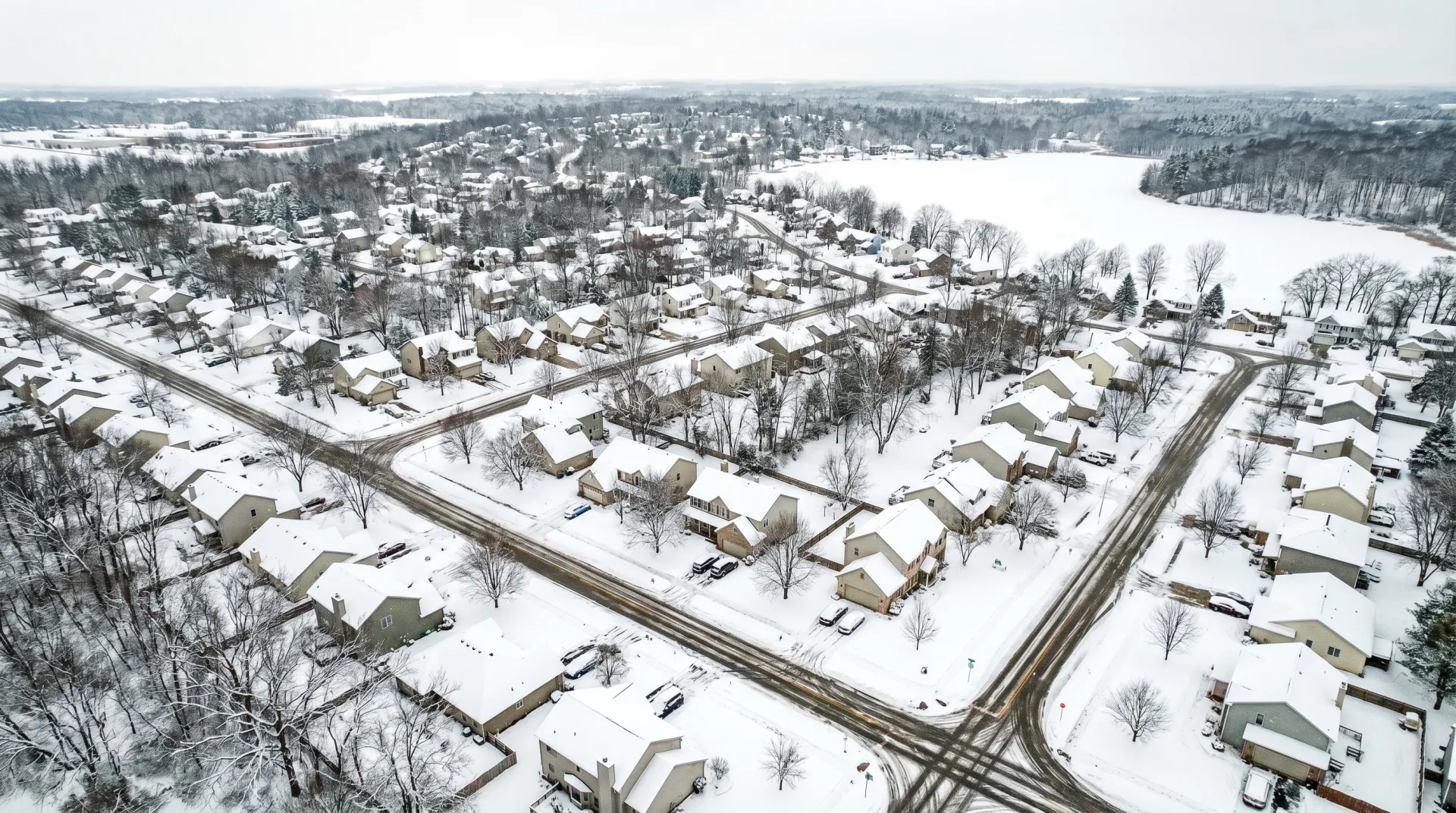
East Hills occupies the geographic middle ground between two of Grand Rapids' most recognized neighborhoods: Heritage Hill to the west and Eastown to the east. The neighborhood is composed of seven smaller sub-areas: Fitch Corners, Congress Park, Diamond Gate, Cherry Hill, Fairmount Square, Orchard Hill, and Wealthy Heights. This mosaic of sub-neighborhoods gives East Hills a varied character, with blocks of stately Victorian homes giving way to more modest workers' cottages, interspersed with contemporary infill and multi-family conversions.
Cherry Street SE runs east-west through the heart of East Hills and serves as the neighborhood's primary commercial corridor. This walkable strip is packed with independently owned restaurants, craft breweries, distillery tasting rooms, boutique shops, and cafes. Cherry Street anchors include Brewery Vivant (housed in a renovated 1948 funeral chapel at 925 Cherry St SE), Less Traveled by Long Road Distillers, Grove (a multi-time Grand Rapids Magazine Restaurant of the Year), and the Cherie Inn (operating since 1924). The Wealthy Street corridor along the southern boundary adds further commercial activity as part of the broader Uptown Grand Rapids district.
The residential blocks between the commercial corridors feature a mix of architectural eras and styles. Late 19th century homes with Queen Anne and Tudor Revival details sit alongside Craftsman bungalows, American Foursquares, and more recent infill. The neighborhood underwent significant decline in the 1960s as residents moved to suburbs, but revitalization efforts beginning in the 1980s, led by the East Hills Council of Neighbors, have restored much of the housing stock and commercial vitality. Today, the streetscape shows evidence of ongoing reinvestment, with well-maintained historic homes alongside renovated commercial buildings and new construction projects.
Real Estate
Real Estate
East Hills' real estate market reflects a neighborhood that offers meaningful value compared to adjacent Heritage Hill and Eastown. The median sale price sits around $363,000, below Eastown's $424,000 and with a broader price range that starts in the low $200,000s. Properties in the $200,000 to $300,000 range still exist, particularly in sub-neighborhoods farther from Cherry Street, making East Hills one of the more accessible entry points into the walkable southeast Grand Rapids market.
What to expect:
- Single-family homes: 1,200 to 2,800 sq ft, with larger Queen Anne and Tudor Revival homes exceeding 3,000 sq ft. Workers' cottages and bungalows at the smaller end range from 1,200 to 1,600 sq ft
- Multi-unit conversions: Many historic single-family homes have been converted to duplexes, triplexes, and quads, a legacy of the neighborhood's mid-century decline period
- Condominiums and townhomes: Growing inventory. Construction Simplified received approval for an 8-unit condominium project with townhome-style units featuring attached garages
- New construction: Infill and renovation projects along the Cherry Street and Wealthy Street corridors. Grand Rapids saw record construction value ($949.3 million citywide) in 2025
- HOA prevalence: Uncommon for standalone homes; condominium and townhome developments carry HOA fees
East Hills' seven sub-neighborhoods have distinct characters and price points. Cherry Hill and Diamond Gate near the commercial corridor tend to command higher prices; Wealthy Heights and Orchard Hill may offer more value. Buyers should walk multiple sub-neighborhoods rather than treating East Hills as a single uniform market.
Architecture
Architecture
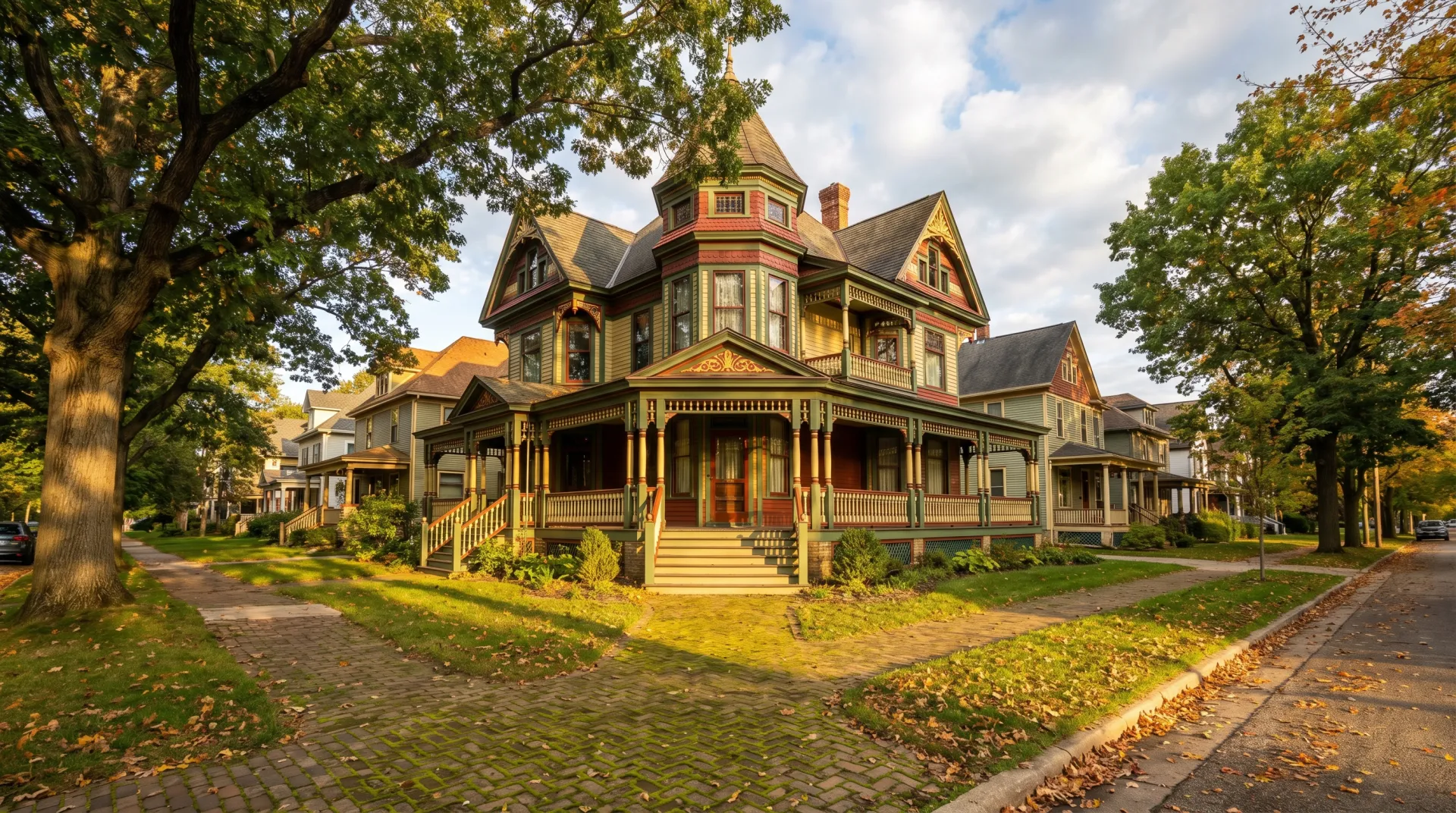
East Hills is known for its eclectic architectural mix, described as featuring pastel-colored Cape Cods, vintage Craftsman Foursquares, elaborate Queen Annes, and half-timbered Tudor Revivals. Queen Anne, Tudor Revival, Cape Cod, Craftsman/American Foursquare, and Colonial Revival are the dominant styles. The majority of homes were built in the late 19th and early 20th centuries (1880s to 1930s), during the same industrial boom that built Heritage Hill to the west. A secondary wave of construction occurred mid-century (1940s to 1960s), and more recent infill from the 2000s to present adds contemporary units, particularly along the commercial corridors.
Typical lots are compact urban parcels, generally ranging from approximately 4,000 to 8,000 square feet, consistent with late 19th century platting patterns. Homes range from approximately 1,200 to 2,800 square feet. Larger Queen Anne and Tudor Revival homes may exceed 3,000 square feet, while workers' cottages and bungalows at the smaller end are typically 1,200 to 1,600 square feet.
The Cherry Hill sub-area is recognized as a local historic area, with homes preserved through the Grand Rapids Historic Preservation Commission. Homes along Union Avenue at the western boundary are part of the Heritage Hill Historic District (National Register, 1971). Many homes retain original Queen Anne details including decorative shinglework, turrets, and ornate woodwork. Tudor Revival homes feature half-timbering and steeply pitched roofs. Craftsman homes retain wide porches, exposed rafter tails, and built-in cabinetry. The commercial buildings along Cherry Street include adaptively reused historic structures, most notably the 1948 funeral chapel that houses Brewery Vivant.
Schools
Schools
East Hills falls entirely within the Grand Rapids Public Schools (GRPS) district. GRPS uses an attendance-area-based assignment system; the specific school serving an East Hills address can be determined using the GRPS Attendance Area Finder tool online.
Congress Elementary (940 Baldwin St SE, approximately 182 students, PK-5) serves portions of the East Hills area. Middle school assignment is determined by the Attendance Area Finder based on home address, with Alger Middle School among the schools serving the broader southeast area. Ottawa Hills High School and Innovation Central High School are among the GRPS high schools accessible to East Hills residents.
GRPS participates in Schools of Choice, meaning residents can apply to attend theme schools and specialized programs beyond their assigned neighborhood school. Coit Creative Arts Academy and Grand Rapids Montessori (PK-12) are available as intra-district options. Private and charter options nearby include Grand Rapids Christian Schools (multiple campuses), Catholic schools within the Diocese of Grand Rapids, and Grand Rapids Child Discovery Center (PK-5 charter).
Dining
Dining
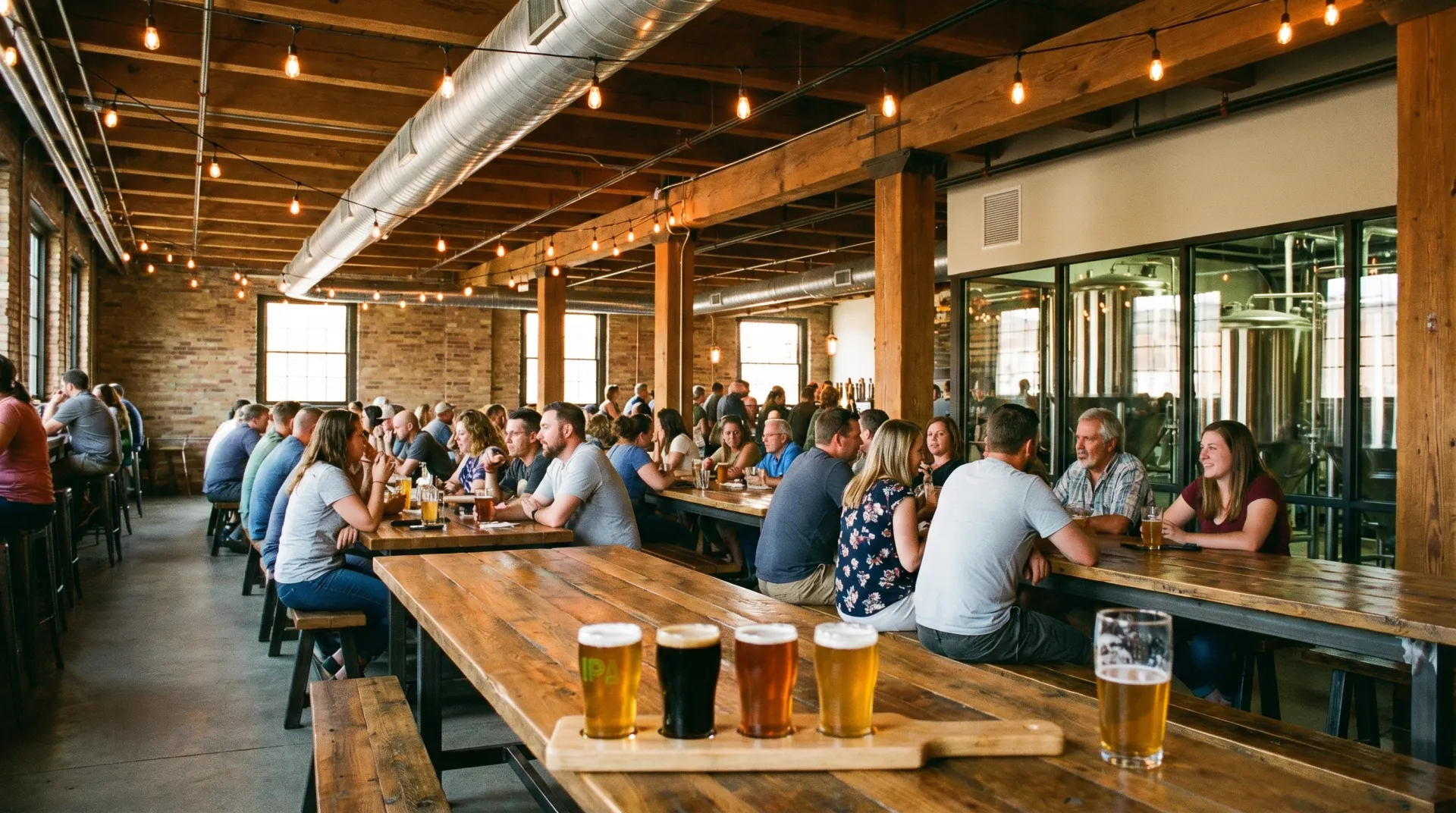
East Hills' dining scene is anchored by Cherry Street SE, the neighborhood's primary commercial corridor, and the Wealthy Street SE corridor along the southern boundary, part of the broader Uptown Grand Rapids commercial district.
Grove (919 Cherry St SE) is the neighborhood's fine-dining anchor, a seasonal, farm-to-table New American restaurant that has won Grand Rapids Magazine's Restaurant of the Year six times. The menu rotates with Midwest farming seasons: three courses for $50 Tuesday through Thursday, or a five-course tasting for two at $125 on weekends. The Cherie Inn (969 Cherry St SE) is Grand Rapids' longest-running restaurant, operating since 1924 in a century-old building with original tin ceilings and Stickley furniture, known for Eggs Benedict and European-style brunch.
Brewery Vivant (925 Cherry St SE) occupies a renovated 1948 funeral chapel and serves European-inspired beers, craft spirits, and a from-scratch menu with locally sourced ingredients. Less Traveled by Long Road Distillers (959 Cherry St SE) offers a cocktail lounge featuring Long Road Distillers' spirits, steps from Brewery Vivant. Mangiamo is housed in the historic Paddock Mansion (built 1873), serving Italian cuisine, craft cocktails, and featuring a hidden speakeasy in the wine cellar. It reopened in January 2024 after a multi-year closure.
Black Napkin at the Fulton and Diamond intersection is known for its burgers. The Electric Cheetah on Wealthy Street serves creative American comfort food including multiple varieties of macaroni and cheese. Donkey Taqueria on Wealthy Street brings Mexican street fare in a casual setting. Grocery options include Wealthy Market, Good Judy's Organic Market and Cafe, and Martha's Vineyard Fine Wine and Grocery. The Fulton Street Farmers Market (established 1922) sits at the neighborhood's northwestern edge.
Parks
Parks and Recreation
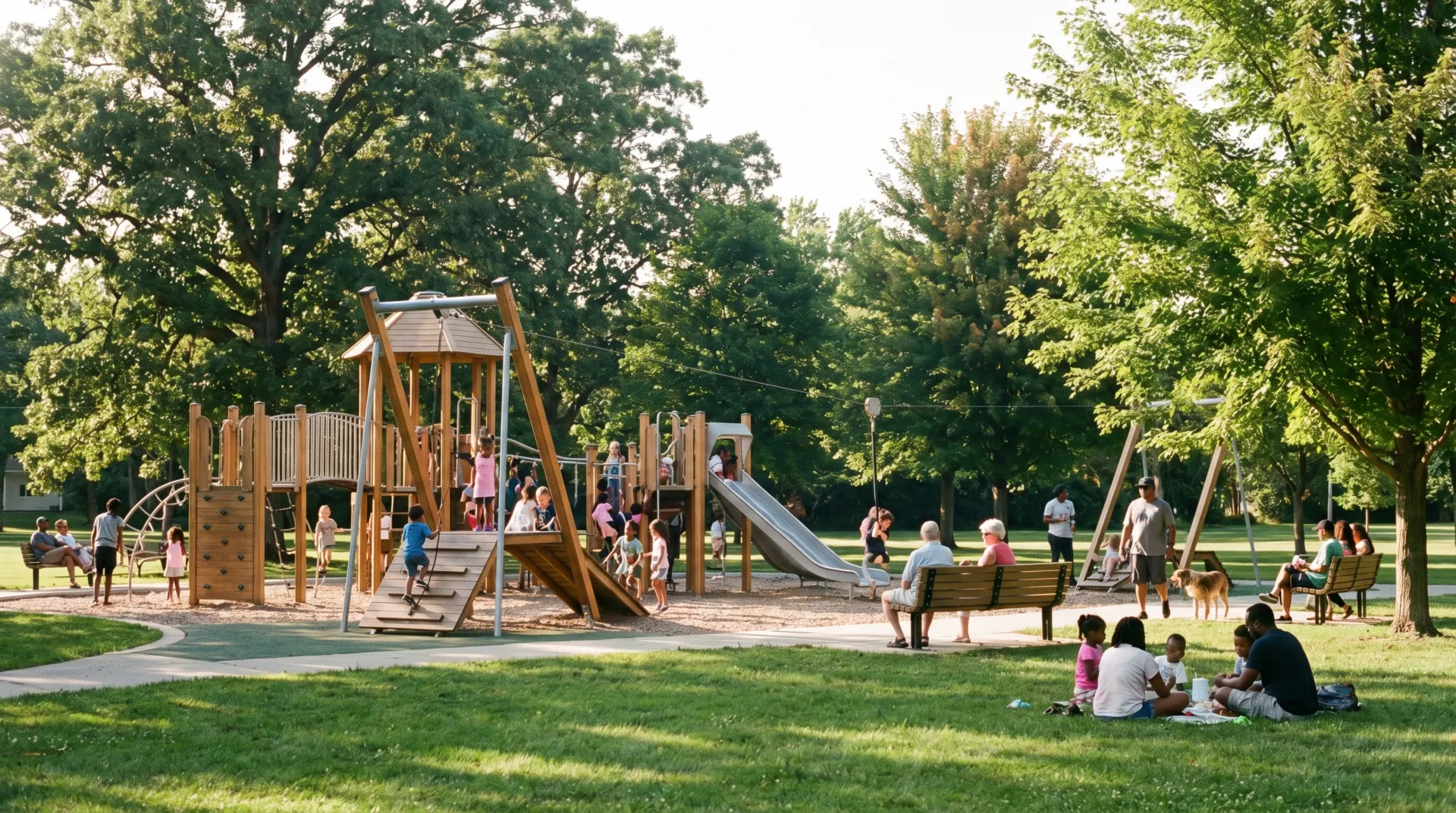
Congress Park is located within East Hills and provides green space with playground equipment and open recreation areas. Midtown Green, at Fulton Street and Carlton Avenue, sits adjacent to the northern boundary and offers a community garden, shaded walking paths, and gathering space for neighborhood events. Pleasant Park, near the western edge of East Hills adjacent to Heritage Hill, features a playground, benches, and hosts community events.
East Hills' compact, walkable streets connect to the broader Grand Rapids cycling network. Bike lanes run along several corridors connecting east to Eastown and west to downtown. The Wealthy Street and Cherry Street corridors serve as primary east-west cycling routes. The Greater Grand Rapids Bicycle Coalition maintains cycling route maps for the area.
The Grand River runs through Grand Rapids approximately 1 mile west of East Hills' western boundary, with direct riverfront access available via downtown paths and parks. Grand Rapids Parks and Recreation operates facilities throughout the city accessible from East Hills, and the downtown YMCA and various community centers are within a short distance.
Getting Around
Transportation
East Hills is one of the closest neighborhoods to downtown Grand Rapids. The western edge sits approximately 0.5 to 1.0 miles from the center of downtown, a 3 to 7 minute drive or 10 to 20 minute walk from the center of the neighborhood.
Public transit access is strong. Rapid Central Station (250 Grandville SW), the system's primary hub, is located directly adjacent to the southwestern edge of the neighborhood. Routes accessible from East Hills include the Silver Line BRT (Route 90) with 10 to 15 minute peak headways, Route 5 (Wealthy) serving the Wealthy Street corridor, and Route 6 (Eastown) passing through the eastern edge. Fixed-route buses operate at 30 to 60 minute headways depending on route and time.
Bike infrastructure connects East Hills to downtown and surrounding neighborhoods. The neighborhood's compact layout and proximity to downtown make cycling practical for commuting and errands. Grand Rapids holds a Bronze-level Bike-Friendly Community award from the League of American Bicyclists.
Major road access includes Wealthy Street SE (southern boundary, major east-west arterial), Cherry Street SE (internal east-west corridor), Fulton Street SE (northern boundary, connects west to downtown and I-196), Fuller Avenue SE (eastern boundary), and Union Avenue SE (western boundary). I-196 is accessible via Fulton Street, approximately 1 mile from the center of East Hills. Gerald R. Ford International Airport is approximately 13 miles southeast, a 16 to 20 minute drive. Walk Score rates the neighborhood 89 ("Very Walkable"), the highest walkability score in Grand Rapids.
Community
Community
East Hills is a neighborhood within the City of Grand Rapids, which operates under a council-manager form of government. The population is approximately 3,500.
The East Hills Council of Neighbors (est. 1981) is the primary neighborhood organization, a grassroots community group dedicated to improving the East Hills neighborhoods. Originally formed as a crime watch group, it expanded to include block clubs, neighborhood improvement, city planning, youth programs, and business district revitalization. The organization represents seven sub-neighborhoods: Fitch Corners, Congress Park, Diamond Gate, Cherry Hill, Fairmount Square, Orchard Hill, and Wealthy Heights. Uptown Grand Rapids is the business association covering the Wealthy Street, East Fulton, East Hills, and Eastown commercial districts. The Grand Rapids Historic Preservation Commission oversees the Cherry Hill historic area and Heritage Hill properties along Union Avenue.
The nearest Grand Rapids Public Library branch is the Madison Square Branch at 1201 Madison Ave SE. The GRPL Main Library downtown is approximately 1 mile from East Hills' western edge.
East Hills participates in broader Uptown Grand Rapids seasonal events and programming. The Fulton Street Farmers Market (May to October, plus winter Saturdays) serves as a weekly community gathering point at the neighborhood's northwestern edge with over 200 vendors during peak season. Brewery Vivant hosts community events and seasonal programming at its Cherry Street location.
History
History
East Hills was developed in the late 19th century as orchards and farms were subdivided into residential lots. During the late 1800s, Grand Rapids experienced the effects of the industrial revolution and immigration from Europe, and the East Hills area grew because it was accessible via the streetcar system. The name reflects the neighborhood's geographic position on the elevated terrain east of downtown Grand Rapids, between Heritage Hill and the city's eastern boundary.
During the 1960s, East Hills experienced significant decline as residents moved to newly created suburbs, leaving the neighborhood with substantial vacancy and deterioration. This paralleled the urban renewal pressures that also threatened Heritage Hill during the same period. In 1981, the East Hills Council of Neighbors was formed by concerned residents to address neighborhood decline. What began as a crime watch group expanded into a comprehensive neighborhood organization covering housing, planning, youth programs, and business district revitalization.
Brewery Vivant opened in 2010 in a renovated 1948 funeral chapel at 925 Cherry St SE, becoming a catalyst for commercial reinvestment along Cherry Street. The building originally served as an automobile garage (built 1915) for the Metcalf funeral home's horse-drawn hearses before being rebuilt as a chapel in 1948. The Cherry Hill sub-area within East Hills contains homes recognized for their historic character and preserved through the Grand Rapids Historic Preservation Commission. East Hills' current identity is shaped by this revitalization arc: from late 19th century development, through mid-20th century decline, to the community-driven renewal that began in the 1980s and the commercial corridor that thrives today.
Investment
Investment Potential
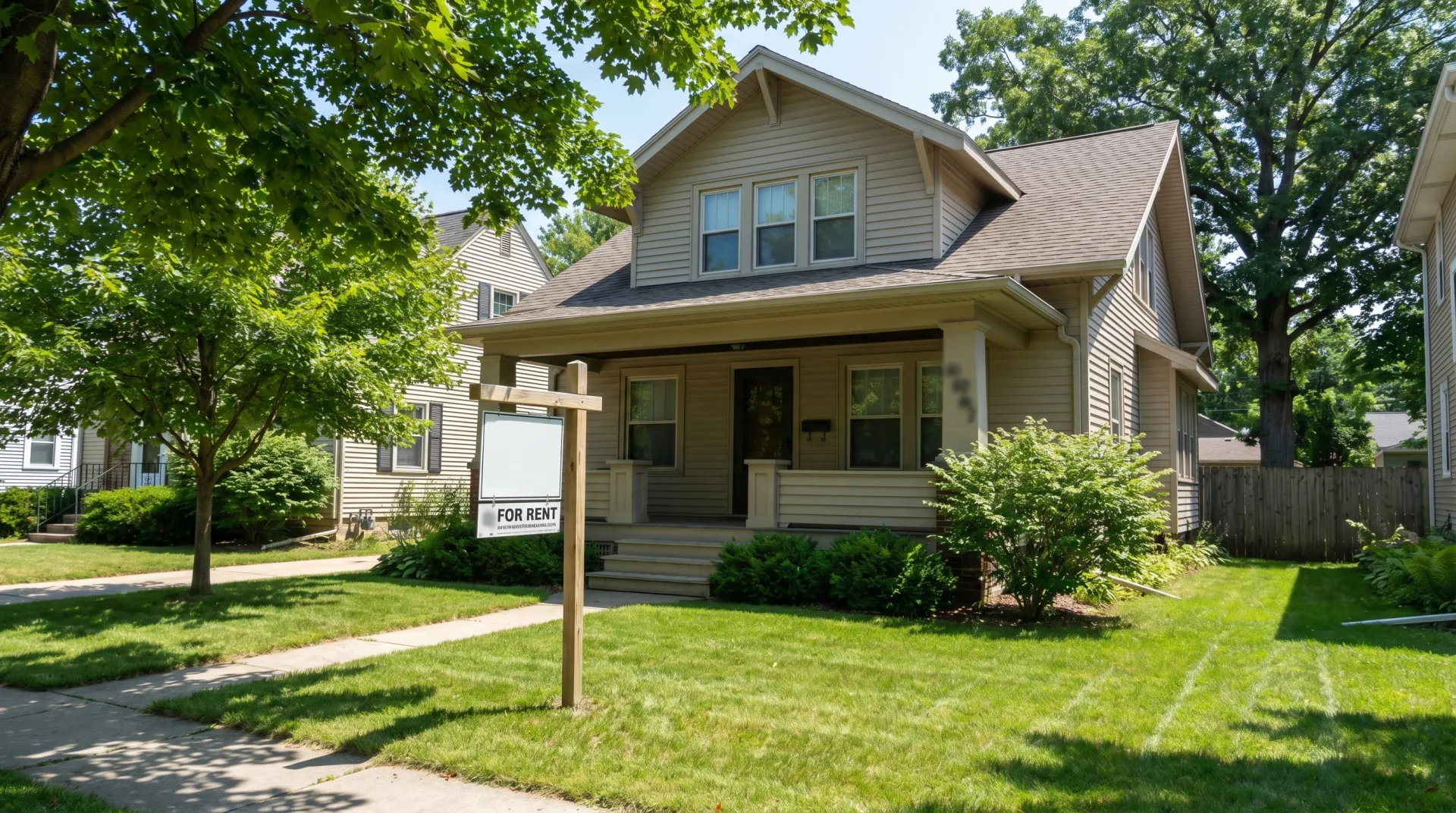
East Hills offers a compelling investment profile with its relatively accessible price point compared to adjacent Heritage Hill and Eastown. The median sale price around $363,000 is below both neighbors, and properties in the $200,000 to $300,000 range exist in sub-neighborhoods farther from the Cherry Street commercial corridor.
Multi-unit investment properties are common throughout East Hills. Many historic single-family homes were converted to duplexes, triplexes, and quads during the neighborhood's mid-century decline. Average rents of approximately $2,070/month, higher than 83.9% of Michigan neighborhoods, and proximity to downtown employment centers support strong rental underwriting. The Cherry Street and Wealthy Street commercial corridors drive consistent tenant demand.
The 8-unit condominium project approved by Grand Rapids signals growing demand for ownership housing with lower maintenance requirements in a walkable location. Grand Rapids' 2024 citywide zoning update allows for increased housing density, which may facilitate additional infill and mixed-use development along East Hills' commercial corridors. The Uptown Corridor Improvement Authority oversees investment planning for the commercial corridors.
Important for short-term rental investors: Grand Rapids requires a Home Occupation Class C License and Special Land Use Permit for short-term rentals, with significant restrictions: the property must be the owner's principal residence, the owner must be present during rental periods, rentals are limited to one room with a maximum of two adult guests, and entire-home rentals are prohibited. Approximately 200 STR licenses are issued citywide per year. Investors should underwrite to long-term rental income only.
Nathan's Take
The local read.
East Hills sits in the sweet spot between Heritage Hill's higher prices and Eastown's premium. At a median around $363,000, you are getting walkable access to one of the best dining corridors in Grand Rapids, with properties in the $200,000 to $300,000 range still available in sub-neighborhoods farther from Cherry Street. That makes it one of the more accessible entry points into the walkable southeast Grand Rapids market.
The Cherry Street commercial corridor is the real anchor here. Brewery Vivant, Grove, Cherie Inn, and Less Traveled are all within a few blocks of each other, and this density of quality restaurants and nightlife directly supports property values along and near Cherry Street. When you are evaluating a specific property, pay attention to which of the seven sub-neighborhoods it falls in. Cherry Hill and Diamond Gate near the corridor tend to command higher prices, while Wealthy Heights and Orchard Hill may offer more value.
For investors, the multi-unit opportunity is real. Many historic homes were converted to duplexes, triplexes, and quads during the neighborhood's mid-century decline, and average rents around $2,070/month with proximity to downtown employment support solid underwriting. Just remember the same restrictive STR ordinance applies here: owner-occupied only, one room maximum. Underwrite to long-term income.
The approved 8-unit condo project signals where this neighborhood is heading. New ownership housing with walkability is in demand, and buyers who want newer construction in an urban setting should watch East Hills for similar infill projects. The value gap with Heritage Hill and Eastown may narrow over time as reinvestment continues along the commercial corridors.
Location
East Hills on the map
Boundary of the East Hills area. Drag to explore the surrounding neighborhoods and commute corridors.
Listings
Browse homes in East Hills.
See what is currently listed in East Hills and the surrounding area.
Resources
Helpful links
Neighborhood organization with community programs, events, and neighborhood news
District homepage, school directory, and enrollment information
Determine which GRPS school serves a specific address in East Hills
Business association covering Wealthy Street, East Hills, and Eastown commercial districts
Nearest Grand Rapids Public Library branch to East Hills (1201 Madison Ave SE)
Bus schedules, route maps, and fare information for public transit
Bicycle route maps for the Grand Rapids area
Visitor and resident guide with dining, events, and neighborhood profiles
Official municipal site including property tax estimator and planning resources
Airport information, driving directions, and flight status
More in Grand Rapids
Other neighborhoods in Grand Rapids.
East Hills is one of several neighborhoods in Grand Rapids. Each has its own character and price range.
Questions about East Hills?
Ask Nathan.
Send a note with what you are looking for in East Hills, price range, timeline, school or commute priorities, and Nathan will follow up.
Contact
Get in touch
Send a message and Nathan will get back to you within one business day.
Message received
Thank you. Nathan will be in touch soon.
Nathan typically responds within one business day.
— Nathan Strodtbeck, REALTOR®