East Grand Rapids
Lake living, five minutes from downtown
City · Kent County
East Grand Rapids at a glance
East Grand Rapids is a small, built-out city east of downtown Grand Rapids centered on Reeds Lake, the Gaslight Village, and top-ranked EGR schools.
- Median Price
- $626,000
- Median $/sqft
- $323
- Median DOM
- 14 days
- Walk Score
- 49
- Population
- 11,389
- Median Income
- $168,487
- School District
- East Grand Rapids Public Schools
- Tax Millage
- 36.5
Market data as of 2025-04. Population: U.S. Census Bureau, 2020 Decennial Census.
Overview
Overview
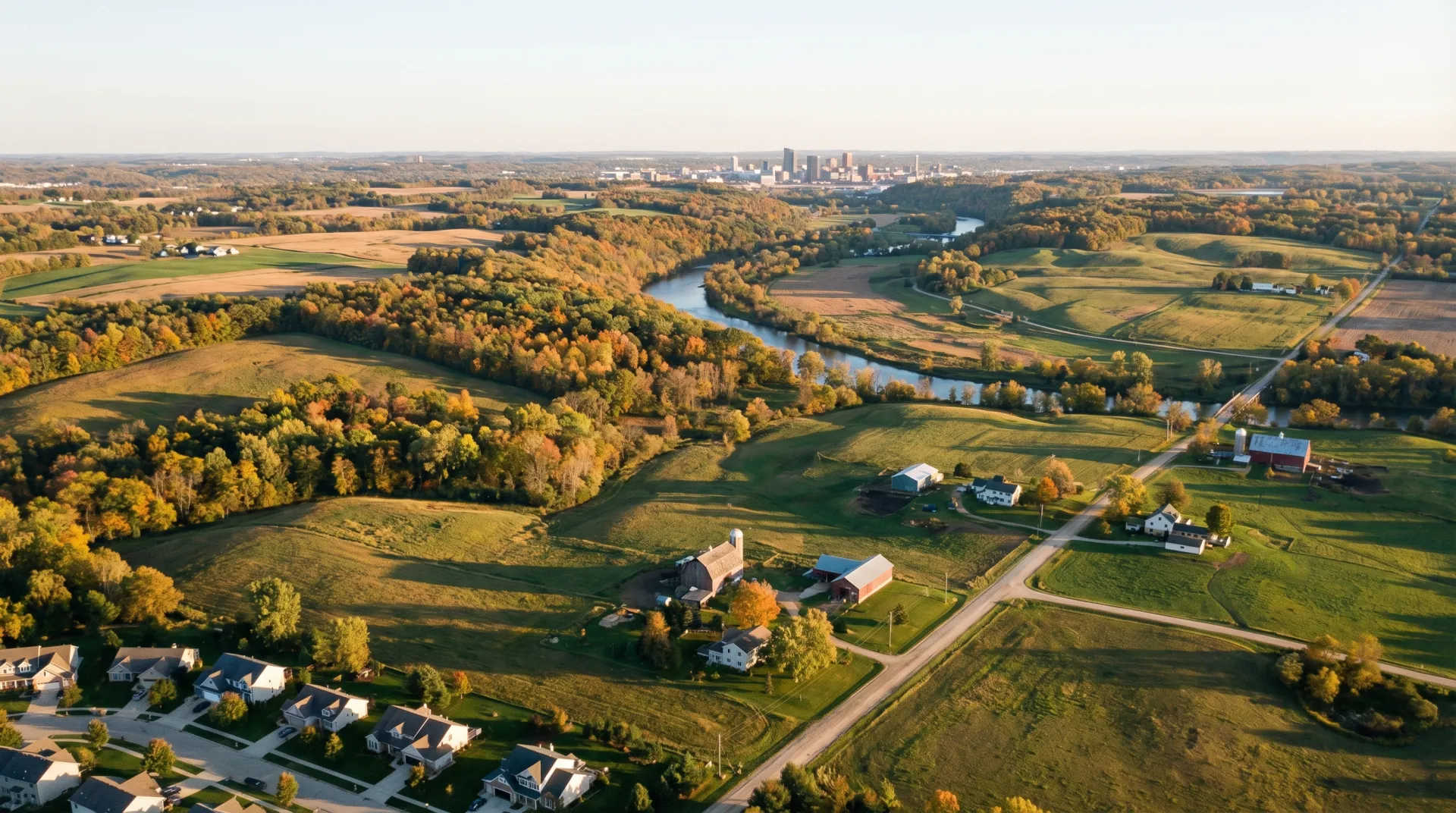
East Grand Rapids, locally known as EGR, is a small, fully built-out city of approximately 11,400 people sitting directly east of downtown Grand Rapids. The city is organized around three anchors: Reeds Lake (a 295-acre all-sports lake near the center of the city), the Gaslight Village commercial district on Wealthy Street, and East Grand Rapids Public Schools. It is one of the oldest established residential communities in the metro, with roots going back to the 1830s.
The city covers just 3.4 square miles, which makes it one of the most compact and walkable communities in the Grand Rapids area. Nearly every home sits within a short walk or bike ride of the lake, a park, or the Gaslight Village shops and restaurants. The 4.2-mile Reeds Lake Trail loops the lake and connects parks, neighborhoods, and the commercial district.
EGR's identity is defined by its combination of proximity, density, and institutional quality. Downtown Grand Rapids is a five-minute drive west. The school district is entirely contained within the city, and the community's investment in its parks, library, and public spaces is visible on every block. The tradeoff for all of this is price: EGR is one of the most expensive residential markets in the metro, and the limited geographic footprint means inventory is perpetually tight.
Real Estate
Real Estate
EGR is dense and almost entirely single-family. The city is fully built out, which means new inventory enters the market only through individual resales, occasional teardown-and-rebuild projects, or rare infill opportunities. The median sale price has been running around $626,000, with lakefront and fully updated homes regularly exceeding $1 million. Price per square foot averages around $323, among the highest in the metro.
What to expect:
- Single-family homes: The dominant housing type by far. Most are three- to four-bedroom homes on compact urban lots (typically 0.15 to 0.35 acres). Square footage ranges from 1,400 for smaller bungalows up to 4,000+ for updated or lakefront properties
- Lakefront properties: Homes on Reeds Lake with private docks represent the top of the market, frequently exceeding $1 million and occasionally reaching $2 million+
- Condos and townhomes: Limited. A few condominium developments exist, primarily along the Wealthy Street corridor near Gaslight Village
- New construction: Rare because the city is built out. When new homes are built, they are typically teardown-and-rebuild projects on existing lots, priced at a significant premium
- HOA prevalence: Uncommon. Most EGR properties are standalone single-family homes without HOA governance
The homeownership rate in EGR exceeds 94%. Inventory is genuinely tight, and homes tend to sell within days of listing. Buyers should be pre-approved and prepared to move quickly when a property matching their criteria appears.
Architecture
Architecture
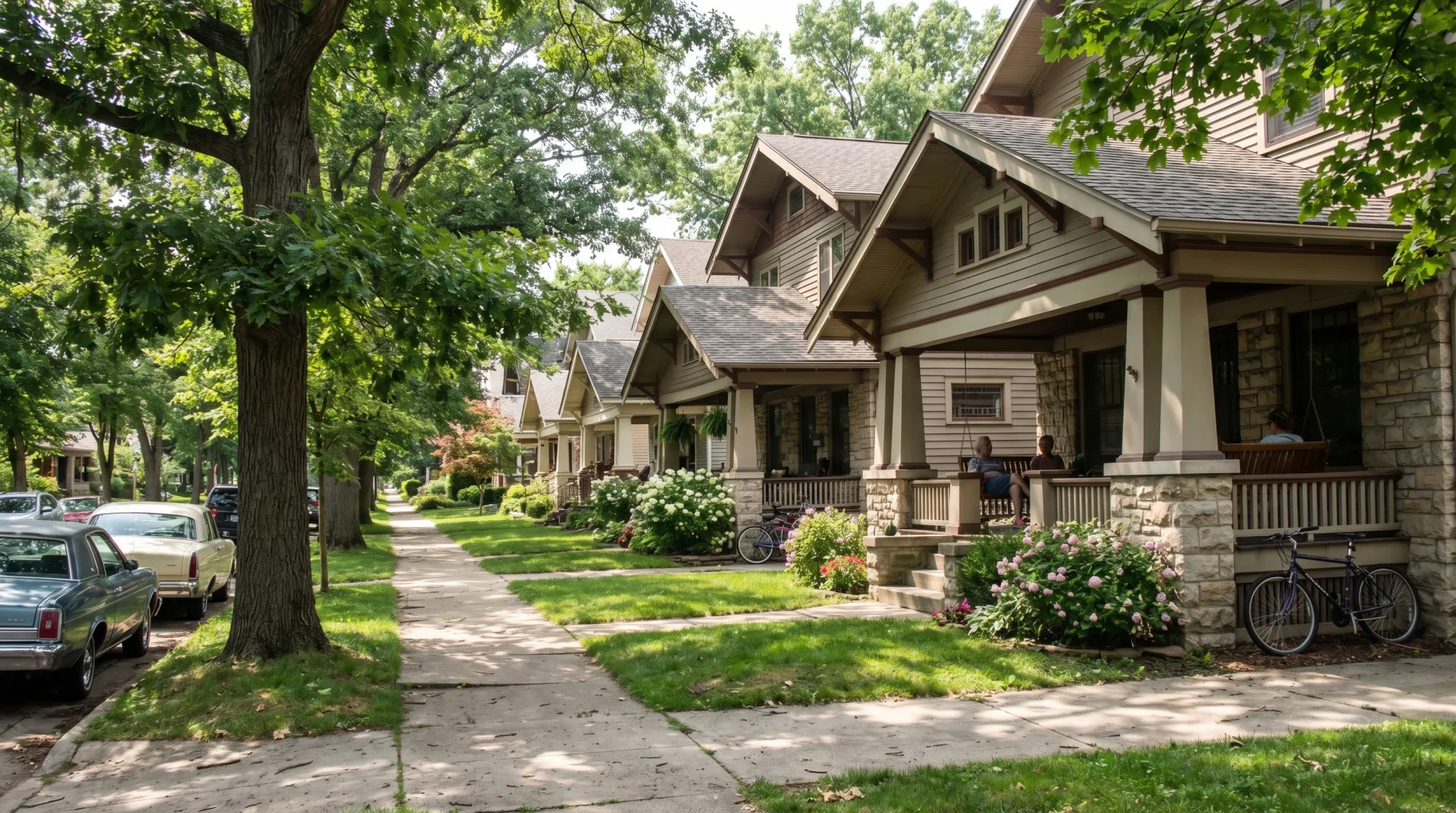
East Grand Rapids contains one of the richest concentrations of early-to-mid-twentieth-century residential architecture in the Grand Rapids metro. The city's housing stock tells the story of its development from a summer resort community to a year-round residential city.
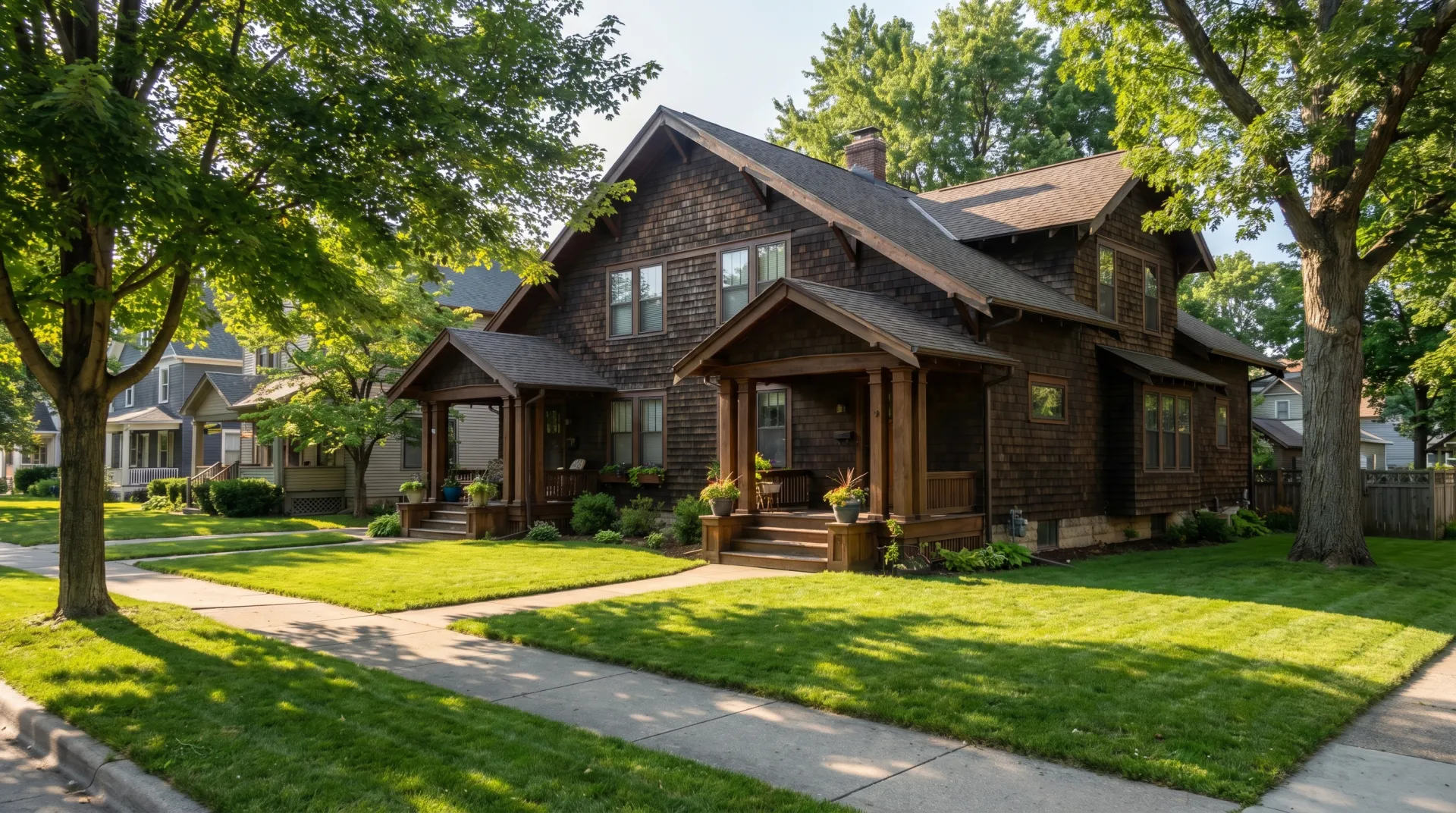
The most prominent styles include Tudor Revival, Colonial Revival, Cape Cod, and Craftsman, most built between the 1920s and 1950s during EGR's primary residential development period. Tudor homes are particularly well-represented, with steeply pitched gable roofs, decorative half-timbering, leaded glass windows, and intricate interior woodwork. Colonial Revivals feature symmetrical facades, center-hall plans, and multi-story layouts on the compact city lots.
Mid-century homes from the 1950s and 1960s include ranch-style and split-level designs, as well as a notable collection of Mid-Century Modern homes characterized by flat planes, large glass windows, open floor plans, and integrated indoor-outdoor living spaces. These homes are concentrated in neighborhoods that developed during the postwar building boom.
More recent decades have seen selective teardown-and-rebuild projects where older homes are replaced with contemporary construction. These newer homes tend to be larger than their predecessors and incorporate modern floor plans while often maintaining exterior proportions and materials sympathetic to the surrounding streetscape.
The overall architectural character of EGR is mature, tree-lined streets with homes set on compact lots, most featuring well-maintained landscaping, front porches or covered entries, and period-specific detailing that gives each block a cohesive visual identity.
Schools
Schools
East Grand Rapids Public Schools (EGRPS) is entirely contained within the city, serving approximately 2,900 students across three elementary schools, one middle school, and one high school. The district is one of the highest-performing in Michigan.
East Grand Rapids High School is ranked 10th in the state and 486th nationally by U.S. News. Academic proficiency rates at the high school level reach 87% in reading and 70% in math. East Grand Rapids Middle School ranks 11th among Michigan middle schools, with 78% reading proficiency and 69% math proficiency. Elementary proficiency rates run at 75% in reading and 65% in math.
The three elementary schools, Breton Downs, Lakeside, and Wealthy, serve different geographic zones within the city. All three are less than a mile from most homes in their attendance areas, reflecting the city's compact layout.
The school district is the single largest driver of EGR's real estate premium. Homes within the district boundary command significantly higher prices than comparable properties in adjacent communities. The district boundary aligns with the city limits, so there is no ambiguity about attendance eligibility. If the mailing address is East Grand Rapids, the home is in the EGR school district.
Private school options nearby include Grand Rapids Christian Schools, Catholic Central High School, and several parochial elementary schools, all within a 10- to 15-minute drive.
Dining
Dining
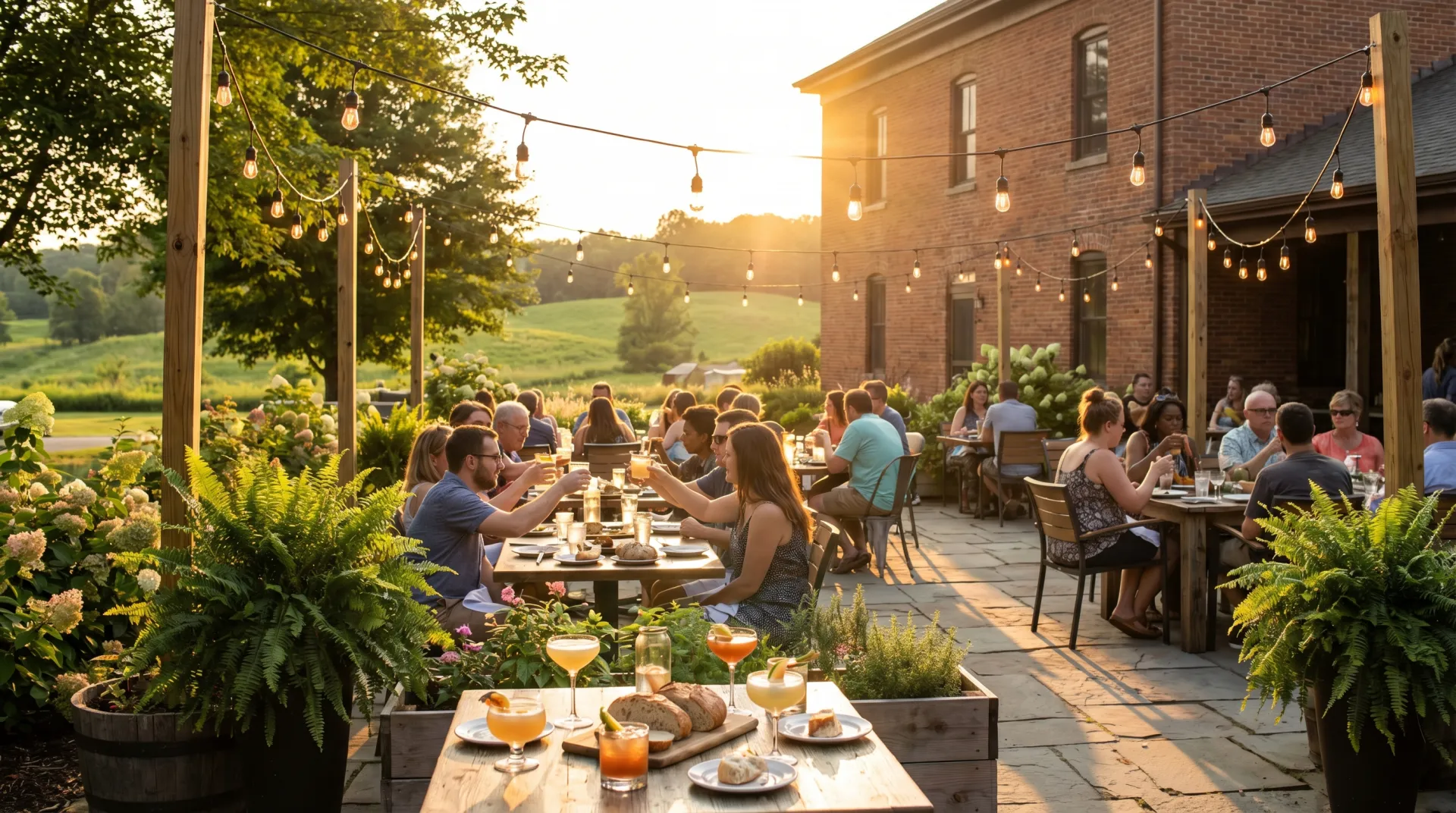
EGR's dining and retail scene centers on the Gaslight Village, the Wealthy Street commercial district that sits steps from Reeds Lake and East Grand Rapids High School. The village is compact and walkable, with restaurants, shops, and services clustered along a few blocks.
Bowdies Chophouse anchors the upscale dining end, offering steakhouse fare in a setting that has drawn comparisons to Manhattan restaurants. Olive's Restaurant and Bar is a neighborhood staple serving seasonal American fare with fine ingredients in a casual atmosphere. Jose Babushka's brings a Mexican-Polish fusion concept to a renovated Gaslight Village space.
Gaslight Kitchen serves Chinese-American dishes in a modern setting. Big Bob's Pizza is a family-friendly bar and restaurant with free popcorn, big-screen TVs, and a full bar alongside its pizza menu. The Bagel Kitchen relocated to EGR in 2020 and has become a morning staple for hand-rolled, boiled bagels.
For specialty shopping, Fromage is a boutique gourmet and gift store carrying artisan food products and curated gifts. Laurel and Jack is a locally owned clothing boutique for the whole family.
The Gaslight Village also includes cafes, ice cream shops, a dry cleaner, a pharmacy, and other everyday services. Its proximity to the lake and the high school creates a natural gathering point for the community, particularly during warmer months when outdoor seating fills the sidewalks.
Parks
Parks and Recreation
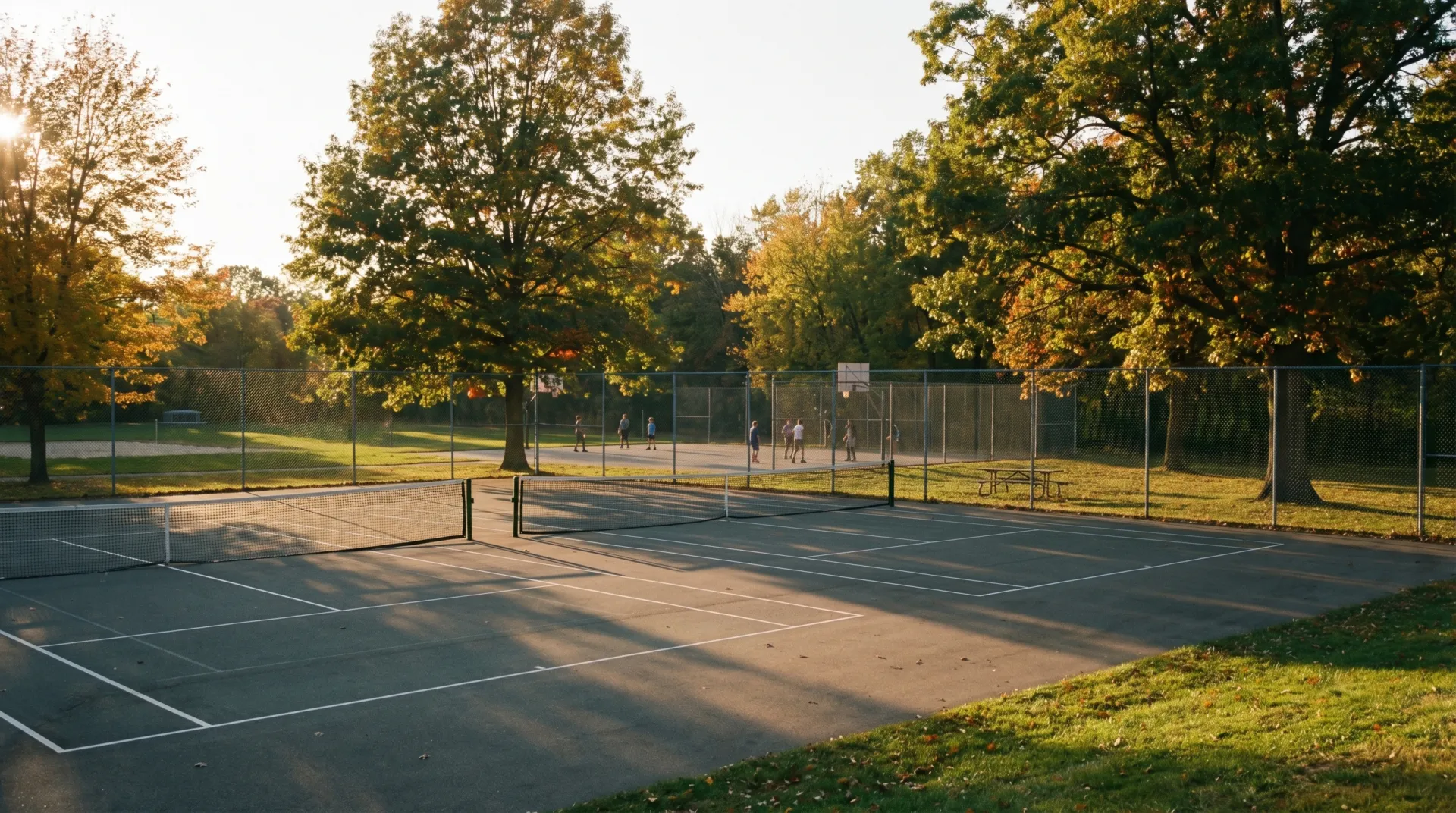
East Grand Rapids maintains 10 parks and natural areas plus five public school sites, totaling 179 acres of public-use land. For a city of 3.4 square miles, that is a substantial allocation of green space.
Reeds Lake is the city's centerpiece, a 295-acre all-sports lake that supports boating, kayaking, paddleboarding, fishing, and swimming in summer, and ice skating, cross-country skiing, and ice fishing in winter. The Reeds Lake Trail, a 4.2-mile loop, encircles the lake and passes through parks, wooded areas, wetlands, and residential neighborhoods via a combination of sidewalks, paved pathways, and boardwalks.
John Collins Park (650 Lakeside Dr) sits on the shore of Reeds Lake approximately 0.2 miles from Gaslight Village. Despite being only three acres, it packs in a public boat launch, shore walk, overlook decks, rain gardens, picnic tables, and a stage area that hosts summer concerts, outdoor movies, and the annual Fourth of July celebration.
Waterfront Park provides additional lake access and green space along the Reeds Lake shoreline. Manhattan Park, Hodenpyl Woods, and Remington Park offer wooded walking areas, playgrounds, and neighborhood gathering spaces throughout the city.
The city's Parks and Recreation Department runs hundreds of programs annually, from youth sports leagues to adult fitness classes. The Reeds Lake Clothesline Art Fair, held along Lakeside Drive and Wealthy Street, features over 100 artist booths and is one of the region's longest-running art events.
Getting Around
Transportation
EGR's compact layout and proximity to downtown Grand Rapids make it one of the better-connected suburban communities in the metro, despite limited public transit.
Commute times: Downtown Grand Rapids is approximately five minutes west via Wealthy Street or Lake Drive. The commute to the medical corridor (Spectrum Health/Corewell, Mary Free Bed) is under 10 minutes. The Gerald R. Ford International Airport is roughly 15 minutes south via I-96.
Walkability: The city's Walk Score is 49, reflecting the residential character of most neighborhoods. However, for residents near Gaslight Village and the Reeds Lake Trail, daily errands and recreation are genuinely walkable. The compact city layout means most homes are within a mile of the commercial district.
Cycling: The Reeds Lake Trail provides a dedicated 4.2-mile loop for recreational and commuter cycling. Lake Drive and Wealthy Street connect EGR to downtown Grand Rapids and the broader city bike network. EGR is one of the more bike-friendly communities in the metro for practical cycling.
Public transit: The Rapid operates routes along Wealthy Street and Lake Drive, providing bus connections to downtown Grand Rapids and Rapid Central Station. Service frequency is lower than in the city core, with 30- to 60-minute headways depending on route and time.
Street character: In 2006, the city invested $3 million in refurbishing Wealthy Street with new paving, decorative lighting, and pedestrian features. The resulting streetscape reinforces EGR's walkable, small-city identity.
Community
Community
East Grand Rapids operates under a council-manager form of city government. The city offices, Parks and Recreation Department, and engineering operations are housed in the Community Center Complex on Wealthy Street, which also contains the East Grand Rapids branch of the Kent District Library.
The East Grand Rapids Branch Library is a nearly 30,000-square-foot facility that is one of the largest KDL branches in the system. The library hosts programs, events, book sales, and meeting space. The Friends of the East Grand Rapids Library is an active volunteer organization that supplements programming and raises funds through used book sales and other events.
The East Grand Rapids Community Foundation is a 501(c)(3) organization that secures financial and community support for services, programs, and projects that enhance the quality of life for residents and visitors. The foundation has funded park improvements, community events, and public art projects.
The city's annual events calendar reflects its close-knit character. The Fourth of July Celebration begins with a community parade through the streets, continues with family activities at Collins Park, and ends with fireworks over Reeds Lake. The Reeds Lake Clothesline Art Fair brings over 100 artist booths to Lakeside Drive and Wealthy Street. Rhythms and Reels at Collins Park offers summer concerts and outdoor movies. Art on Reeds Lake and various charity athletic events round out the seasonal calendar.
The overall community feel in EGR is engaged and neighborhood-oriented. Block parties, school events, and lake activities create a social fabric that is denser than most suburbs. The small geographic footprint means residents encounter each other regularly at the lake, the library, and the Gaslight Village shops.
History
History
East Grand Rapids was first settled in 1834 when the Reed family arrived from New York State. Originally part of Paris Township, it is one of the oldest suburbs in Kent County. By the 1870s, the Reeds Lake area had become a popular summertime day trip destination for Grand Rapids residents who traveled to the lake for picnicking, boating, swimming, and leisure.
The most celebrated chapter of EGR's early history is Ramona Park, an amusement park owned and operated by the Grand Rapids Street Railway Company that served as a destination for thousands of families between 1881 and 1955. The park featured the Jack Rabbit Derby Racer, a double-track wooden roller coaster built in 1914 with an 80-foot drop. The Ramona Theatre Pavilion, which could seat 1,700 people, overlooked Reeds Lake and hosted plays, musicals, vaudeville acts, silent films, and concerts from 1897 until 1949. Regularly scheduled excursion steamboat rides on Reeds Lake began in 1883 when Captain John Honore Poisson established his business.
Residents voted to establish the Village of East Grand Rapids in 1891. The village was incorporated as a home-rule city in 1926, when the population was approximately 1,300. Through the early-to-mid twentieth century, the city developed rapidly as a residential community, with the Tudor, Colonial, Craftsman, and Cape Cod homes that define the city's architectural character today.
After Ramona Park closed in 1955, the site was redeveloped. The current Gaslight Village, with its strip of shops, restaurants, and condos, now occupies the land where the amusement park once stood. The name "Gaslight Village" references the decorative gas lamps that were installed along Wealthy Street, evoking the district's connection to EGR's resort-era past.
Investment
Investment Potential
East Grand Rapids presents a specific investment profile: high barriers to entry, limited supply, and strong long-term appreciation driven by the school district and lake proximity. This is not a cash-flow rental market. It is an equity-growth and lifestyle market.
The median sale price of approximately $626,000 and a homeownership rate above 94% mean that rental properties are rare and the rental market is very thin. When rentals do appear, they command premium rents driven by families seeking temporary access to the EGR school district.
For investment-minded buyers, the primary opportunity in EGR is the teardown-and-rebuild or major renovation play. The spread between dated, smaller homes on desirable lots (particularly near Reeds Lake or the Gaslight Village) and fully updated or new-construction comparables can be significant. A 1,600-square-foot 1940s bungalow on a good lot might sell in the low $500s; a rebuilt or extensively renovated home on the same lot could list above $900,000.
Lakefront properties represent the highest-value segment. Homes with Reeds Lake frontage and private dock access have consistently appreciated faster than the city average and show strong resilience during market downturns.
The city's fully built-out status is the fundamental constraint and the fundamental investment thesis. No new land is being created. Every sale is a resale. This scarcity, combined with the school district premium and lake access, supports long-term price stability and appreciation.
Important for rental investors: EGR's zoning is predominantly single-family residential. Multi-unit investment properties are extremely rare. Short-term rental regulations apply. Investors should underwrite to long-term hold and appreciation, not cash-flow rental income.
Nathan's Take
The local read.
EGR trades square footage and lot size for location and school district. You are paying for the zip code, proximity to Reeds Lake, and the EGR schools, not for a sprawling floor plan. A 2,000-square-foot Tudor on a quarter-acre lot in EGR will cost more than a 3,500-square-foot Colonial on a full acre in Cascade or Ada. That is the fundamental tradeoff, and buyers need to be clear about what they value.
Inventory is genuinely tight because the city is built out. There is no farmland being subdivided, no new phases of construction. Every home that sells was already someone else's home. Most sales happen within days of listing, and multiple-offer situations are common. If EGR is on your list, get pre-approved before you start looking, and be ready to write an offer the day you tour a property.
Something that catches buyers off guard: the property tax rate in EGR is higher than most east-side communities. The city's own schools, the city services, and the compact infrastructure all get funded through millage. Budget for property taxes carefully when calculating your monthly payment.
If you want a walkable community with a real commercial village, lake access, top schools, and a five-minute drive to downtown, EGR is the answer. The tradeoff is that you will pay a premium for every square foot, and you will compete with other buyers who want exactly the same thing.
Location
East Grand Rapids on the map
Boundary of the East Grand Rapids area. Drag to explore the surrounding neighborhoods and commute corridors.
Listings
Browse homes in East Grand Rapids.
See what is currently listed in East Grand Rapids and the surrounding area.
Resources
Helpful links
Official city government site with departments, services, parks, and community information
District homepage with enrollment, school directory, academic programs, and calendar
Shops, restaurants, events, and business directory for EGR's commercial district
Parks directory, Reeds Lake Trail map, recreation programs, and facility information
Library hours, programs, event calendar, and community room information
Community foundation supporting EGR programs, projects, and quality-of-life initiatives
Property tax estimator and current millage rate breakdown for East Grand Rapids
Visitor guide covering EGR dining, shopping, parks, and attractions
Local history archives, photographs, and historical information about East Grand Rapids
Volunteer organization supporting library programming through book sales and fundraising
Questions about East Grand Rapids?
Ask Nathan.
Send a note with what you are looking for in East Grand Rapids, price range, timeline, school or commute priorities, and Nathan will follow up.
Contact
Get in touch
Send a message and Nathan will get back to you within one business day.
Message received
Thank you. Nathan will be in touch soon.
Nathan typically responds within one business day.
— Nathan Strodtbeck, REALTOR®