Rockford
Small-city charm on the Rogue River
City · Kent County
Rockford at a glance
Rockford is a small city north of Grand Rapids with a walkable downtown, the Rogue River dam, the White Pine Trail, and Rockford Public Schools.
- Median Price
- $444,000
- Median $/sqft
- $236
- Median DOM
- 17 days
- Walk Score
- 37
- Population
- 6,177
- Median Income
- $107,121
- School District
- Rockford Public Schools
- Tax Millage
- 31.5
Market data as of 2025-06. Population: U.S. Census Bureau, 2020 Decennial Census.
Overview
Overview
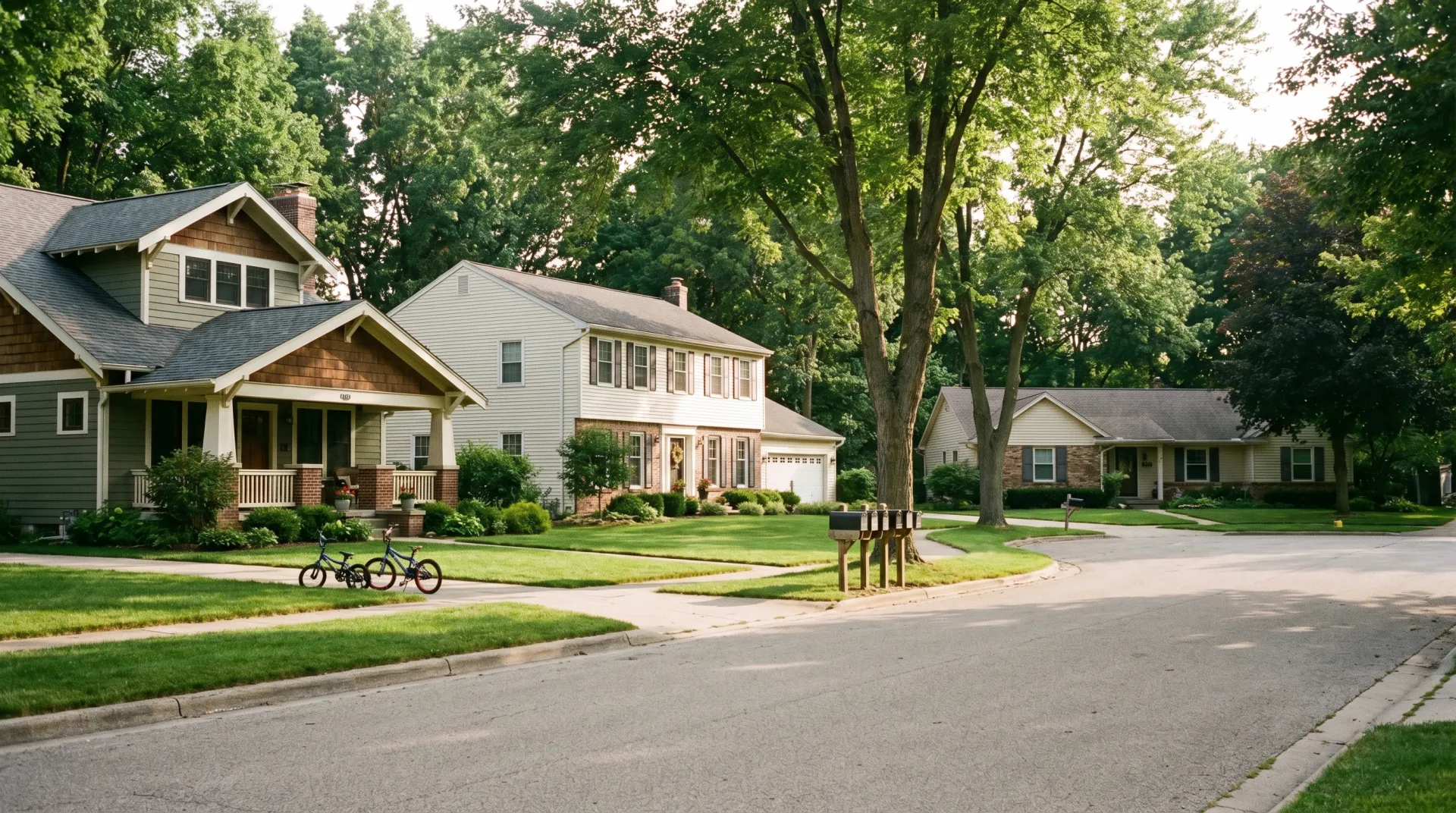
Rockford sits about 12 miles north of Grand Rapids along the Rogue River. Unlike most of the metro's east-side suburbs, Rockford is its own small city with a walkable historic downtown, a dam and millpond in the center of town, and the Fred Meijer White Pine Trail running through it. The surrounding townships (Algoma, Cannon, Plainfield, Courtland) feed into Rockford Public Schools and are often listed under "Rockford" even when they are technically unincorporated.
The city's identity centers on its downtown, which packs more than 20 restaurants, shops, and cafes into seven walkable blocks along the Rogue River. The Rockford Dam overlook is one of the most photographed spots in the metro. The White Pine Trail, a 92-mile paved state park trail connecting Comstock Park to Cadillac, passes directly through downtown Rockford alongside the river, making the city a natural stopping point for cyclists, runners, and walkers.
Rockford's population of approximately 6,200 within the city limits grows considerably when the surrounding township areas within the Rockford school district are included. The broader Rockford area combines small-city walkability with rural and suburban residential options in the surrounding countryside, creating a community that appeals to buyers who want a genuine downtown without the price tag of East Grand Rapids.
Real Estate
Real Estate
Recent listing data puts the median price for homes in the Rockford area in the $444,000 range, with individual sales running from the low $300s for smaller in-town homes up into seven figures for lakefront and large-acreage properties in the surrounding townships. Price per square foot averages around $236, with homes selling in a median of 17 days.
What to expect:
- In-town homes: Older homes within the city limits tend to sit on compact lots (0.15 to 0.35 acres) and include a mix of Victorian-era houses, Craftsman bungalows, mid-century ranches, and Cape Cods. These typically range from 1,200 to 2,500 sq ft and represent the most affordable segment of the Rockford market
- Suburban subdivisions: The 1990s through 2010s subdivisions in the surrounding townships offer three- to four-bedroom homes on quarter-acre to half-acre lots, typically 1,800 to 3,500 sq ft. These make up the bulk of the inventory
- New construction: Active builders are developing former farmland in Algoma, Cannon, and Courtland townships. New builds in the Rockford district commonly list from $450,000 to $700,000+
- Lake and river properties: The surrounding townships contain multiple inland lakes and the Rogue River corridor. Waterfront properties command premium pricing and move quickly
- Acreage: Five-acre-plus parcels with newer custom homes are available in the outer townships, typically priced above $600,000
- Condos and townhomes: Limited inventory compared to the east-side suburbs. A few condominium developments exist, but Rockford's housing stock is predominantly single-family
The Rockford market is competitive, scoring 86 out of 100 in market heat indicators. Well-priced homes inside the city limits tend to sell within days.
Architecture
Architecture
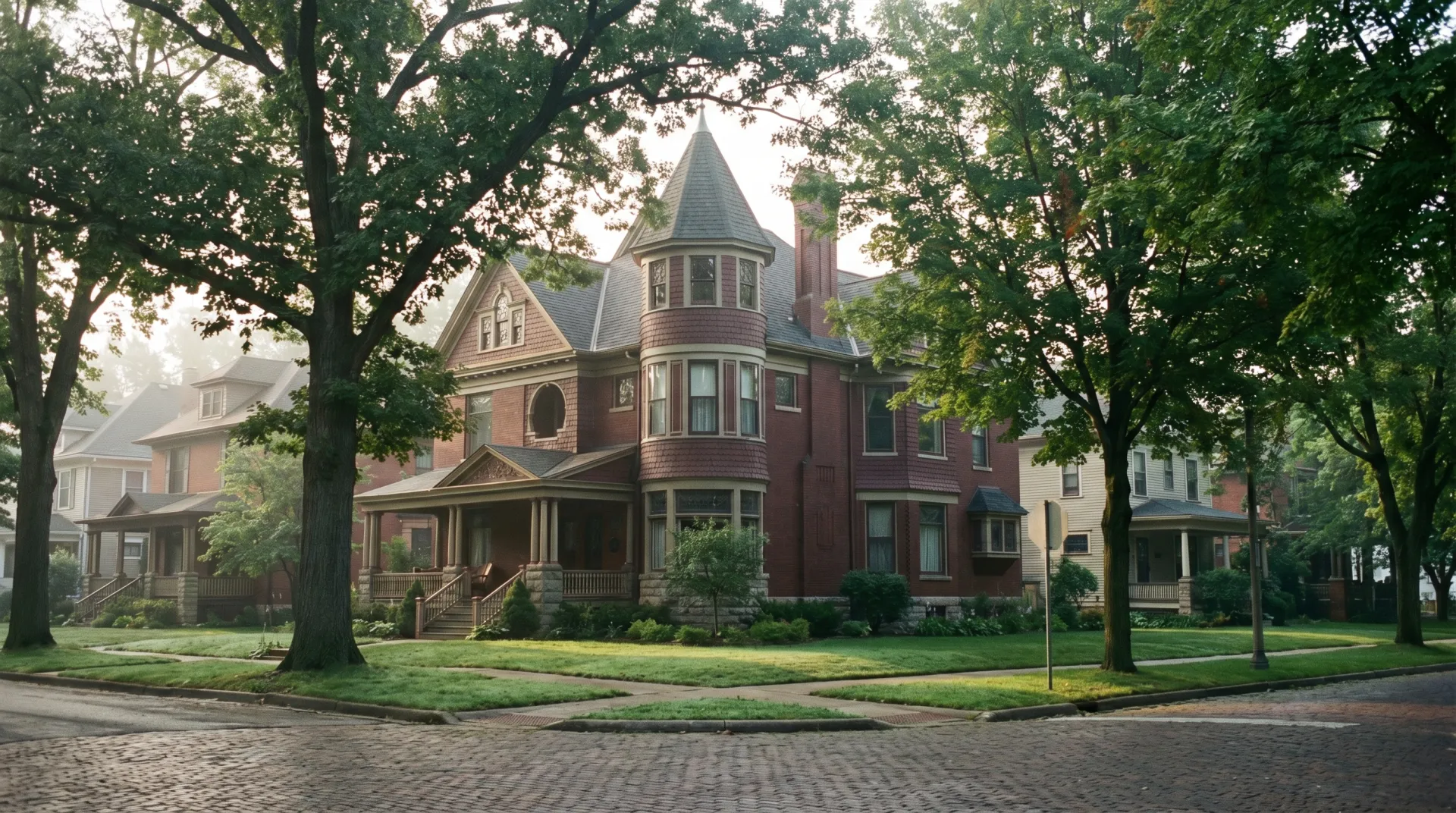
Rockford's architectural character varies significantly between the historic downtown core and the surrounding suburban and rural areas.
Within the city limits, the oldest homes date to the late 1800s and early 1900s, reflecting Rockford's origins as a lumber and manufacturing town. Victorian-era homes, including Queen Anne and Folk Victorian styles, are found along the streets closest to downtown. These feature decorative woodwork, asymmetrical facades, and covered porches characteristic of the era. Craftsman bungalows and American Foursquare homes from the 1910s through 1930s fill out the older residential blocks.
Mid-century development added ranch-style and Cape Cod homes from the 1950s through 1970s, primarily on the expanding edges of the city. These homes are typically single-story or story-and-a-half designs on larger lots than the downtown core.
The newer subdivisions in the surrounding townships, built from the 1990s onward, feature Colonial Revival, Craftsman, transitional, and modern farmhouse styles. These homes are larger than their in-town predecessors, with open-concept floor plans, three-car garages, and lots that take advantage of the rural setting.
Downtown Rockford's commercial architecture includes a mix of renovated storefronts from the early 1900s, maintaining the small-town character that draws visitors to the district. The dam overlook, boardwalk, and river-adjacent buildings create a visual identity tied to the Rogue River that is distinct from any other community in the Grand Rapids metro.
Schools
Schools
Rockford Public Schools (RPS) serves the city and surrounding townships with approximately 7,600 students across 14 schools. The district is well-regarded, consistently ranking among the stronger districts in the Grand Rapids metro.
Rockford High School serves approximately 1,800 students in grades 9-12 and is ranked 72nd in Michigan by U.S. News. The school earned a 5-star rating from SchoolDigger, ranking 50th out of 743 Michigan high schools in the 2023-2024 school year. Math and reading proficiency both rank in the top 20% statewide.
The district operates multiple elementary schools and middle schools distributed across the attendance area. The elementary schools serve different geographic zones based on home address, and the district provides boundary lookup tools for enrollment verification.
Buyers should be aware that the Rockford school district boundary extends well beyond the city limits into Algoma, Cannon, Courtland, Plainfield, and portions of other townships. Homes marketed as "Rockford" in these outlying areas typically reference the school district, not the city. As with all metro-area communities, verify the exact district boundary before making an offer, especially near the edges of the attendance area where boundaries may not follow obvious geographic lines.
Private school options accessible from Rockford include several area Christian schools and parochial elementary schools within a 15- to 25-minute drive.
Dining
Dining
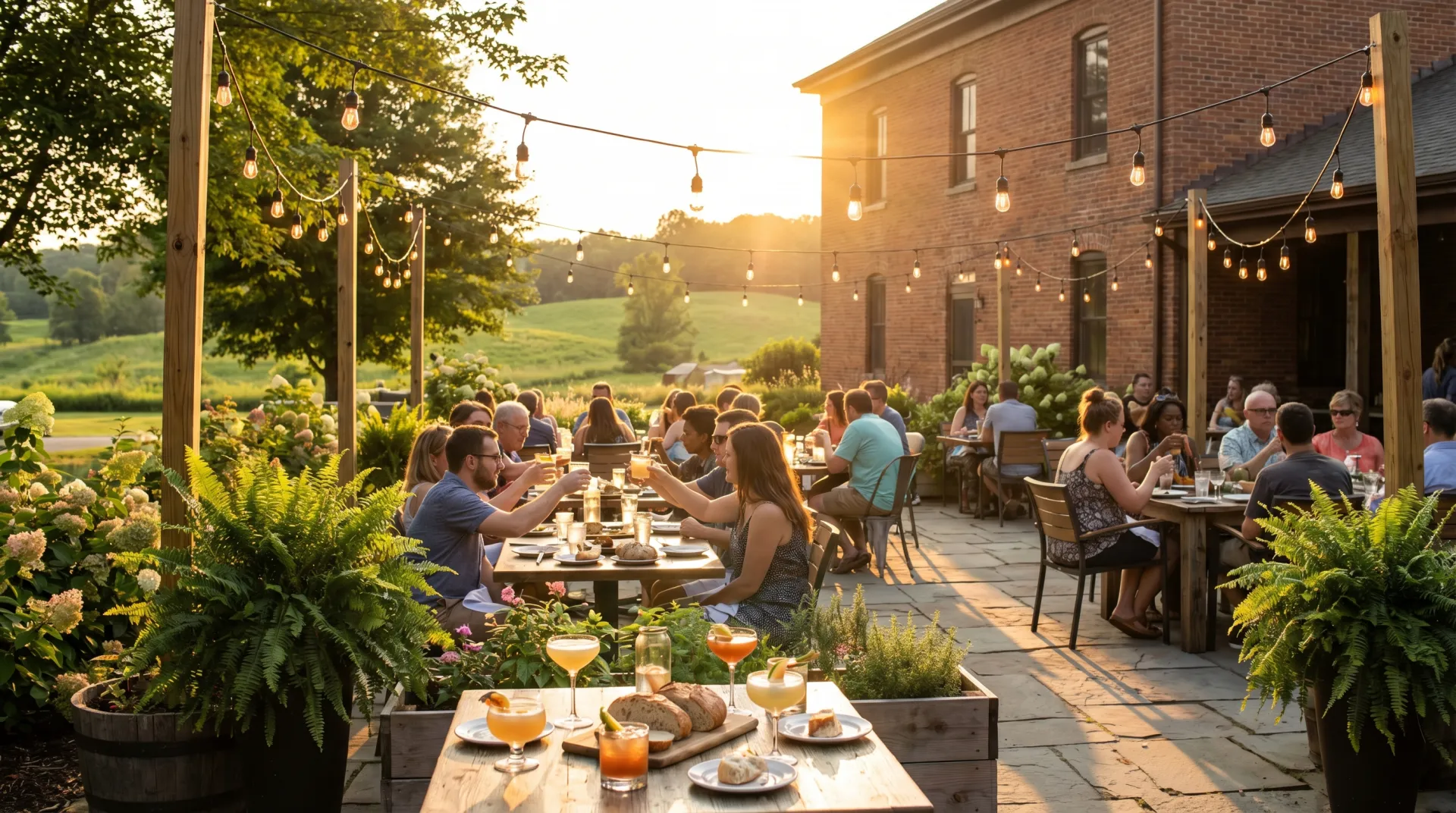
Downtown Rockford packs more than 20 dining and drink destinations into seven walkable blocks along the Rogue River, giving the city a restaurant density that is unusual for its size.
The Corner Bar has been a Rockford landmark since 1935, famous for its neon sign and the "World Famous Hot Dog Hall of Fame." The bar was completely rebuilt after a 2017 fire but maintained its friendly neighborhood atmosphere and historic character. Bridge Street Burger Shack is a throwback to old-school burger joints with freshly ground, never-frozen beef and vegan and vegetarian options.
Woodfire Brick Oven Pizza specializes in rustic wood-fired pizza with fresh and locally grown ingredients alongside regional Italian dishes. Sisters Thai Cafe serves authentic Thai and Laotian cuisine with fresh, light recipes. Rogue River Tavern is a sports bar and restaurant situated in the heart of downtown, convenient to the dam overlook, shops, and the White Pine Trail.
The downtown dining scene extends beyond sit-down restaurants to include cafes, ice cream shops, and specialty food stores. The Rogue River Blues Series, a free outdoor summer concert series, pairs live music with the downtown restaurant scene and draws visitors from across the metro.
Grocery and everyday shopping are available along Northland Drive (US-131 business route) and in the Plainfield Township commercial areas south of the city. For a broader selection of chain restaurants and retail, the 10 Mile Road and Plainfield Avenue corridors are a short drive south.
Parks
Parks and Recreation
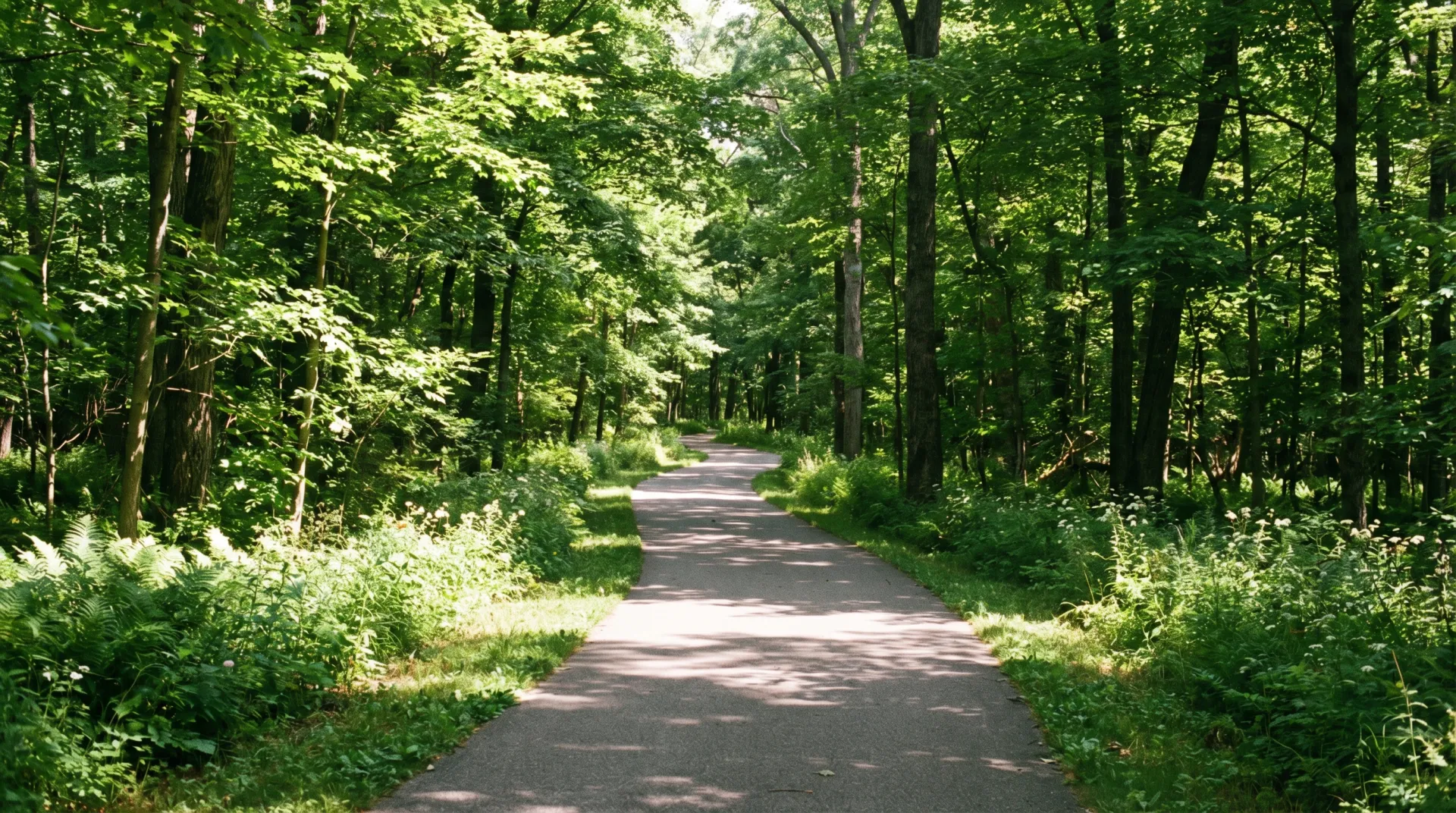
Rockford's park system is anchored by the Rogue River, the White Pine Trail, and a network of smaller neighborhood parks that collectively make the city one of the best communities in the metro for trail-based recreation.
The Fred Meijer White Pine Trail State Park is a 92-mile paved linear trail connecting Comstock Park to Cadillac, and Rockford is one of its signature stops. The trail enters the city approximately 8.2 miles from its southern start, crossing the Rogue River on a historic railroad trestle. Within the city, the trail runs alongside the river and through downtown, providing direct access to restaurants, shops, and the dam overlook. The trail is used year-round by cyclists, runners, walkers, and cross-country skiers.
The Rockford Dam Overlook is a renovated viewing area that provides a panoramic view of the dam, the millpond, and the Rogue River as it drops through the center of town. The overlook includes benches, picnic areas, and fishing access.
Richardson Sowerby Park features a covered pavilion, BBQ grills, playground, fishing access, and restrooms on the east bank. A pedestrian bridge connects to the west bank, which includes a fitness course, softball field, and dog park. The park is directly accessible from the White Pine Trail and Main Street.
Memorial Park features the Rum Creek Nature and Fitness Trail, a path along Rum Creek, a pristine cold-water trout stream with wetlands, forested areas, and a scenic creek corridor.
The Rogue River itself is a significant recreational asset. The river supports trout and salmon fishing, kayaking, and canoeing, with multiple access points in and around the city. The river's designation as a state-designated trout stream reflects its water quality and ecological value.
Getting Around
Transportation
Rockford is car-dependent for most daily commuting and errands, with a Walk Score of 37 reflecting the small-city and suburban character of the broader area. However, the compact downtown core is genuinely walkable, with restaurants, shops, and the trail system accessible on foot for residents who live near the center of town.
Commute times: Downtown Grand Rapids is approximately 20 to 25 minutes south via US-131. The Gerald R. Ford International Airport is roughly 30 to 35 minutes southeast. The commute is the primary tradeoff for Rockford buyers compared to the east-side suburbs.
US-131 is the main highway connecting Rockford to Grand Rapids and points south. Northland Drive serves as the business route through town. 10 Mile Road provides east-west access to the East Beltline (M-44) and the broader highway network.
Public transit: The Rapid bus system does not currently extend to Rockford. Residents who need public transit would drive south to a park-and-ride or transit hub in the Plainfield or Alpine corridors.
Cycling and trails: The White Pine Trail is Rockford's signature cycling and pedestrian asset, providing a paved 92-mile corridor for both recreational and practical transportation. The trail connects Rockford to Comstock Park and the broader Grand Rapids trail network to the south. Within the city, the trail and downtown sidewalk network make car-free errands practical for residents in the core.
The tradeoff is clear: Rockford offers a real downtown and exceptional trail access, but the commute to Grand Rapids employment centers is 20 to 25 minutes on US-131. For buyers who work downtown or need frequent airport access, the drive time is the key consideration.
Community
Community
Rockford operates under a council-manager form of city government. The city offices are located in the downtown area. Despite a city-limits population of approximately 6,200, the broader Rockford school district area encompasses a significantly larger community across multiple surrounding townships.
The Krause Memorial Library is downtown Rockford's public library, offering weekly storytimes, an early literacy play space, a teen area, and community programming. The library is undergoing an expansion, with a new Library Plaza planned for construction beginning in spring 2026 to serve as a flexible outdoor space for library and community events. The Nordlof Center, operated by the library, provides a multi-use performance, meeting, and classroom venue with high-speed Wi-Fi for library and community events.
The Rockford Area Historical Museum (21 S Monroe St NE), established in 1975 and operated by the Rockford Area Historical Society, tells the story of the city from its logging origins through the present with historic artifacts and video memories. Admission is free, and the museum is open Tuesday through Sunday.
The Rockford Chamber of Commerce is the primary organizer of the city's major events. The Start of Summer Celebration (June, running since the 1960s) features a carnival, parade, food and craft vendors, live entertainment, and kids' activities over a multi-day weekend. Harvest Fest (September) brings family activities, crafts, and fall celebrations to downtown. The Rogue River Blues Series offers free outdoor concerts during summer months.
The Rogue River Artists Association supports local visual artists and showcases member works. The Heart of Rockford business district organization promotes downtown shops and events. Community identity in Rockford is anchored by the downtown, the river, and the trail, creating a small-city feel that is distinct from the suburban character of most Grand Rapids metro communities.
History
History
The Rockford area was inhabited by Native American peoples, including the Hopewell, Mascouten, and Ottawa, who used trails through the region, though archaeological evidence of permanent settlements in the Rogue River valley is limited.
The first significant European-American settler was Smith Lapham, who arrived in Kent County in 1843 after living in Washtenaw County for 18 years. Lapham came to the Rogue River to help complete a dam and sawmill begun by William Hunter, who gave Lapham 40 acres on the east side of the river in return. Lapham built his own sawmill on his land, completing it by 1844. The original dam, which powered the sawmill, stood at the site of the current Rockford Dam.
By the fall of 1845, the settlement had about five houses. Since the community stood largely on land owned or sold by Smith Lapham, it became known as "Laphamville." When a newly arrived resident from Rockford, Illinois proposed renaming the settlement after his former town, the name "Rockford" was narrowly approved.
The community's early economy was based on the lumber industry, supported by the dam and the river's power. At the turn of the twentieth century, a shoe factory and tannery diversified the local economy. Rockford incorporated as a city in 1935.
The White Pine Trail's history is tied to the Grand Rapids and Indiana Railroad, which laid the first tracks from Grand Rapids to Cedar Springs in 1867. The rail line eventually extended north to Cadillac. After rail service ended, the corridor was converted into the Fred Meijer White Pine Trail State Park, officially opened in 1995. The trail transformed Rockford from a small city with a modest downtown into a regional destination for trail-based recreation.
Modern Rockford has invested significantly in its downtown and riverfront. The dam overlook has been renovated, the White Pine Trail boardwalk has been expanded, and new restaurant and retail spaces have filled previously vacant storefronts. The result is a downtown that attracts visitors from across the metro while maintaining its small-city character.
Investment
Investment Potential
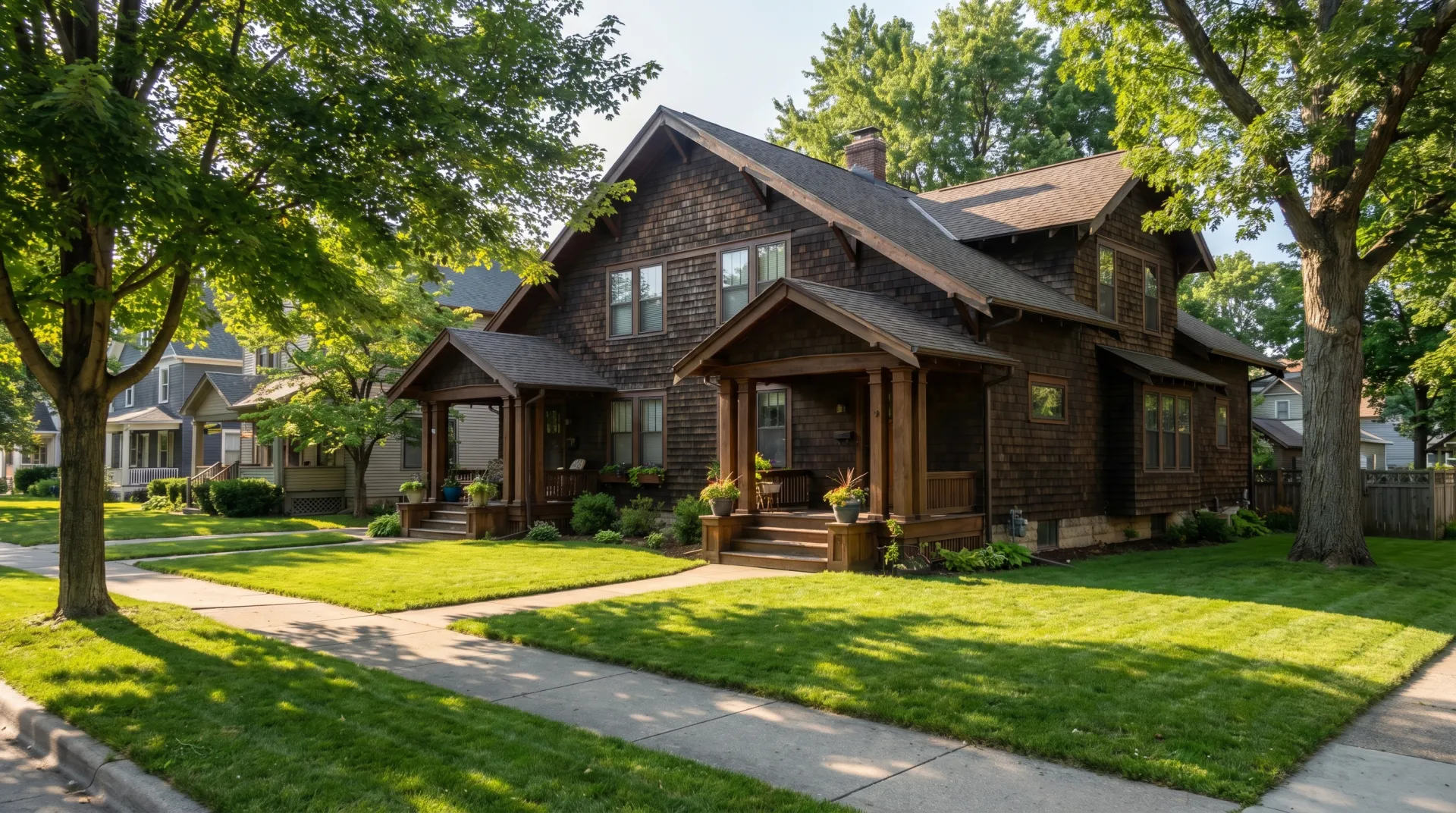
Rockford offers an investment profile that balances accessibility with strong long-term fundamentals. The median sale price around $444,000 is significantly lower than the east-side suburbs (Ada, EGR, Cascade), making it more approachable for both owner-occupants and investors.
Property appreciation has been strong, with home values increasing approximately 6.7% over the past year. The combination of Rockford Public Schools, the walkable downtown, and the White Pine Trail creates consistent buyer demand that supports long-term price stability.
For rental investors, the market shows promise. Average rental prices in the Rockford area run approximately $2,150 per month, with steady demand driven by families seeking the school district and professionals who value the small-city lifestyle. The rental market is more accessible than the east-side suburbs, where extremely high owner-occupancy rates leave little rental inventory.
The renovation opportunity is concentrated in the older in-town housing stock. Smaller homes from the early-to-mid twentieth century on compact downtown lots can be purchased at a meaningful discount to newer suburban construction. The spread between dated and updated comparables supports forced appreciation through strategic renovation.
New construction in the surrounding townships targets the $450,000 to $700,000+ range, with builders developing former farmland in Algoma, Cannon, and Courtland. The ongoing conversion of agricultural land to residential use provides more development capacity than the fully built-out east-side communities.
Key consideration: The commute to downtown Grand Rapids (20 to 25 minutes via US-131) is the primary factor that keeps Rockford prices below the east-side suburbs. For investors, this means the school-district premium and downtown walkability support values, but the commute distance creates a natural ceiling relative to communities closer to Grand Rapids employment centers.
Nathan's Take
The local read.
Rockford attracts buyers who want a real downtown they can walk to without paying East Grand Rapids prices. The seven blocks of shops and restaurants along the Rogue River, the dam overlook, and the White Pine Trail running through the center of town give Rockford a small-city character that you simply cannot find in the suburban east-side communities. It is the closest thing to a New England village center in the Grand Rapids metro.
The tradeoff is the commute. Twenty to twenty-five minutes to downtown Grand Rapids on US-131, and thirty-plus minutes to the airport. If your daily commute heads south, that time adds up. Rockford works best for buyers who work remotely, work in the northern suburbs, or value lifestyle over commute time.
Inventory in the city limits is thinner than the surrounding area suggests. When a well-priced home hits the market inside Rockford proper, it is usually gone within a week. The broader "Rockford area" (meaning the school district) has more inventory in the townships, but the character and walkability of in-town living does not extend to a subdivision five miles north.
For the buyer who wants a walkable downtown, river access, a strong trail network, and solid schools at a price point below the east-side competition, Rockford is the answer. Just be honest about the commute and be prepared to move quickly when the right property shows up.
Location
Rockford on the map
Boundary of the Rockford area. Drag to explore the surrounding neighborhoods and commute corridors.
Listings
Browse homes in Rockford.
See what is currently listed in Rockford and the surrounding area.
Resources
Helpful links
Official city government site with departments, parks, trails, and community information
District homepage with enrollment, school directory, boundary information, and academic programs
Downtown business directory, restaurant guide, shops, and event information
Business directory, community events including Start of Summer and Harvest Fest, and local resources
Trail maps, conditions, parking, and visitor information for the 92-mile paved trail
Library hours, programs, event calendar, and Nordlof Center community venue
Local history museum with artifacts and exhibits from Rockford's lumber-era origins to the present
Parks directory, trail maps, and recreation information for city parks and river access
Visitor guide covering Rockford dining, festivals, parks, and the White Pine Trail
Trail advocacy, volunteer opportunities, and updates on trail conditions and improvements
Questions about Rockford?
Ask Nathan.
Send a note with what you are looking for in Rockford, price range, timeline, school or commute priorities, and Nathan will follow up.
Contact
Get in touch
Send a message and Nathan will get back to you within one business day.
Message received
Thank you. Nathan will be in touch soon.
Nathan typically responds within one business day.
— Nathan Strodtbeck, REALTOR®