Heritage Hill
Where Grand Rapids history lives
Neighborhood · Kent County
Heritage Hill at a glance
Grand Rapids' oldest neighborhood and one of the largest urban historic districts in the U.S., with 1,300 homes spanning 60+ architectural styles.
- Median Price
- $330,000
- Median $/sqft
- $174
- Median DOM
- 36 days
- Walk Score
- 83
- Population
- 4,350
- Median Income
- $54,216
- School District
- Grand Rapids Public Schools
- Tax Millage
- 33.63
Market data as of 2026-03. Population: ACS 2020 5-year estimate (census tract approximation via AreaVibes/City-Data).
Overview
Overview
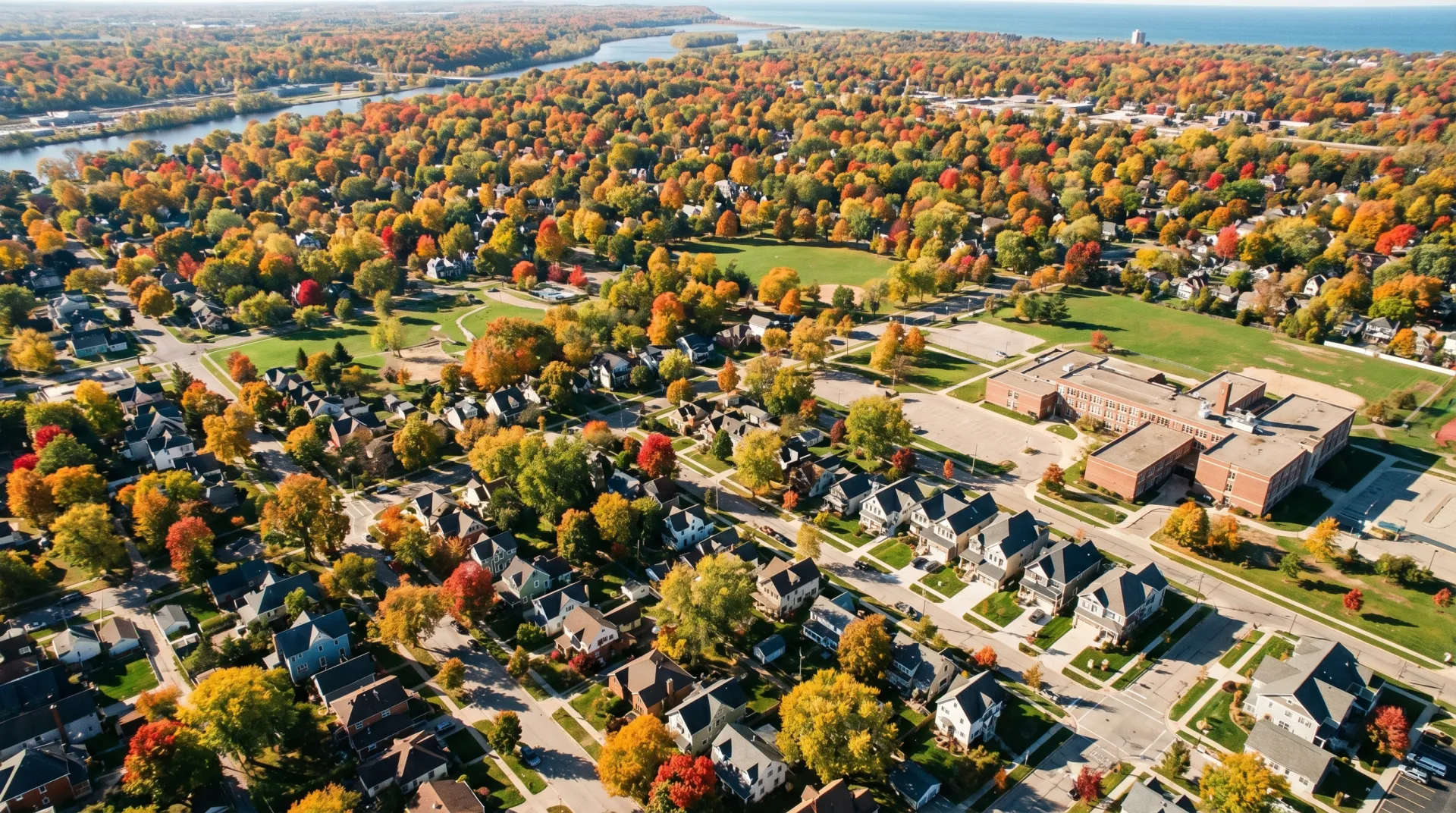
Heritage Hill is the oldest residential neighborhood in Grand Rapids, with homes dating to 1844. It stands as one of the largest urban historic districts in the United States, recognized by the American Planning Association as a "Great Place in America" in 2012 and named one of "America's Best Old House Neighborhoods" by This Old House magazine in 2011. The district contains approximately 1,300 structures representing more than 60 architectural styles, from Greek Revival to Prairie, creating a streetscape where no two blocks look alike.
The neighborhood's pace is residential and measured, with commercial activity concentrated at the edges rather than within the district itself. Cherry Street cuts through the southern portion and serves as a walkable corridor with restaurants, cafes, and a nonprofit theater. The Wealthy Street corridor runs along the southern boundary, offering an eclectic mix of locally owned shops, galleries, coffeehouses, and restaurants as part of the broader Uptown Grand Rapids commercial district. The Fulton Street Market, Grand Rapids' oldest farmers market (established in 1922), sits at the district's southwestern edge.
Walking through Heritage Hill, the visual impression is of dense, mature tree canopy overarching streets lined with large homes set on compact urban lots. Many properties retain original leaded glass windows, carved woodwork, wraparound porches, and period-specific ornamentation. The neighborhood's identity is deeply tied to its preservation history: in the late 1960s, the City recommended demolishing 75% of the neighborhood for urban renewal, and residents organized the Heritage Hill Association in 1968 to stop the demolitions. That preservation legacy defines the community today.
Real Estate
Real Estate
Heritage Hill's real estate market reflects the constraints and appeal of a built-out historic district with no vacant land for subdivision development. New units enter the market only through individual resales or occasional infill projects. The median sale price sits around $330,000, but the range is wide, from properties needing restoration in the $175,000 to $250,000 range to fully restored showpieces above $600,000. The key variable is renovation condition, not just square footage.
What to expect:
- Single-family homes: 1,800 to 5,000+ sq ft, 3 to 6 bedrooms, many with original architectural details. Average around 2,500 sq ft on 0.2-acre urban lots
- Multi-unit conversions: Many homes that appear as single-family from the exterior are actually duplexes, triplexes, or quads, a legacy of Heritage Hill's rental conversion history
- Condominiums: Limited inventory; condominium conversions of historic properties appear occasionally
- New construction: The Heritage Court project at Wealthy/Lafayette represents the first significant new residential construction in decades: 14 townhomes, 6 flats, and 2 renovated historic homes
- HOA prevalence: Uncommon; the majority of properties are standalone without HOA governance
Buyers should be aware that Heritage Hill's Historic Preservation Commission must approve all exterior changes to properties in the district. This does not prevent renovation; it ensures exterior modifications are consistent with the district's architectural character. Interior work is not subject to review. Factor in HPC approval timelines when planning exterior projects.
Architecture
Architecture
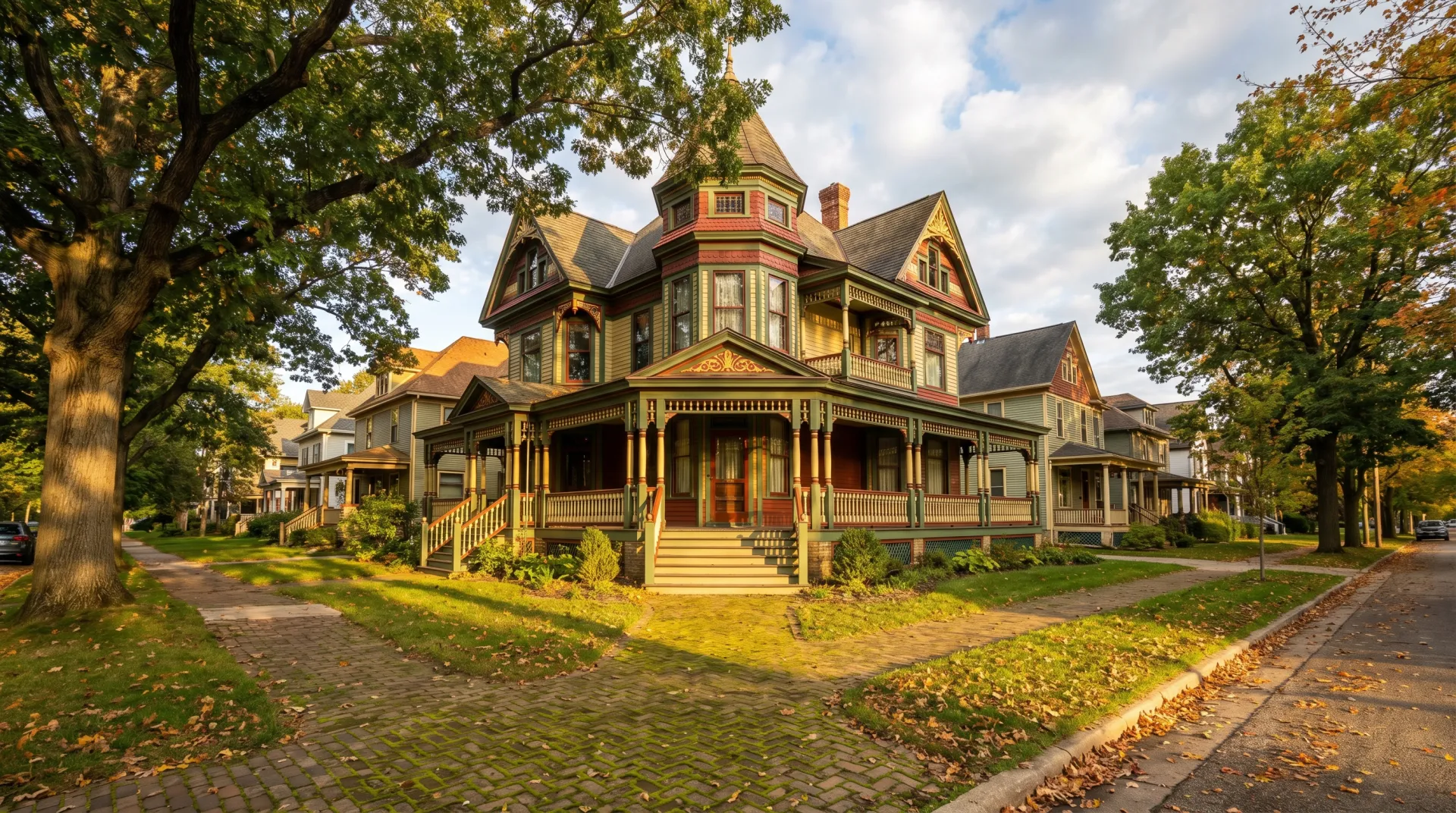
Heritage Hill contains more than 60 identified architectural styles. Nearly every style of American residential architecture from Greek Revival through Prairie is represented here. The most prominent include Greek Revival, Italianate, Second Empire, Queen Anne, Shingle Style, Colonial Revival, Tudor Revival, Craftsman, American Foursquare, Chateauesque, and Prairie Style.
The vast majority of homes were built between the 1840s and 1920s, with peak construction during Grand Rapids' lumber and furniture manufacturing boom of the 1870s to 1910s. The neighborhood's grandest mansions were originally built for the city's lumber barons, furniture magnates, judges, and legislators. Post-1920 construction is minimal.
Three properties stand out as architectural landmarks. The Meyer May House (1908 to 1909), designed by Frank Lloyd Wright, is considered one of the most completely restored Prairie Style residences in the country, featuring original art glass windows, skylights, and Ludowici-tiled hip roofs. It is open for free public tours, restored and maintained by Steelcase. The Voigt House (1895), a French Chateau-style mansion at 115 College SE, survives as a preserved Victorian-era time capsule operated as a museum by the Grand Rapids Public Museum. The Fox House (1888) at 455 Cherry Street is a Chateauesque-style mansion resembling a Scottish baronial castle, built for the Fox lumber family.
The entire district is listed on both the National Register of Historic Places and the Michigan State Register of Historic Sites (1971), and it was the City of Grand Rapids' first locally designated historic district (1973). The Grand Rapids Historic Preservation Commission oversees all exterior modifications within the district.
Schools
Schools
Heritage Hill falls entirely within the Grand Rapids Public Schools (GRPS) district. GRPS uses an attendance-area-based assignment system; the specific school serving a Heritage Hill address can be determined using the GRPS Attendance Area Finder tool online.
Congress Elementary (K-5, 1331 M.L.K. Jr St SE) is located near the eastern edge of Heritage Hill and is housed in a historic building. Coit Creative Arts Academy is a GRPS theme-school option offering an inquiry-based curriculum integrating visual arts, music, dance, and movement with core academics. For middle and high school, GRPS operates several options accessible to Heritage Hill residents, including Innovation Central High School and Grand Rapids Montessori (PK-12).
GRPS participates in Schools of Choice, meaning residents can apply to attend theme schools and Centers of Innovation throughout the district beyond their assigned neighborhood school. Private and charter options nearby include Grand Rapids Christian Schools, Sacred Heart Academy, and Grand Rapids Child Discovery Center (PK-5 charter).
Dining
Dining
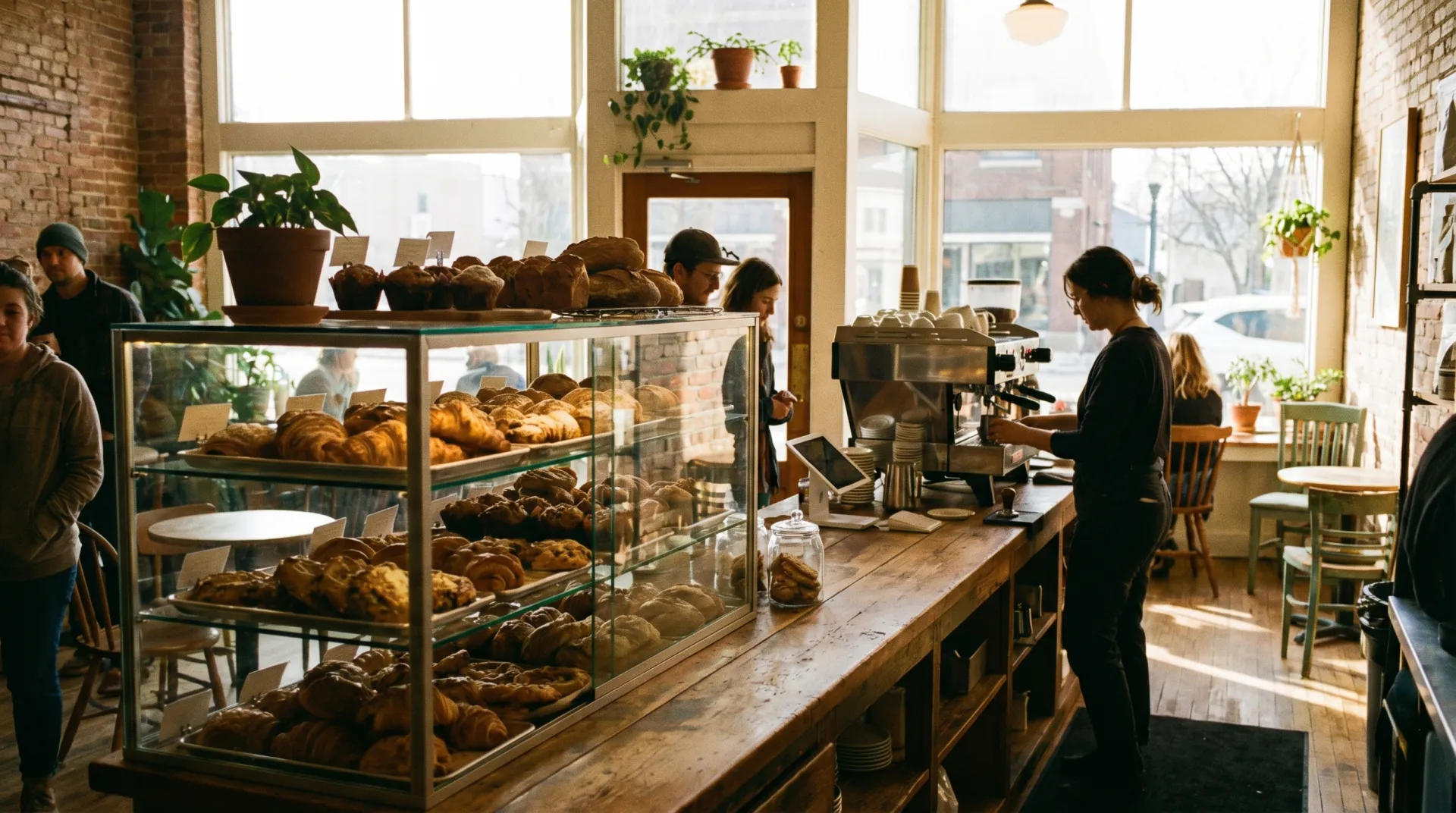
Heritage Hill's dining scene is anchored by the Cherry Street corridor running through the southern portion of the district and the Wealthy Street corridor along its southern boundary.
Grove (919 Cherry St SE) is the neighborhood's fine-dining anchor, a seasonal, farm-to-table New American restaurant that has won Grand Rapids Magazine's Restaurant of the Year six times. The menu rotates with Midwest farming seasons: three courses for $50 Tuesday through Thursday, or a five-course tasting for two at $125 on weekends. The Cherie Inn (969 Cherry St SE) is Grand Rapids' longest-running restaurant, operating since 1924 in a century-old building with original tin ceilings, known for Eggs Benedict and European-style brunch.
KCM, near Cherry Street, serves Japanese-Korean comfort food; its Hire Katsu Curry was named one of the 23 Best American Dishes of 2023 by the New York Times. The Commons (547 Cherry St SE) offers American comfort food and specialty cocktails in a 1970s-vintage setting with weekend brunch. Furniture City Creamery (958 Cherry St SE) makes handcrafted ice cream from local ingredients with a daily-changing menu including dairy-free and vegan options.
Just outside the district, Brewery Vivant occupies a refurbished historic funeral home in the East Hills area and serves Belgian-inspired beers with a from-scratch, locally sourced menu. The Heritage Restaurant at GRCC's Secchia Institute for Culinary Education is a student-run culinary "laboratory" offering lunch ($7 to $12) and dinner ($21 to $30) Tuesday through Thursday. The Fulton Street Market (May to October: Wednesday, Friday, and Saturday; November to April: Saturdays) hosts over 200 vendors during peak season and accepts EBT/SNAP.
Parks
Parks and Recreation
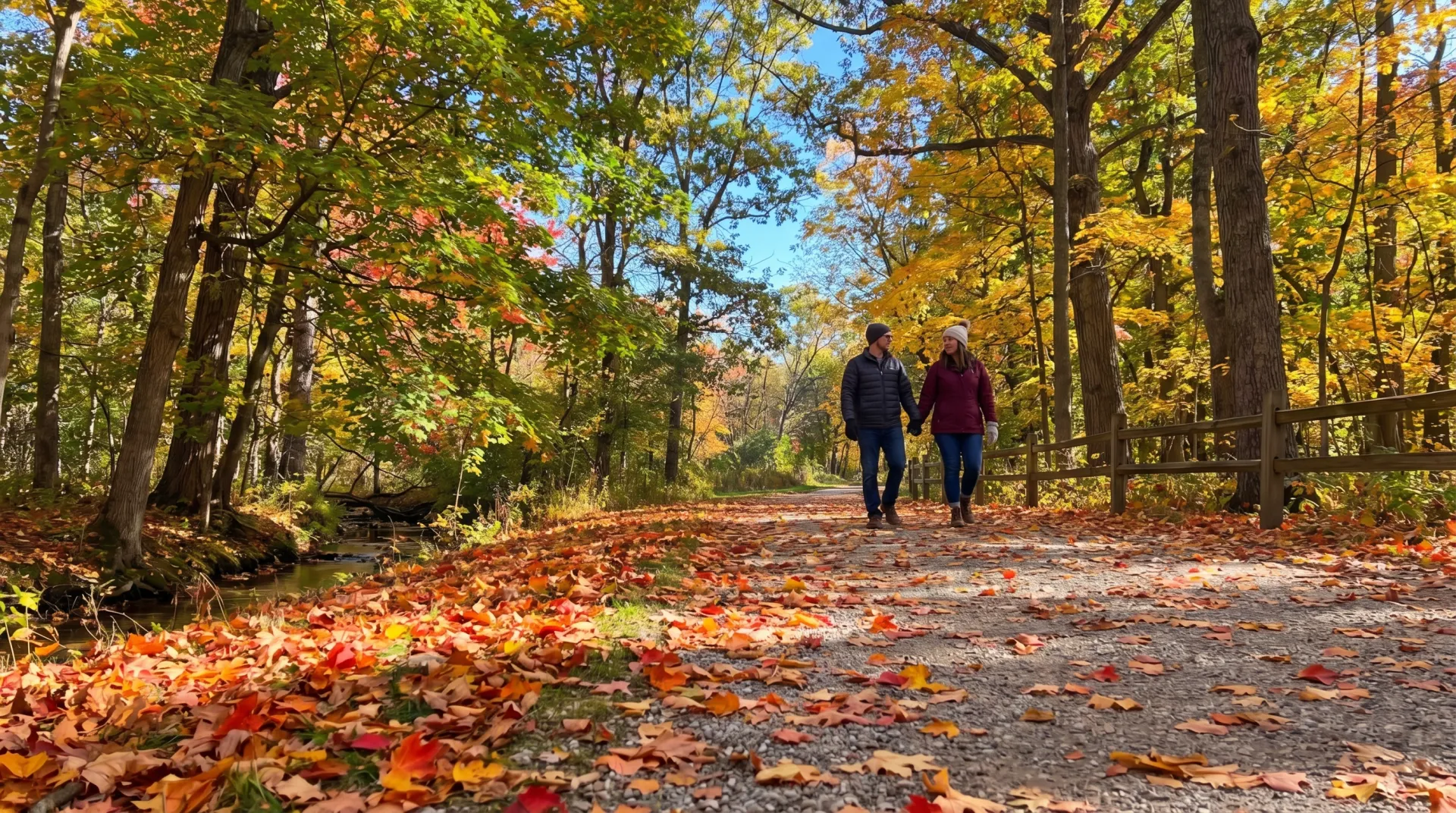
Pleasant Park (400 Pleasant St SE) is Heritage Hill's community gathering space, built in 2014 through a neighborhood fundraising effort. The park features a playground and benches and hosts Heritage Hill Association events including Movies in the Park and the annual Shakespeare in the Park performance each July.
Wilcox Park, located in and adjacent to Heritage Hill, is a larger multi-acre urban park with landscaped gardens, playgrounds, a splash pad, tennis courts, basketball courts, walking trails, and historic monuments including a Victorian-era fountain and a bronze statue of Grand Rapids' first mayor.
The neighborhood also features wayfinding signs that outline "A Pleasant Walk," a leisurely walking route past the district's most notable homes and over to Pleasant Park. The broader Grand Rapids trail network, including connections to the Kent Trails system and Grand River-adjacent paths, is accessible via short rides from the neighborhood. The Grand River itself runs approximately 0.5 to 1 mile west of Heritage Hill's western boundary, with riverfront access available via downtown paths and parks.
Getting Around
Transportation
Heritage Hill is one of the best-connected neighborhoods in Grand Rapids for non-car commuters. The western boundary sits approximately 0.5 to 1.0 miles from the center of downtown, a 3 to 5 minute drive or 10 to 15 minute walk.
Public transit access is excellent. Rapid Central Station (250 Grandville SW), the system's primary hub, is located directly adjacent to Heritage Hill's southwestern edge. Routes originating there include the Silver Line BRT (Route 90) with 10 to 15 minute peak headways, plus Routes 1 (Division/Madison), 2 (Kalamazoo), 5 (Wealthy), and 6 (Eastown). Fixed-route buses operate at 30 to 60 minute headways depending on route and time.
Bike infrastructure connects Heritage Hill to downtown and surrounding neighborhoods via the city's 80+ miles of bike lanes. Grand Rapids holds a Bronze-level Bike-Friendly Community award from the League of American Bicyclists. Major road access includes Lafayette Avenue (western boundary, connects to I-196), Wealthy Street SE (major east-west arterial), and Cherry Street SE.
Gerald R. Ford International Airport is approximately 13 miles southeast, a 16 to 20 minute drive. Walk Score rates the neighborhood 83 ("Very Walkable").
Community
Community
Heritage Hill is a neighborhood within the City of Grand Rapids, which operates under a council-manager form of government. The population is approximately 4,300 to 4,400.
The Heritage Hill Association (est. 1968) is the primary neighborhood organization, a volunteer-led nonprofit focused on land use, preservation, housing, and community issues, headquartered at 252 State St SE. The Grand Rapids Historic Preservation Commission is a city-appointed seven-member body overseeing the Historic Preservation Ordinance, including review of all exterior changes to Heritage Hill properties. Uptown Grand Rapids is the business association covering the Wealthy Street, East Fulton, East Hills, and Eastown commercial districts adjacent to the neighborhood.
The nearest Grand Rapids Public Library branch is the Madison Square Branch (1201 Madison Ave SE). The GRPL Main Library downtown is approximately 1 mile from Heritage Hill's western edge.
Heritage Hill's signature annual events include the Weekend Tour of Homes (May, annually since 1969), where 6 to 7 private homes and 1 to 2 historic buildings open for public tours over a Saturday and Sunday weekend with over 100 volunteers. The Garden Tour (June) is a Saturday walking tour of approximately 12 private and public gardens within the district. Shakespeare in the Park (July) and Movies in the Park (summer) take place at Pleasant Park.
History
History
Heritage Hill is the first residential neighborhood in Grand Rapids, with its earliest homes dating to 1844. The district was developed in the mid-to-late 1800s as the residential quarter for Grand Rapids' industrial elite: lumber barons, furniture magnates, judges, and legislators who built the mansions that define the neighborhood's character today.
The neighborhood's modern identity was forged in crisis. In the late 1960s, the City of Grand Rapids recommended demolishing approximately 75% of Heritage Hill as part of downtown urban renewal plans. On June 24, 1968, 125 residents, including two City Commissioners, held the first meeting of what became the Heritage Hill Association. They filed court challenges under the 1966 National Historic Preservation Act to stop the demolitions, and they won.
Heritage Hill was listed on the National Register of Historic Places and the Michigan State Register of Historic Sites on March 11, 1971, becoming one of the earliest neighborhoods in Michigan to receive this recognition. The City established a local Historic Preservation Ordinance effective April 23, 1973, with Heritage Hill becoming Grand Rapids' first locally designated historic district.
That grassroots preservation movement transformed a neighborhood slated for demolition into one of the most recognized urban historic districts in the country. The American Planning Association designated Heritage Hill a "Great Place in America" in 2012, and This Old House magazine named it one of "America's Best Old House Neighborhoods" in 2011. The same activist preservation culture that saved Heritage Hill in 1968 continues to define community engagement here more than fifty years later.
Investment
Investment Potential
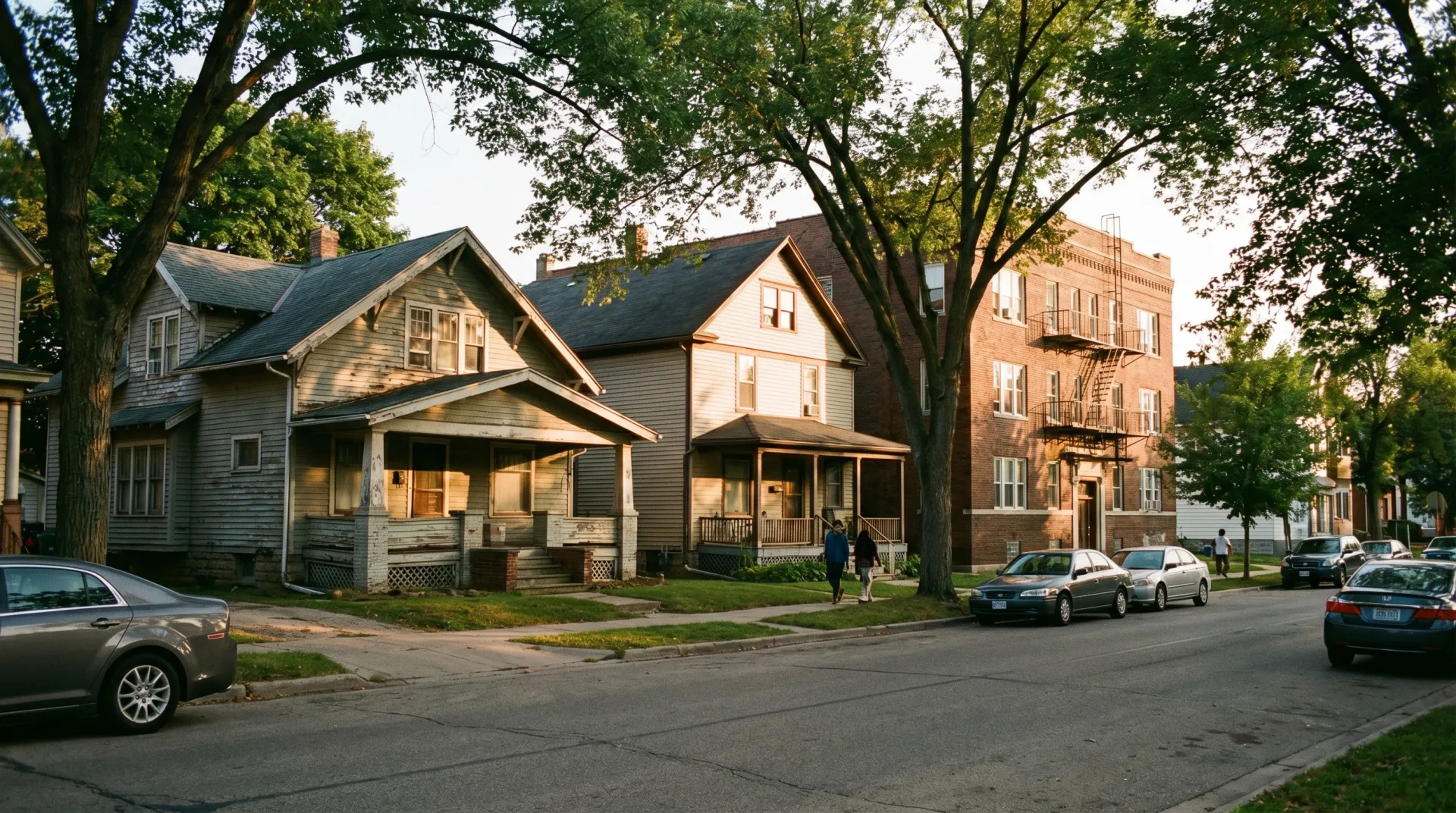
Heritage Hill offers a distinct investment profile shaped by its historic district status and built-out urban character. The substantial rental market, with many historic single-family homes already converted to multi-unit configurations, provides steady demand. Average rents range from approximately $1,106/month for studios to $1,696/month for three-bedrooms, with year-over-year increases of approximately 2.5%. Small-scale complexes (under 50 units) account for 59% of rental stock, and single-family rentals account for 16%.
For investment-minded buyers, multi-unit properties with walkability to downtown represent a strong long-term hold. However, careful due diligence on zoning, occupancy permits, and lead paint compliance is essential. Every property here predates 1978.
The Heritage Court townhome development at Wealthy/Lafayette (14 new townhomes, 6 flats, 2 renovated historic homes, 2 office suites) represents the first significant new-construction residential project in Heritage Hill in decades. Its market-rate pricing will establish a benchmark for new-build product in a historic district context.
Important for short-term rental investors: Grand Rapids requires a Home Occupation Class C License and Special Land Use Permit for short-term rentals, with significant restrictions: the property must be the owner's principal residence, the owner must be present during rental periods, rentals are limited to one room with a maximum of two adult guests, and entire-home rentals are prohibited. Only approximately 200 STR licenses are issued citywide per year. Investors should underwrite to long-term rental income only.
Nathan's Take
The local read.
Heritage Hill homes command a premium over the Grand Rapids citywide median, about $330,000 here versus roughly $293,000 to $308,000 citywide, but the price range is wide. A buyer can find a property needing restoration in the $175,000 to $250,000 range, or a fully restored showpiece above $600,000. The key variable is renovation condition, not just square footage.
The Historic Preservation Commission requirement for exterior approval is often misunderstood. It does not prevent renovation; it ensures exterior changes respect the district's architectural character. Interior renovations are not subject to HPC review. Just factor in the approval timeline when planning exterior projects, and you will be fine.
Something buyers miss until they start looking: many properties that appear as single-family homes from the street are actually duplexes, triplexes, or quads. Heritage Hill's rental conversion history means there is real opportunity here for investment-minded buyers: multi-unit properties with strong rental demand and walkability to downtown. But it also means doing thorough due diligence on zoning, occupancy permits, and lead paint compliance for pre-1978 structures.
If you want architectural character, a walkable location minutes from downtown, and a neighborhood with a genuine preservation identity, Heritage Hill should be on your list. The tradeoff is that these are old homes, and you are buying history along with all the maintenance that comes with it.
Location
Heritage Hill on the map
Boundary of the Heritage Hill area. Drag to explore the surrounding neighborhoods and commute corridors.
Listings
Browse homes in Heritage Hill.
See what is currently listed in Heritage Hill and the surrounding area.
Resources
Helpful links
Neighborhood organization with event calendar, preservation resources, apartment listings, and community news
Historic district regulations, exterior modification permit applications, and meeting schedules
District homepage, school directory, and enrollment information
Determine which GRPS school serves a specific address in Heritage Hill
Frank Lloyd Wright Prairie Style house. Free public tours, restored by Steelcase
Grand Rapids' oldest farmers market (est. 1922). Hours, vendors, and seasonal schedules
Bus schedules, route maps, and fare information for public transit
GRPL locations, hours, and programs including the nearby Madison Square Branch
Visitor and resident guide with dining, events, and neighborhood profiles
Official municipal site including property tax estimator and planning resources
More in Grand Rapids
Other neighborhoods in Grand Rapids.
Heritage Hill is one of several neighborhoods in Grand Rapids. Each has its own character and price range.
Questions about Heritage Hill?
Ask Nathan.
Send a note with what you are looking for in Heritage Hill, price range, timeline, school or commute priorities, and Nathan will follow up.
Contact
Get in touch
Send a message and Nathan will get back to you within one business day.
Message received
Thank you. Nathan will be in touch soon.
Nathan typically responds within one business day.
— Nathan Strodtbeck, REALTOR®