Ottawa Hills
Grand Rapids' planned gem since 1922
Neighborhood · Kent County
Ottawa Hills at a glance
A 294-home planned neighborhood built on a former golf course, with curving streets, Tudor and Colonial Revival homes, and a 90+ year parade tradition.
- Median Price
- $486,000
- Median DOM
- 73 days
- Population
- 1,705
- School District
- Grand Rapids Public Schools
- Tax Millage
- 33.63
Market data as of 2026-03. Population: ACS 2020 5-year estimate (Homes.com / Grand Rapids Neighborhoods census tract approximation).
Overview
Overview
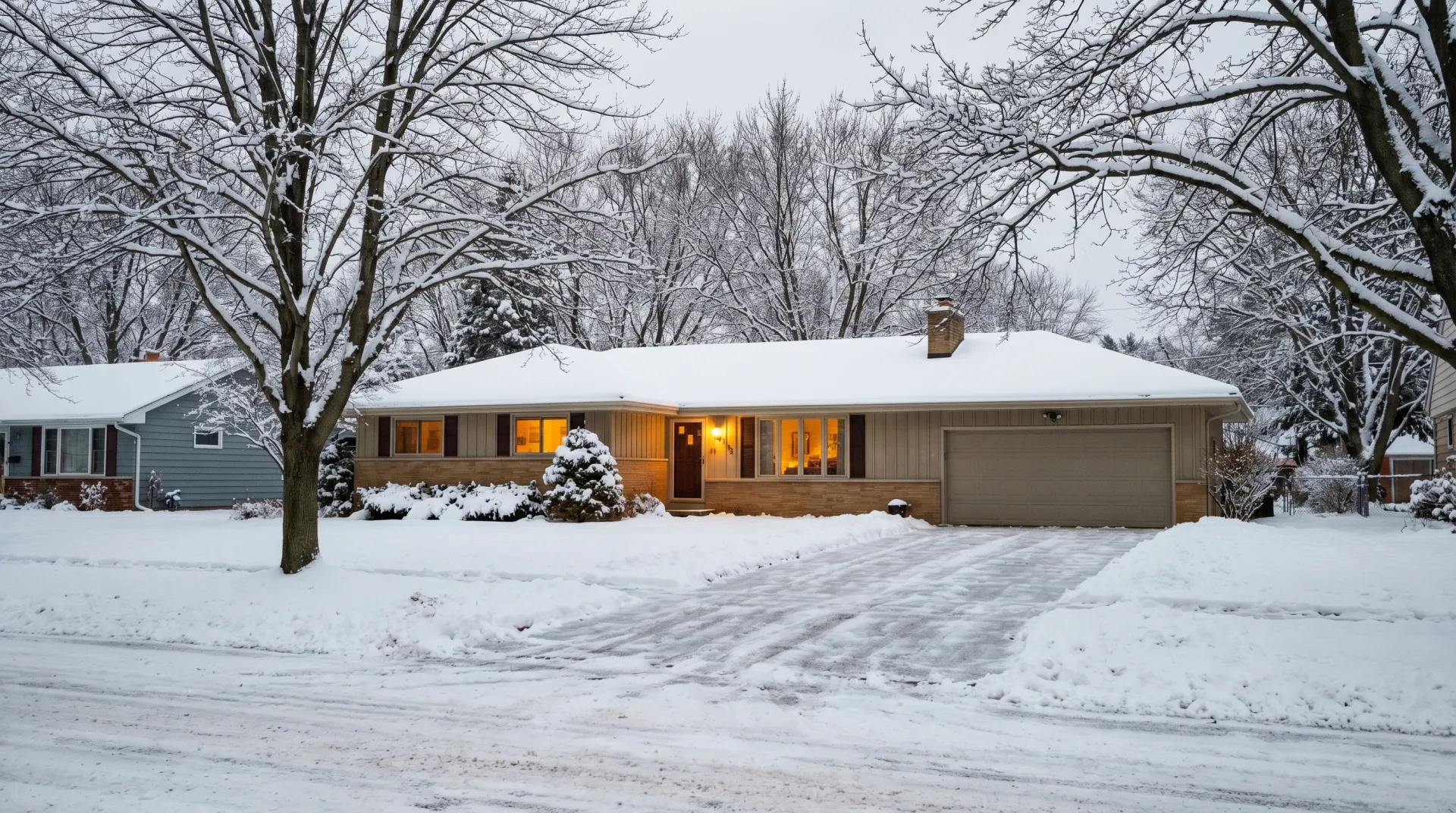
Ottawa Hills is a compact, meticulously maintained residential neighborhood in southeast Grand Rapids, distinguished by its curving streets, mature tree canopy, and architecturally significant homes. Unlike the grid-pattern streets of most Grand Rapids neighborhoods, Ottawa Hills' roads follow winding, curvilinear paths, a design choice reflecting the neighborhood's origins as the former Grand Rapids Golf Club, where the streets are said to follow the paths of the old fairways. The street names draw from Native American vocabulary (Mackinaw, Chippewa, Cadillac, Seminole, Pontiac, Iroquois), lending a distinctive character to the neighborhood's identity.
The homes are set back from the street on generous, well-landscaped lots, creating a parklike feel throughout the neighborhood. Architectural styles span several decades of early-to-mid 20th century design, with an abundance of English Tudor, Colonial Revival, Georgian, French Eclectic, and Craftsman homes, many commissioned from local architects. The visual impression is one of consistent quality and architectural variety, with brick, stone, and half-timber exteriors predominating. By 1928, just six years after the first lots were sold, approximately 200 brick homes of varying styles had been constructed.
The neighborhood is purely residential with no commercial activity within its boundaries. The nearest commercial destinations include the Gaslight Village shopping and dining district in East Grand Rapids (approximately 1 mile east), the Hall Street corridor to the south (including Hall Street Bakery), and downtown Grand Rapids approximately 3 miles northwest. Despite the lack of on-site commercial activity, the compact size and proximity to adjacent commercial areas make errands a short drive.
Real Estate
Real Estate
Ottawa Hills' real estate market reflects the exclusivity and architectural quality of a 294-home planned neighborhood that has been fully built out since the mid-20th century. The median sale price sits around $486,000, more expensive than approximately 81.5% of Michigan neighborhoods, with a range from approximately $300,000 for smaller Craftsman bungalows to over $700,000 for larger Tudor and Colonial Revival estates.
What to expect:
- Single-family homes exclusively: 1,500 to 3,000+ sq ft, 3 to 5 bedrooms, on generous lots averaging approximately 0.27 acres (roughly 11,800 sq ft)
- Architectural quality: English Tudor, Colonial Revival, Georgian, French Eclectic, Southern Colonial, and Craftsman homes with brick and stone exteriors, original interior details
- New construction: Essentially none. The neighborhood is fully built out; any new construction would be limited to rare tear-down/rebuild on existing lots
- HOA: No mandatory HOA. The Ottawa Hills Neighborhood Association is a voluntary community organization
With only 294 homes total, inventory turns over rarely. The median days on market (approximately 73) is longer than the Grand Rapids citywide average, reflecting the higher price point and smaller buyer pool. Approximately 85% of residences are owner-occupied. The rare rental properties command premium pricing, with average rents of approximately $2,334.
Architecture
Architecture
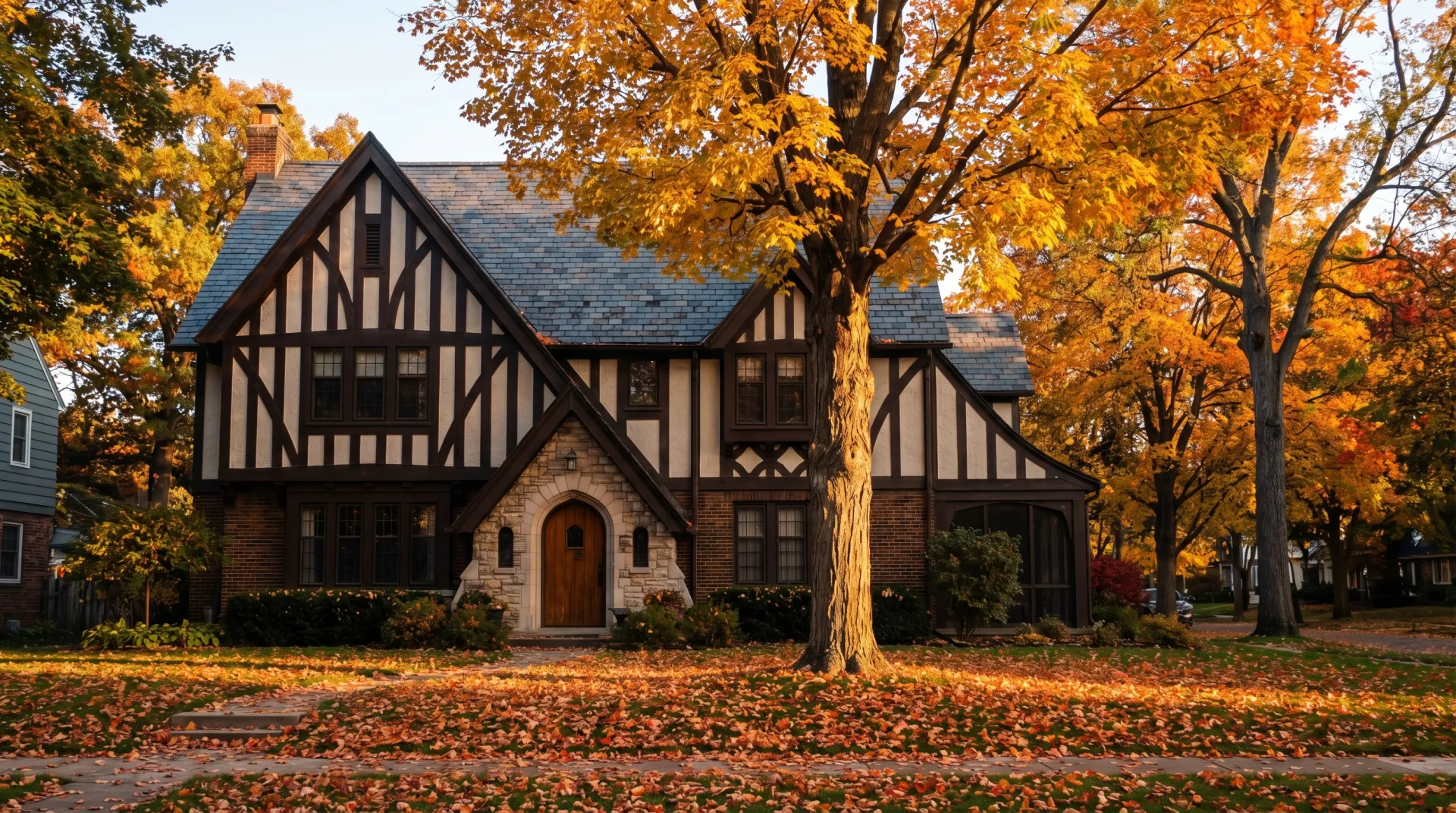
Ottawa Hills contains one of Grand Rapids' most architecturally significant concentrations of early-to-mid 20th century residential design. The dominant styles include English Tudor, Colonial Revival, Georgian, French Eclectic, Southern Colonial, Craftsman, and Medieval Cottage. Owners commissioned local architects and builders to create homes in a wide variety of historic revival styles, resulting in an eclectic but cohesive streetscape. The Grand Rapids Public Library curates a reading list titled "Rediscover Ottawa Hills: Architecture" documenting the neighborhood's architectural significance.
Homes were built primarily between 1922 and 1950. The first lots were sold in 1922, and by 1928 approximately 200 brick homes had been constructed. Building continued through the 1930s, 1940s, and into the early 1950s. Post-1950 construction is minimal.
Brick and stone exteriors predominate, with half-timbering on Tudor-style homes, slate and tile roofs, arched doorways, leaded glass windows, and substantial chimneys. Many homes retain original interior features including hardwood floors, plaster moldings, built-in bookcases, and fireplaces. The curving street layout, mature tree canopy, and consistent setbacks create a unified neighborhood character despite the architectural variety. While Ottawa Hills does not have a formal National Register historic district designation, the architectural character is preserved through strong homeowner commitment and neighborhood association activity.
Schools
Schools
Ottawa Hills falls within the Grand Rapids Public Schools (GRPS) district. This is a common point of confusion for buyers, as the neighborhood borders the East Grand Rapids Public Schools district directly to the east, and the exact boundary runs along the neighborhood's eastern edge. GRPS uses an attendance-area-based assignment system; the specific school serving an Ottawa Hills address can be determined using the GRPS Attendance Area Finder tool online.
Ottawa Hills High School (2055 Rosewood Ave SE) is one of two neighborhood comprehensive high schools in the GRPS system, serving approximately 385 students in the 2024-2025 school year (grades 9 through 12). GRPS operates elementary and middle schools serving the Ottawa Hills area, with assignment depending on home address via the Attendance Area Finder.
Private and charter options nearby include Grand Rapids Christian Schools (multiple campuses, approximately 2,300 students). East Grand Rapids Public Schools, a separate adjacent district, operates its own elementary, middle, and high schools approximately 1 mile east. GRPS participates in Schools of Choice, allowing enrollment in theme schools and specialized programs beyond the assigned neighborhood school.
Dining
Dining
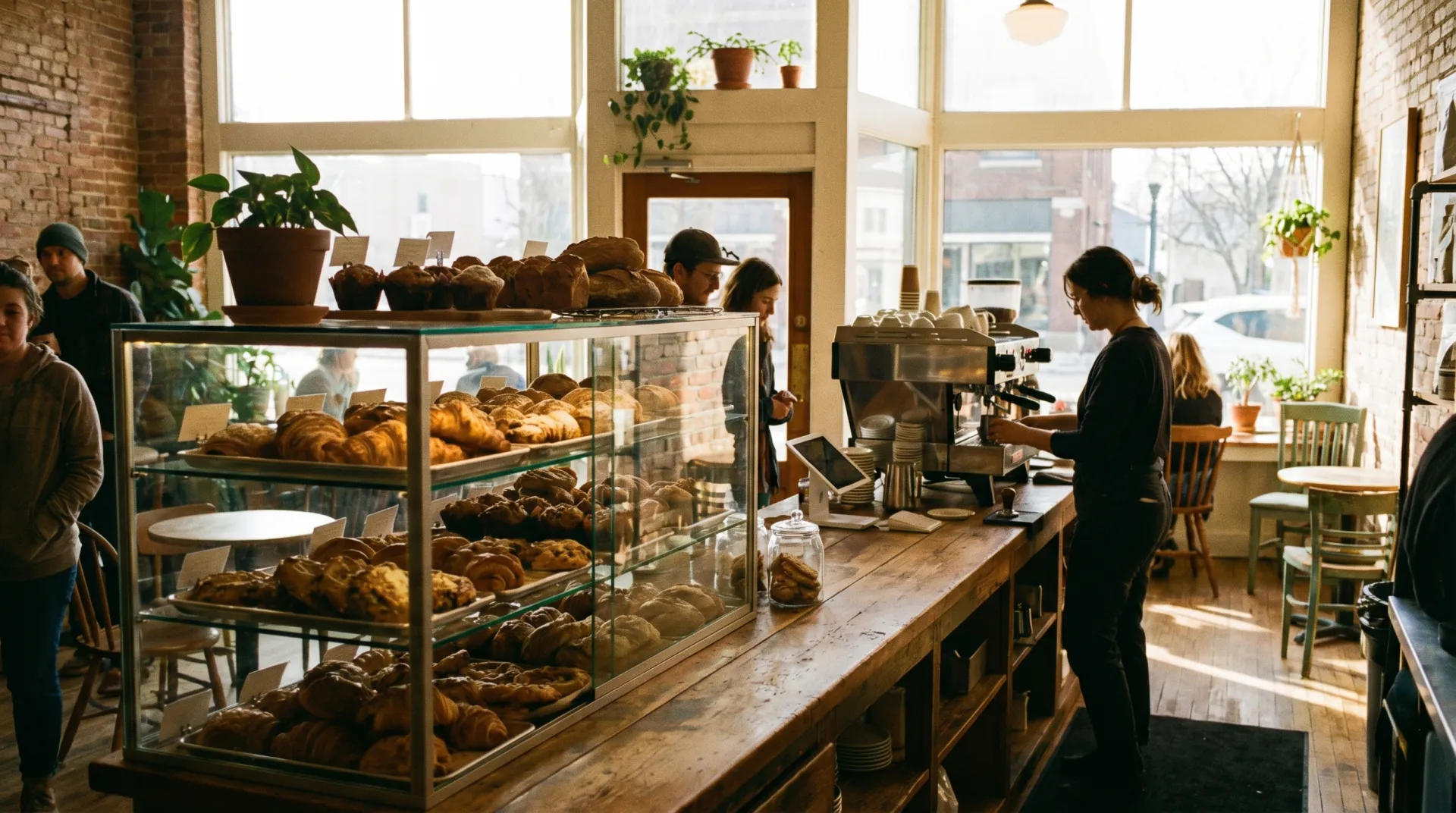
Ottawa Hills contains no commercial activity within its boundaries, but several dining destinations are a short drive away.
Hall Street Bakery, located at Hall Street and Diamond Avenue approximately 0.5 miles south, offers baked goods, sandwiches, and coffee. The Gaslight Village shopping and dining district in East Grand Rapids, approximately 1 mile east, provides a broader selection of restaurants. Named for its flickering gas lamps, the district dates to the early 1900s when Reeds Lake hosted an amusement park, and today offers restaurants alongside lakeside views.
The Wealthy Street SE corridor to the north and the Eastown commercial district provide additional dining options within a short drive, including the concentration of restaurants, breweries, and coffeehouses documented in the Heritage Hill and Baxter neighborhood profiles. Downtown Grand Rapids, with the Downtown Market and a full range of dining options, is approximately 3 miles northwest.
Grocery options are available along the Fuller Avenue and 28th Street corridors (a short drive south or southwest) and in the Gaslight Village / East Grand Rapids area. The Breton Village shopping area and 28th Street commercial corridor provide larger retail access.
Parks
Parks and Recreation
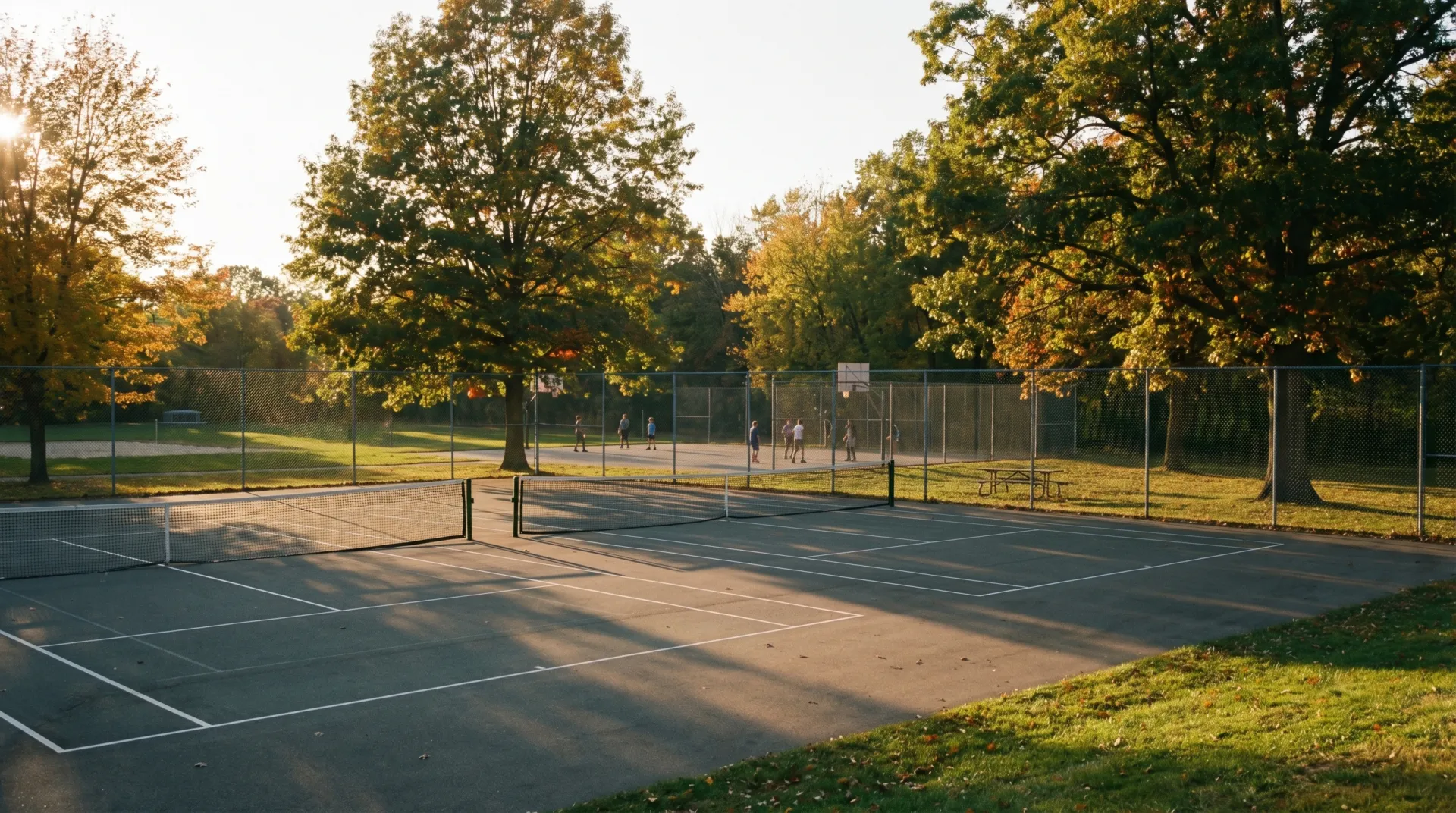
Pontiac Park is Ottawa Hills' neighborhood park, located within the neighborhood boundaries. The park features swings, basketball courts, tennis courts, and open green space. Franklin Park (Martin Luther King Jr. Park), located near the neighborhood's northern boundary, provides additional green space and recreation.
Ottawa Hills' curving, tree-lined streets provide pleasant walking and running routes throughout the neighborhood. The broader Grand Rapids trail network, including connections to the Kent Trails system, is accessible via short drives. The Greater Grand Rapids Bicycle Coalition maintains maps of area cycling routes.
Reeds Lake in East Grand Rapids is approximately 1 mile east and offers lakefront parks and walking paths. The East Grand Rapids community facilities surrounding Reeds Lake provide additional outdoor recreation options within a short drive. The neighborhood was built on the site of the former Grand Rapids Golf Club; no golf courses exist within Ottawa Hills today, though Lincoln Country Club (private) is approximately 1.5 miles south.
Getting Around
Transportation
Ottawa Hills' location in southeast Grand Rapids puts downtown approximately 3 miles away, an 8 to 12 minute drive.
Public transit includes Rapid bus routes along Fuller Avenue and Hall Street, accessible from the neighborhood's western and southern edges. Fixed-route buses operate at 30 to 60 minute headways depending on route and time of day. Rapid Central Station (250 Grandville Ave SW), the system's primary hub, is approximately 3 miles northwest.
Bike infrastructure connects Ottawa Hills to the broader city network via Franklin Street and Hall Street. Grand Rapids has over 80 miles of bike lanes citywide and a Bronze-level Bike-Friendly Community award from the League of American Bicyclists. The neighborhood's curving streets, while scenic for walking and running, are designed for residential traffic speeds.
Major road access includes Hall Street SE (southern boundary, east-west arterial), Giddings Avenue SE (western boundary), Franklin Street SE (northern boundary), and Fuller Avenue SE (accessible to the west, major north-south arterial). I-196 and US-131 are accessible via Fuller Avenue and Division Avenue to the west. Gerald R. Ford International Airport is approximately 9 to 10 miles southeast, a 14 to 18 minute drive.
Community
Community
Ottawa Hills is a neighborhood within the City of Grand Rapids, which operates under a council-manager form of government. The population is approximately 1,683 to 1,727, with approximately 85% homeowner occupancy.
The Ottawa Hills Neighborhood Association (established in the early 1970s) was formed to preserve the neighborhood's unique features and foster community cohesion. The association organizes events, maintains the neighborhood's identity, and serves as a liaison with city government. It is a voluntary community organization, not a mandatory HOA.
The Grand Rapids Public Library Ottawa Hills Branch at 1150 Giddings Ave SE opened in July 1957 with 12,000 volumes and serves Ottawa Hills and the surrounding southeast neighborhoods.
Ottawa Hills' signature annual event is the Hollyhock Lane Parade, held every Fourth of July since 1934. Michigan's longest-running parade, it started as a modest bicycle parade during the Great Depression to provide low-cost entertainment. The parade marches down Giddings from Iroquois to Franklin on the morning of every Fourth of July, organized by a group of neighbors as the Calvin-Giddings Patriotic Association. The parade has been held continuously for over 90 years (excepting wartime).
History
History
Ottawa Hills was platted in 1922 when William H. Gilbert, S.R. Fletcher, Adrian Dooge, and Harold T. Fletcher formed the Ottawa Hills Land Company on the site of the former Grand Rapids Golf Club. The 80 acres had previously been part of a 160-acre pig farm; half belonged to the City of Grand Rapids, while the other half was in Grand Rapids Township and would later become part of East Grand Rapids. The first lots offered for public purchase in 1922 sold out within two weeks, and a second plat was put on the market in 1923.
"Ottawa" refers to the Ottawa (Odawa) people, an Anishinaabe nation indigenous to the Great Lakes region. The "Hills" component reflects the neighborhood's gently rolling terrain. The street names (Mackinaw, Chippewa, Cadillac, Seminole, Pontiac, Iroquois) continue the Native American naming pattern.
By 1928, approximately 200 brick homes of varying architectural styles had been constructed. Building continued through the 1930s, 1940s, and into the early 1950s, creating the architecturally rich streetscape that defines the neighborhood today. The Hollyhock Lane Parade, begun in 1934, has become Michigan's longest-running parade, held every Fourth of July for over 90 years.
The Ottawa Hills Neighborhood Association was established in the early 1970s to preserve the neighborhood's residential character during a period when the surrounding area was experiencing rapid change. In 2022, the neighborhood celebrated its centennial, marking 100 years since the first lots were sold and the first homes were built. Ottawa Hills' identity today is directly traceable to that 1922 development, with the curving streets, architectural quality, and community traditions creating a neighborhood with an exceptionally strong sense of continuity.
Investment
Investment Potential
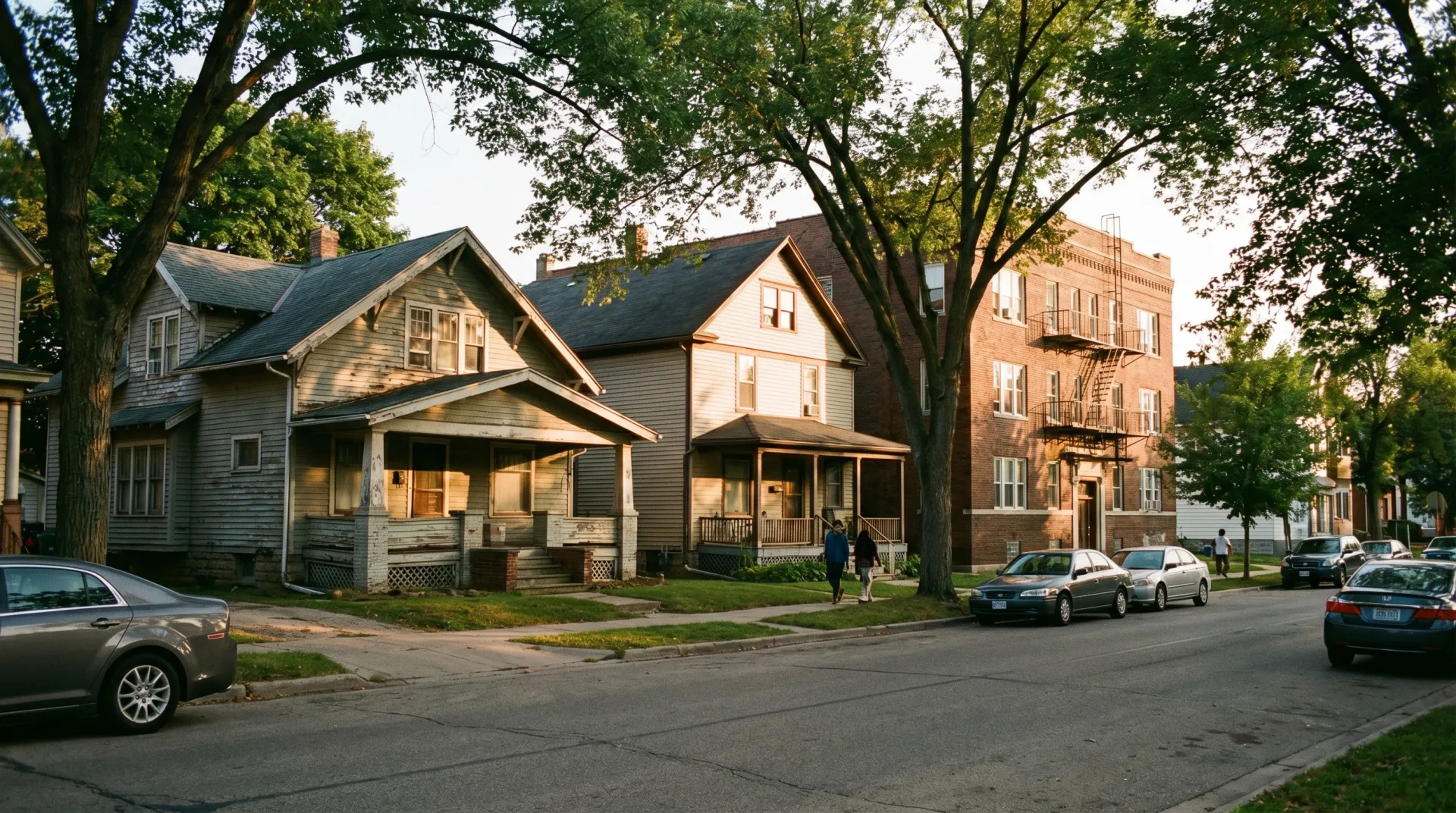
Ottawa Hills is not a conventional investment neighborhood. With only 294 homes, approximately 85% owner-occupancy, and a median price around $486,000, the investment thesis here is long-term value preservation and appreciation rather than cash-flow rental income.
The neighborhood is fully built out with no significant new development planned. Home renovation and restoration projects are the primary form of reinvestment. The extremely limited inventory and infrequent turnover mean that homes often sell through neighborhood word-of-mouth or off-market channels before reaching the MLS.
The rare rental properties that do appear in Ottawa Hills command premium pricing, with average rents of approximately $2,334 per month, higher than 84.8% of Michigan neighborhoods. However, rental inventory is so limited that building an investment portfolio in the neighborhood is not practical.
Important for short-term rental investors: Grand Rapids requires a Home Occupation Class C License for short-term rentals, with significant restrictions: the property must be the owner's principal residence, the owner must be present during rental periods, rentals are limited to one room with a maximum of two adult guests, and entire-home rentals are prohibited. Only approximately 200 STR licenses are issued citywide per year. The purely residential character of Ottawa Hills and the active neighborhood association make STR activity unlikely to be well-received. Investors should look to other Grand Rapids neighborhoods for rental-focused strategies.
Nathan's Take
The local read.
Ottawa Hills is one of those neighborhoods you need to understand differently from most of Grand Rapids. The median price of approximately $486,000 is the highest of the neighborhoods I profile here, but the range extends down to around $300,000 for smaller Craftsman-style homes. Do not assume the neighborhood is uniformly at the top of the market.
The biggest challenge with Ottawa Hills is simple: there are only 294 homes, and they do not come to market very often. When they do, the 73-day median days-on-market reflects the higher price point and a smaller buyer pool, not a lack of demand. Many homes in Ottawa Hills sell through word-of-mouth or off-market channels before they ever hit the MLS. If you are seriously interested in this neighborhood, make that interest known to your agent well in advance of seeing a listing pop up online.
Something buyers consistently miss: Ottawa Hills sits within Grand Rapids Public Schools, not East Grand Rapids Public Schools, despite sharing a border with EGR. The district boundary runs along the neighborhood's eastern edge, and the school assignment varies by exact address. This is worth verifying through the GRPS Attendance Area Finder before making assumptions.
What you get in Ottawa Hills is genuinely hard to replicate elsewhere in Grand Rapids. The curving streets (following the old golf course fairways), the mature tree canopy, the brick Tudor and Colonial Revival homes with original details, and a community that has maintained a Fourth of July parade for over 90 consecutive years. This is not a neighborhood that has reinvented itself. It has been exactly what it is since 1922, and that consistency is the point.
Location
Ottawa Hills on the map
Boundary of the Ottawa Hills area. Drag to explore the surrounding neighborhoods and commute corridors.
Listings
Browse homes in Ottawa Hills.
See what is currently listed in Ottawa Hills and the surrounding area.
Resources
Helpful links
Neighborhood association with events (including Hollyhock Lane Parade), news, and community information
Grand Rapids Public Library branch at 1150 Giddings Ave SE, opened 1957
District homepage, school directory, and enrollment information
Determine which GRPS school serves a specific address in Ottawa Hills
Bus schedules, route maps, and fare information for public transit
Bicycle route maps for the Grand Rapids area
GRPL main site with locations, hours, and programs
Visitor and resident guide with dining, events, and neighborhood profiles
Official municipal site including property tax estimator and planning resources
Airport information, driving directions, and flight status
More in Grand Rapids
Other neighborhoods in Grand Rapids.
Ottawa Hills is one of several neighborhoods in Grand Rapids. Each has its own character and price range.
Questions about Ottawa Hills?
Ask Nathan.
Send a note with what you are looking for in Ottawa Hills, price range, timeline, school or commute priorities, and Nathan will follow up.
Contact
Get in touch
Send a message and Nathan will get back to you within one business day.
Message received
Thank you. Nathan will be in touch soon.
Nathan typically responds within one business day.
— Nathan Strodtbeck, REALTOR®