Southeast End
Accessible pricing, growing momentum
Neighborhood · Kent County
Southeast End at a glance
A large southeast Grand Rapids neighborhood with accessible pricing, historic cemeteries, active parks, and new developer investment.
- Median Price
- $227,000
- Median DOM
- 23 days
- Walk Score
- 73
- Population
- 7,200
- Median Income
- $59,156
- School District
- Grand Rapids Public Schools
- Tax Millage
- 33.63
Market data as of 2026-03. Population: ACS 2020 5-year estimate (Niche / Homes.com census tract approximation; SECA ~5,733, broader SE End ~8,737).
Overview
Overview
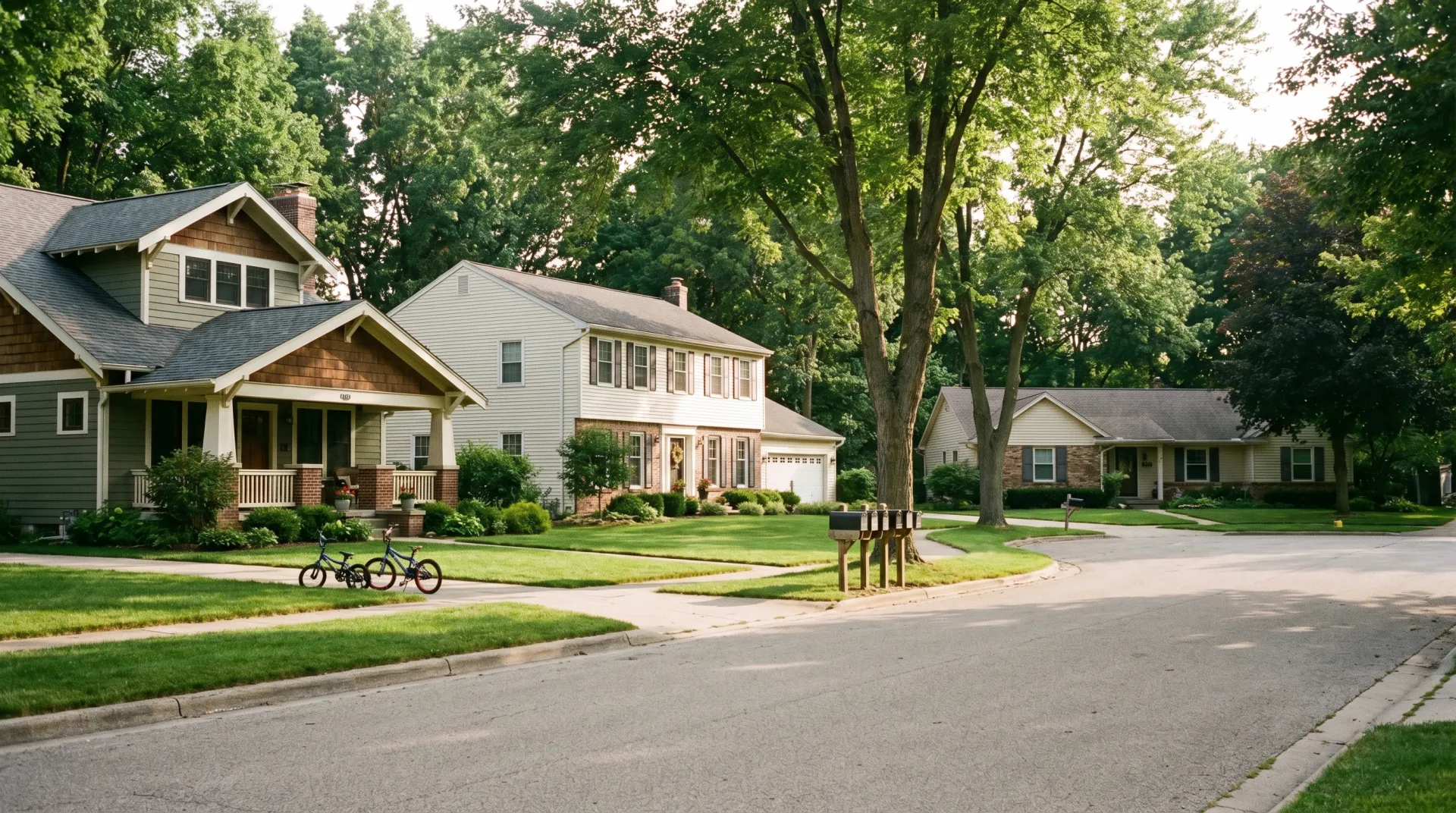
The Southeast End is one of Grand Rapids' larger residential neighborhoods, stretching from the southern edge of Heritage Hill and the Wealthy Street corridor down to Hall Street. The area is characterized by a grid of tree-lined residential streets with a mix of housing types, from early 20th century worker's cottages and bungalows to mid-century construction and some newer infill development. The built environment reflects multiple eras of Grand Rapids' growth, with the oldest homes concentrated in the northern portion of the neighborhood closer to Heritage Hill and Wealthy Street.
Commercial activity within the Southeast End is concentrated along a few key corridors rather than spread throughout the residential grid. Division Avenue forms the western edge and provides commercial access, while the Wealthy Street corridor to the north and Hall Street to the south carry additional commercial establishments. Several notable locally owned restaurants, including those featuring Caribbean and Latin American cuisine, operate along these corridors and within the neighborhood itself. The area includes a mix of single-family homes, duplexes, and multi-family properties, with a significant rental market alongside owner-occupied homes.
Two historic cemeteries anchor the neighborhood's historical landscape. St. Andrew's Cemetery, established in August 1852 as the first permanent Catholic cemetery in Grand Rapids, is the resting place of Louis Campau, one of the city's founders. Oak Hill Cemetery, created in 1853, is known as Grand Rapids' first Jewish cemetery and contains the grave of Julius Houseman, a notable 19th century mayor and Michigan state representative. These sites connect the neighborhood to some of the earliest chapters of Grand Rapids history.
Real Estate
Real Estate
The Southeast End's real estate market offers one of the most accessible price points in a neighborhood within a short drive of downtown Grand Rapids. The median sale price sits around $227,000 (up 14% year-over-year), with a range from approximately $125,000 to $350,000. The neighborhood has approximately 2,000 housing units, providing a relatively large base of inventory compared to smaller neighborhoods.
What to expect:
- Single-family homes: 900 to 2,200 sq ft, approximately 67.6% of housing units, on standard urban lots of 4,000 to 7,000 sq ft
- Duplexes and multi-family: A significant share of housing units, including attached units and multi-family conversions
- New construction: Grand Rapids' emerging developer program has invested $1.97 million in 13 projects since January 2024, creating a pipeline of 261 housing units on the city's southeast side, including a 26-unit apartment project and a 37-unit mixed-use building
- HOA prevalence: Uncommon; the majority of properties are standalone single-family homes or duplexes without HOA governance
The median days on market is 23, well below the national average, indicating strong demand at current price levels. The rental market is significant, with a substantial share of housing units occupied by renters. Rental prices are generally below the Grand Rapids citywide average, making the neighborhood accessible from both purchase and rental perspectives.
Architecture
Architecture
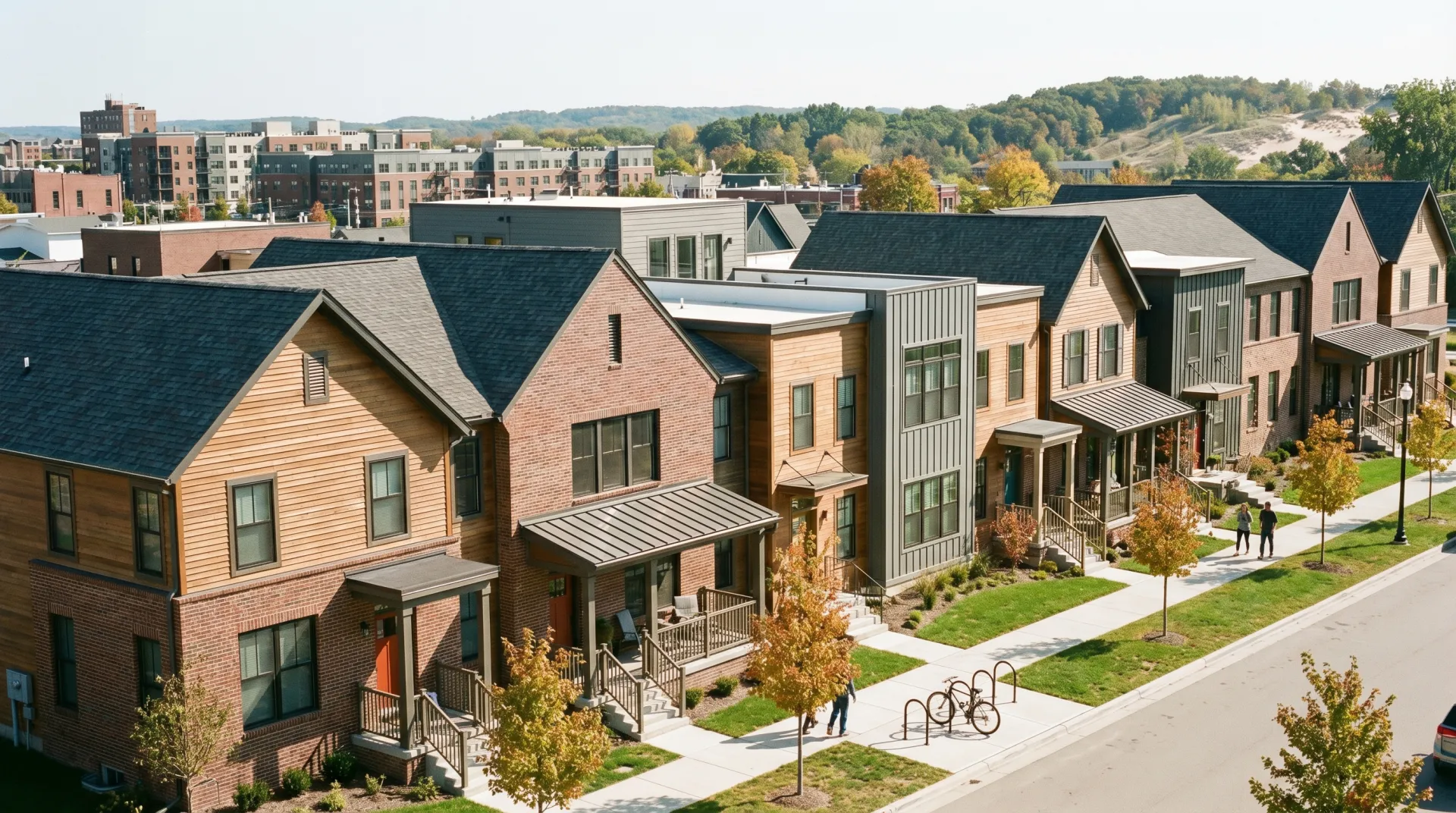
The Southeast End's housing stock spans multiple decades of Grand Rapids residential construction, with the median construction year of 1940. Approximately 47.7% of homes were built before the 1940s, with another 16.1% constructed by 1949. The remaining homes date from the 1950s through more recent decades, giving the neighborhood a more varied architectural character than Grand Rapids' oldest single-era neighborhoods.
The dominant architectural styles include bungalow, worker's cottage, National style, and vernacular early 20th century residential, with some mid-century construction also present. Typical homes feature 2 to 4 bedrooms and range from approximately 900 to 2,200 square feet, with lots generally measuring 4,000 to 7,000 square feet.
Early 20th century bungalows and worker's cottages with front porches, simple woodwork, and period-specific detailing are the most common building types. While the Southeast End does not have a formally designated historic district, St. Andrew's Cemetery (1852) and Oak Hill Cemetery (1853) are historically significant sites that predate most of the residential construction. The housing stock represents a cross-section of Grand Rapids' working-class residential construction from the early-to-mid 1900s.
Schools
Schools
The Southeast End falls entirely within the Grand Rapids Public Schools (GRPS) district. GRPS uses an attendance-area-based assignment system; the specific school serving a Southeast End address can be determined using the GRPS Attendance Area Finder tool online.
Mulick Park Elementary (1761 Rosewood Ave SE) is a magnet school serving Pre-K through 5th grade, located adjacent to scenic Mulick Park. Martin Luther King Jr. Leadership Academy serves Pre-K through 8th grade with state-of-the-art classrooms, collaborative learning spaces, and a library/media center.
For middle school, Alger Middle School (grades 6 through 8) is a magnet school serving students in the broader southeast area. Ottawa Hills High School (2055 Rosewood Ave SE) is one of two neighborhood comprehensive high schools in the GRPS system, enrolling approximately 385 students in the 2024-2025 school year.
Private and charter options nearby include Grand Rapids Christian Schools (multiple campuses). GRPS participates in Schools of Choice, allowing enrollment in theme schools and specialized programs beyond the assigned neighborhood school.
Dining
Dining
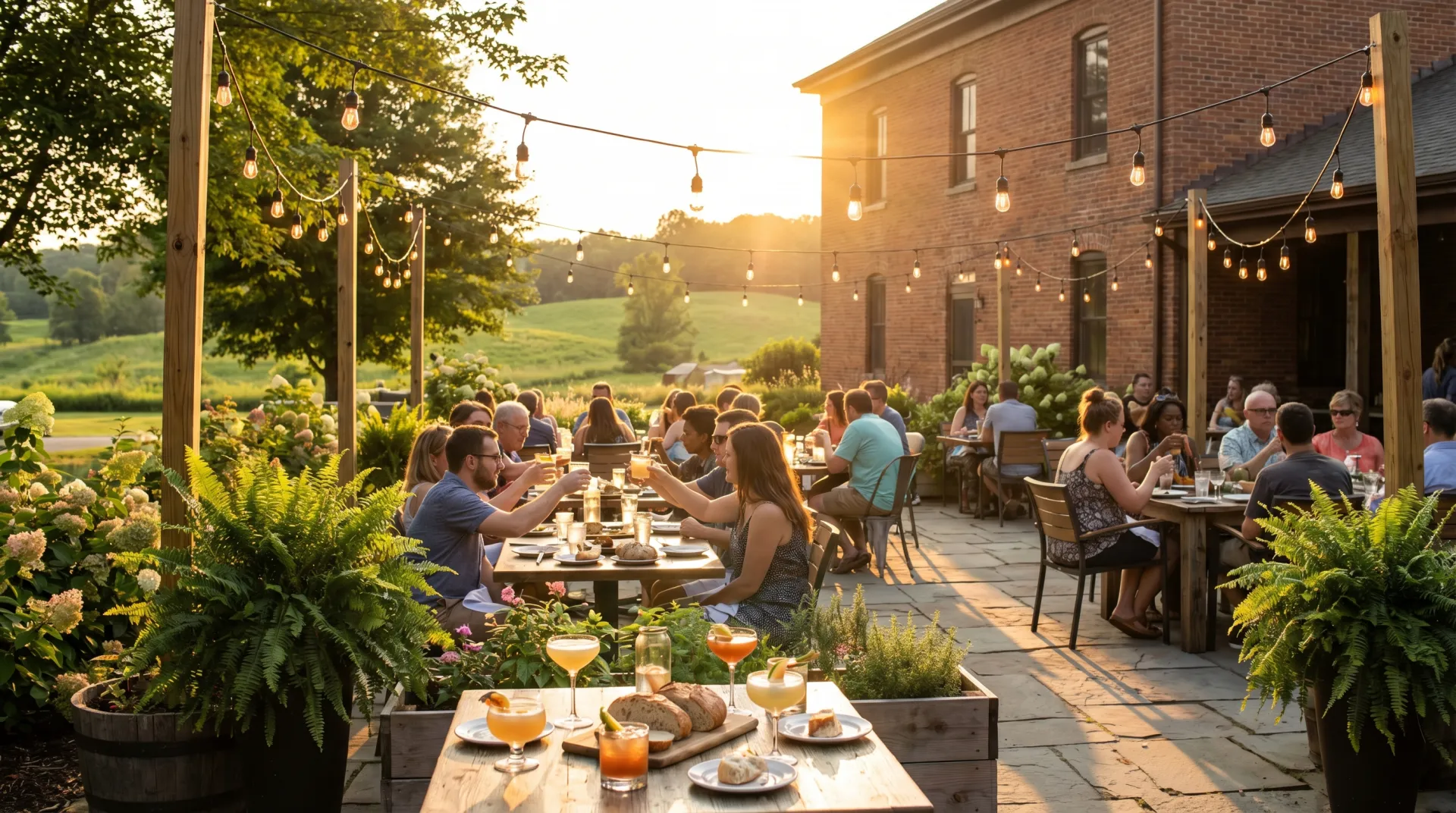
The Southeast End's dining options are distributed across the corridor streets that border and traverse the neighborhood. Division Avenue along the western edge, Wealthy Street SE to the north, and Hall Street SE to the south all carry commercial establishments.
Jamaican Dave's Restaurant serves Caribbean and Jamaican cuisine, including jerk chicken, vegetarian dishes, and authentic Jamaican sodas, with both takeout and dine-in service. Taqueria San Jose, operating since 2010, offers authentically prepared Mexican cuisine with outdoor seating, takeout, and dine-in options.
The broader Wealthy Street corridor to the north, approximately 0.5 to 1 mile from the neighborhood's center, provides an extensive concentration of locally owned restaurants, coffeehouses, and bars that serve as a dining destination for the Southeast End. The East Hills and Eastown commercial districts are also within a short drive.
Grocery options are available along the Division Avenue and Hall Street corridors, with full-service grocery chains accessible via a short drive on Fuller Avenue or Division Avenue. Downtown Grand Rapids, with the Downtown Market and larger retail, is approximately 1.5 to 2 miles northwest.
Parks
Parks and Recreation
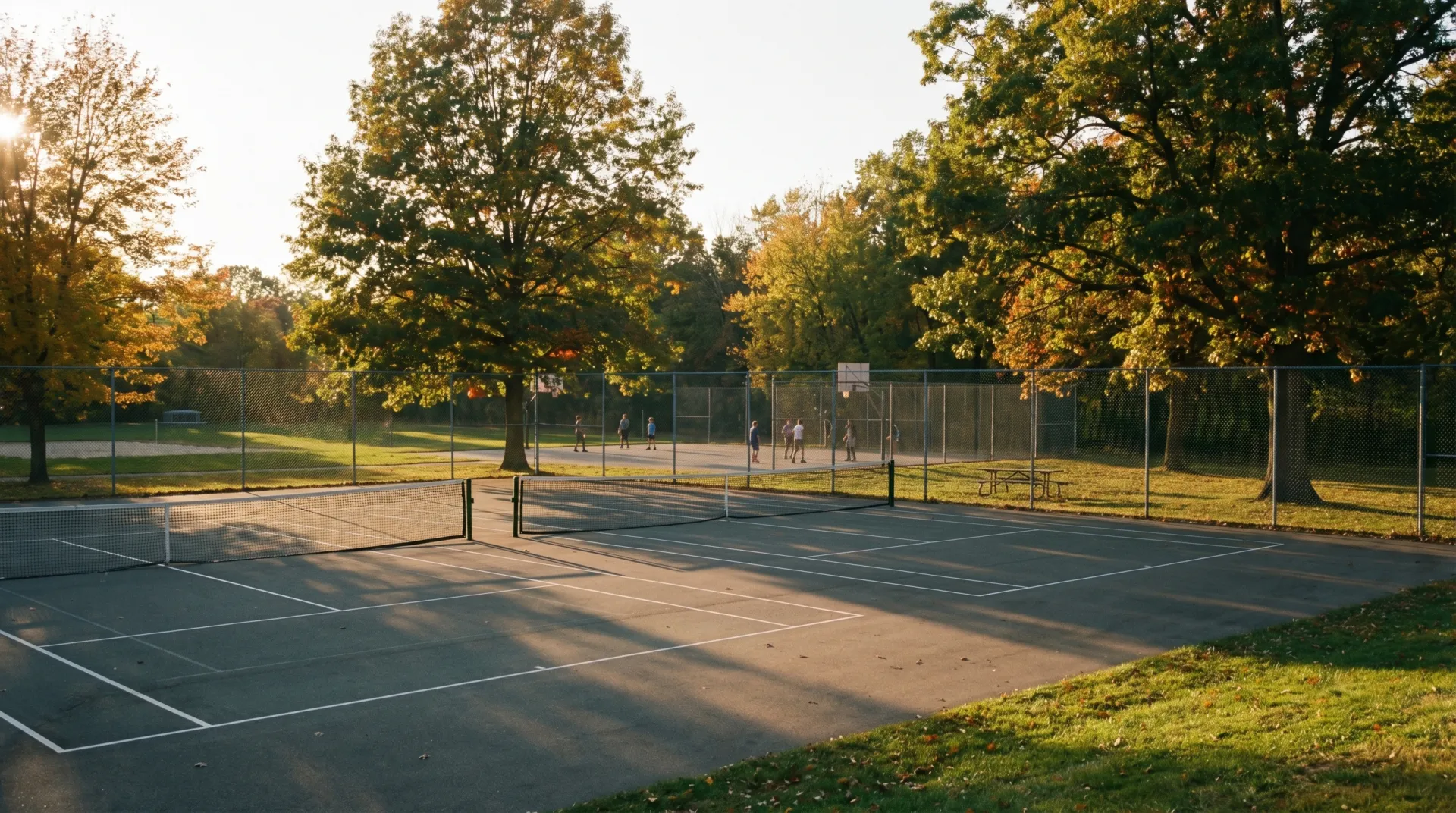
The Southeast End has several well-developed parks providing year-round recreation.
Cambridge Park (approximately 8 acres) features a soccer field, baseball diamond, and picnic shelters with tables. The park is also known locally as "Tower Park" due to the large silver water tower located there. Mulick Park (approximately 10 acres) offers a brightly colored playground, splash pad in summer, sledding hill in winter, and open green space. It sits adjacent to Mulick Park Elementary School.
King Park (Martin Luther King Jr. Park) is a multi-acre urban park with playground and recreation facilities that has historically served as a gathering point for neighborhood events and community celebrations. Pleasant Park (approximately 2.5 acres) has playground equipment and a small sledding hill, located near the Heritage Hill border.
The Southeast Trail network provides biking and walking connections from the neighborhood to other parts of Grand Rapids, with the Greater Grand Rapids Bicycle Coalition maintaining maps of area cycling routes. Fuller Avenue provides a cycling corridor along the eastern edge of the neighborhood. The Grand River is approximately 2 miles west, accessible via downtown paths and parks.
Getting Around
Transportation
The Southeast End's location puts downtown Grand Rapids approximately 1.5 to 2.5 miles away, depending on location within the neighborhood, a 5 to 10 minute drive.
Public transit includes multiple Rapid bus routes with stops along Division Avenue, Fuller Avenue, and Hall Street. Fuller Avenue provides easy access to multiple types of public transportation. Fixed-route buses operate at 30 to 60 minute headways depending on route and time of day. Rapid Central Station (250 Grandville Ave SW), the system's primary hub, is approximately 2 miles northwest.
Bike infrastructure includes the Southeast Trail network connecting to the broader Grand Rapids cycling infrastructure. Grand Rapids has over 80 miles of bike lanes citywide and a Bronze-level Bike-Friendly Community award from the League of American Bicyclists.
Major road access includes Division Avenue (western boundary, connecting to downtown and US-131), Fuller Avenue SE (eastern boundary, major north-south arterial), Hall Street SE (southern boundary), and Eastern Avenue SE (internal north-south street). I-196 and US-131 are accessible via Division Avenue. Gerald R. Ford International Airport is approximately 10 to 12 miles southeast, a 14 to 18 minute drive. Walk Score ranges from 67 to 80 depending on the specific sub-area, with the SECA portion rated 80 ("Very Walkable").
Community
Community
The Southeast End is a neighborhood within the City of Grand Rapids, which operates under a council-manager form of government. The population ranges from approximately 5,733 to 8,737 depending on which geographic boundary is used (SECA versus the broader South East End area). The overlapping neighborhood designations can be confusing for buyers; listings may appear under either name.
The South East Community Association (SECA) (1408 Madison Ave SE) is the primary neighborhood organization, organizing community events, neighborhood improvement projects, and civic engagement. The neighborhood also has historical roots in the South East End Neighborhood Association (SEENA), which evolved from HEFF (Hall, Eastern, Franklin, Fuller), a group formed in May 1974 by residents committed to addressing housing and quality-of-life issues.
The nearest Grand Rapids Public Library branches are the Madison Square Branch at 1201 Madison Ave SE and the Ottawa Hills Branch at 1150 Giddings Ave SE. Both provide library services, programs, and community resources.
Community events include SECA-organized neighborhood gatherings, parades, and community improvement events throughout the year, as well as historical events and celebrations in King Park.
History
History
The Southeast End developed as a residential area during Grand Rapids' industrial growth in the late 1800s and early 1900s. The name describes the neighborhood's geographic position within the city. Community organizing formalized in the 1970s, with HEFF (Hall, Eastern, Franklin, Fuller) formed in 1974 and SEENA (South East End Neighborhood Association) established in 1977.
The neighborhood's historical roots reach deeper than its residential construction. St. Andrew's Cemetery, established in August 1852, is the first permanent Catholic cemetery in Grand Rapids. Founded as a ten-acre plot, it is the burial place of Louis Campau, one of the founders of the city. Oak Hill Cemetery, created in 1853, is Grand Rapids' first Jewish cemetery and contains the grave of Julius Houseman, a notable 19th century figure who served as mayor and Michigan state representative.
The housing stock reflects multiple eras of Grand Rapids residential construction, with the median construction year of 1940 and approximately 47.7% of homes built before the 1940s. Bungalows, worker's cottages, and mid-century homes represent the waves of residential development that filled the neighborhood over several decades.
The Southeast End's identity today is shaped by its layered development history, from the mid-19th century cemeteries that predate most of the residential construction to the waves of housing built through the early-to-mid 1900s. The community organizing tradition that began in the 1970s continues through SECA and other organizations.
Investment
Investment Potential
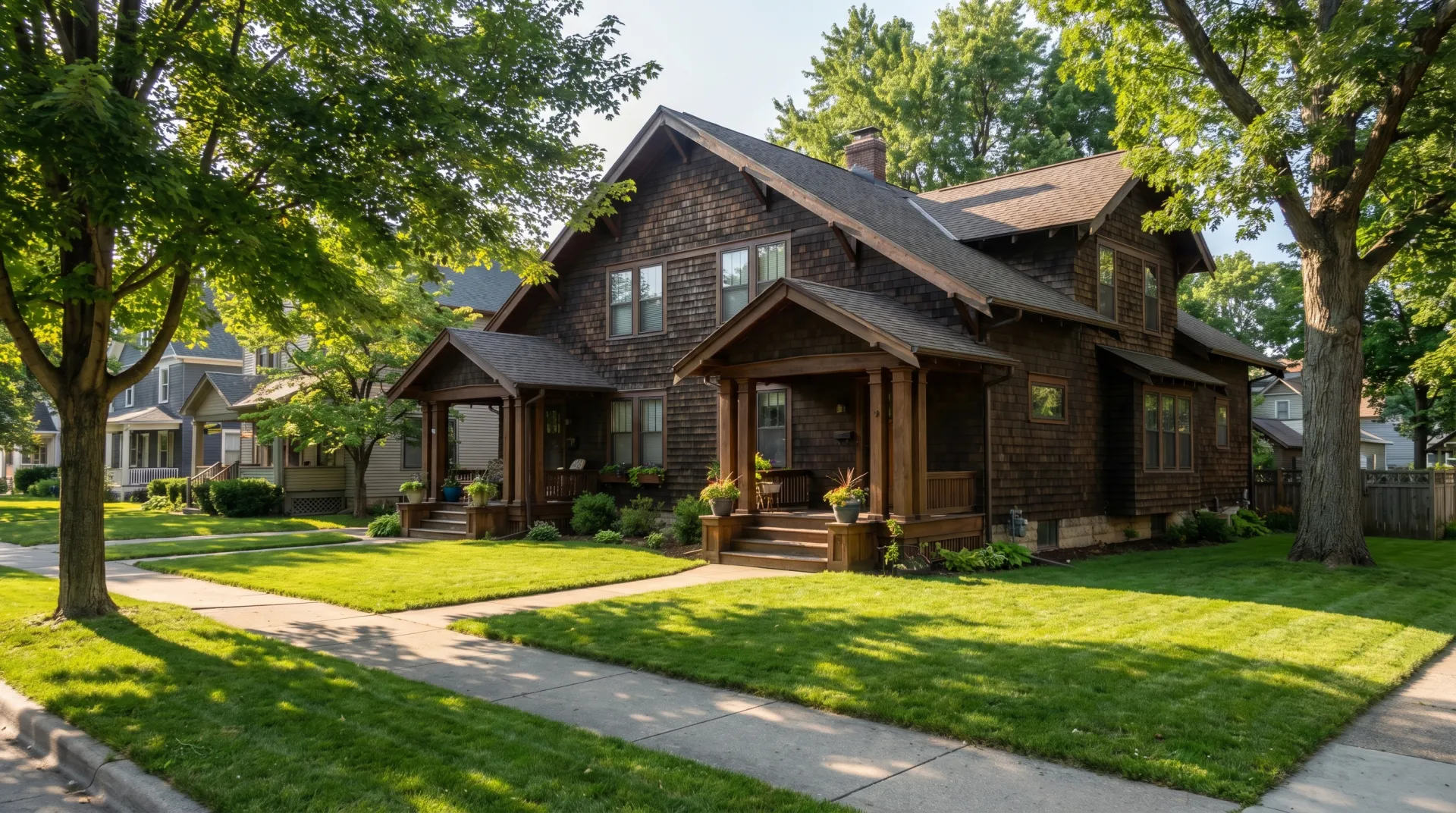
The Southeast End offers a compelling investment profile driven by accessible pricing, proximity to downtown, and active public investment in the area. The median sale price of approximately $227,000 is significantly below the Grand Rapids citywide median, while the 14% year-over-year appreciation and 23-day median days-on-market signal growing demand.
The city's emerging developer program is specifically targeting the southeast side for investment, with $1.97 million committed to 13 projects creating 261 housing units since January 2024. Specific projects include a 26-unit apartment project on a city land bank parcel, a five-story 37-unit mixed-use project, and several smaller rehabilitation and infill developments. The Grand Rapids Land Bank, established in 2024, is making vacant and blighted parcels available to developers in the neighborhood, creating additional opportunities.
The significant rental market, with a substantial share of housing units occupied by renters, indicates established demand for rental properties. Median home prices well below the citywide median, combined with proximity to downtown, create conditions supportive of rental investment. The 2024 citywide zoning update increased flexibility for housing density, which may facilitate additional development.
Important for short-term rental investors: Grand Rapids requires a Home Occupation Class C License for short-term rentals, with significant restrictions: the property must be the owner's principal residence, the owner must be present during rental periods, rentals are limited to one room with a maximum of two adult guests, and entire-home rentals are prohibited. Only approximately 200 STR licenses are issued citywide per year. The STR policy is under review as part of a zoning update expected in 2027. Investors should underwrite to long-term rental income only.
Nathan's Take
The local read.
The Southeast End is one of the most interesting investment stories in Grand Rapids right now. At a median of $227,000, you are getting into a neighborhood within a 5 to 10 minute drive of downtown for well below the citywide median. The 14% year-over-year appreciation tells you the market has noticed, and the 23-day median days-on-market confirms that properties are moving quickly when they hit the market.
What sets the Southeast End apart from other accessible neighborhoods is the public investment pipeline. The city's emerging developer program has specifically targeted the southeast side, with $1.97 million committed to 13 projects since January 2024 and a pipeline of 261 housing units. The Grand Rapids Land Bank is making parcels available to developers. When you see that level of institutional commitment to a specific area, it signals a long-term trajectory worth watching.
Buyers should know that the overlapping neighborhood designations (SECA versus South East End) can create confusion during an online search. Listings may appear under either name, and Walk Scores range from 67 to 80 depending on which sub-area is measured. Search under both names to get the full picture. The northern portion of the neighborhood, closer to Heritage Hill and the Wealthy Street corridor, tends to have older homes with more character and better walkability scores.
For investment-minded buyers, the mix of single-family homes, duplexes, and multi-family properties provides flexibility across multiple strategies. The significant rental market shows established demand, and purchase prices well below the citywide median support the numbers for buy-and-hold. Just be thorough on due diligence: the median construction year is 1940, and nearly half the homes predate that, so budget for inspection surprises and lead paint compliance.
Location
Southeast End on the map
Boundary of the Southeast End area. Drag to explore the surrounding neighborhoods and commute corridors.
Listings
Browse homes in Southeast End.
See what is currently listed in Southeast End and the surrounding area.
Resources
Helpful links
District homepage, school directory, and enrollment information
Determine which GRPS school serves a specific address in the Southeast End
Nearest Grand Rapids Public Library branch (1201 Madison Ave SE)
GRPL main site with locations, hours, and programs
Bus schedules, route maps, and fare information for public transit
Bicycle route maps for the Grand Rapids area
Interactive map for identifying neighborhood boundaries
Visitor and resident guide with dining, events, and neighborhood profiles
Official municipal site including property tax estimator and planning resources
Airport information, driving directions, and flight status
More in Grand Rapids
Other neighborhoods in Grand Rapids.
Southeast End is one of several neighborhoods in Grand Rapids. Each has its own character and price range.
Questions about Southeast End?
Ask Nathan.
Send a note with what you are looking for in Southeast End, price range, timeline, school or commute priorities, and Nathan will follow up.
Contact
Get in touch
Send a message and Nathan will get back to you within one business day.
Message received
Thank you. Nathan will be in touch soon.
Nathan typically responds within one business day.
— Nathan Strodtbeck, REALTOR®