Midtown
Where history meets the Medical Mile
Neighborhood · Kent County
Midtown at a glance
Six sub-neighborhoods between downtown and East Hills, adjacent to the Medical Mile, with 150+ years of architecture and major development underway.
- Median Price
- $325,000
- Median $/sqft
- $203
- Median DOM
- 7 days
- Walk Score
- 87
- Population
- 4,470
- School District
- Grand Rapids Public Schools
- Tax Millage
- 33.63
Market data as of 2026-03. Population: City-Data and Niche average, vintage approximately 2020 ACS estimates.
Overview
Overview
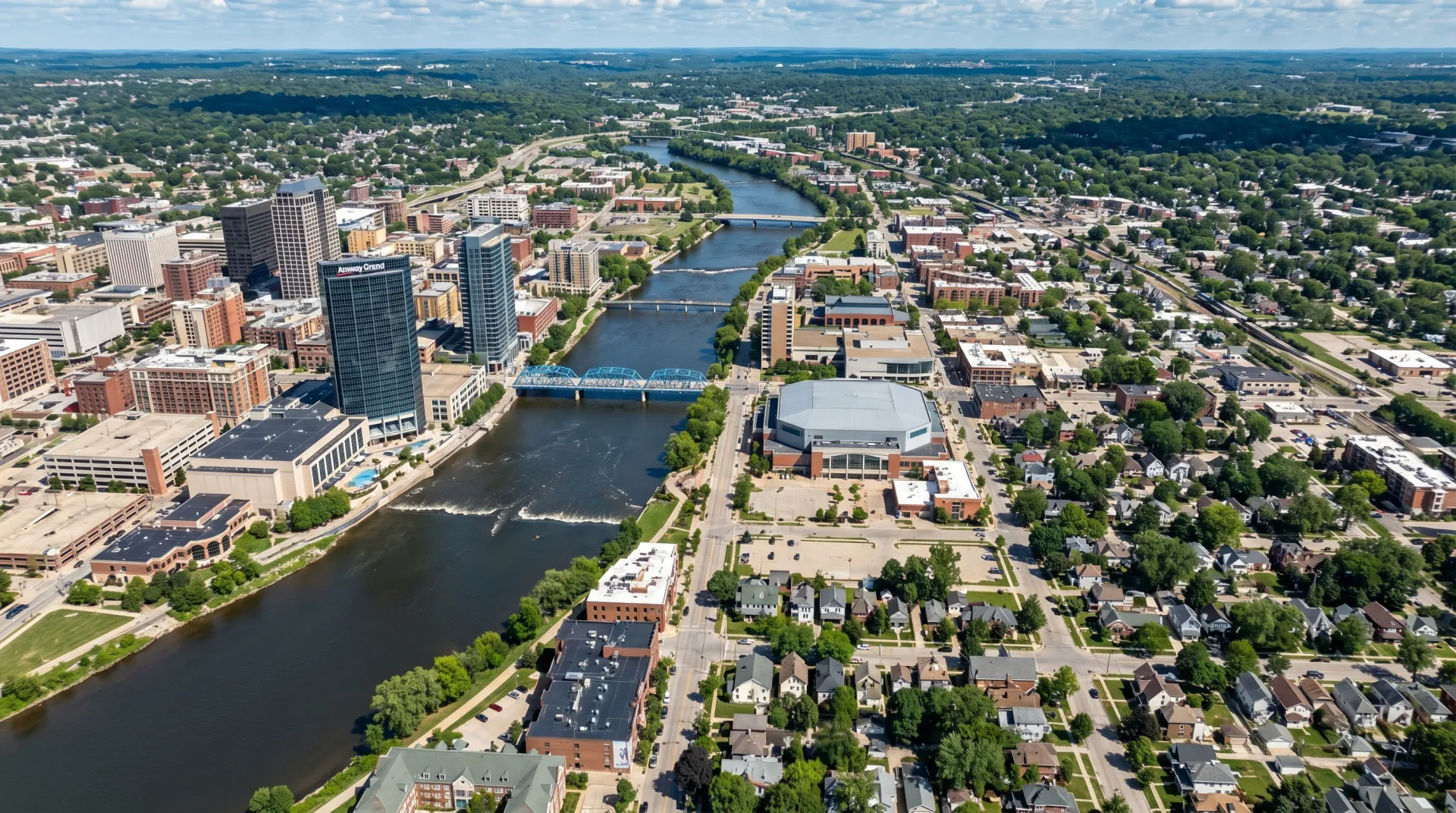
Midtown occupies a strategic position immediately east of downtown Grand Rapids, with the Michigan Street "Medical Mile" corridor running through its northern reaches and Fulton Street forming its southern boundary. The neighborhood's built environment reflects more than 150 years of development, beginning with its origins in the mid-1800s and extending through modern apartment construction near the medical campus. The result is a neighborhood where 19th century Victorian homes share blocks with mid-century buildings and recent multi-story apartment complexes, creating an architectural layering that few Grand Rapids neighborhoods can match.
The neighborhood's sub-areas each carry distinct historical identities. The Brikyaat (from the Dutch "brickyard") in the northeastern portion takes its name from the brick factories that operated near Houseman Field beginning in the 1850s; by 1890, three substantial brick and tile manufacturers operated in the area, later consolidating into the Grand Rapids Consolidated Brick and Tile Company. Old East End, the largest sub-neighborhood, is bounded by Grand Avenue, Diamond Avenue, Michigan Street, and Fountain Street, and its name recognizes the original 1860s eastern boundary of the city. The Fulton Street Farmers Market (established 1922), Grand Rapids' oldest and largest farmers market, anchors the neighborhood's southeastern edge at Fulton and Fuller.
The streetscape in Midtown varies from the dense residential blocks of Victorian and Craftsman homes in the southern and central sections to the larger institutional and commercial properties along Michigan Street. Fulton Street Cemetery (established 1838), the oldest public cemetery in Grand Rapids, occupies a landscaped green space in the neighborhood's center, providing a quiet, park-like environment amid the urban setting. The neighborhood is positioned a short distance of major employment centers including the Medical Mile campus, Grand Rapids Community College, and downtown Grand Rapids.
Real Estate
Real Estate
Midtown is one of the most competitive real estate markets in Grand Rapids, scoring 93 out of 100 on Redfin's market competitiveness scale. The median sale price sits around $325,000 (January 2026), up 9.2% year-over-year. The price range is wide, from approximately $150,000 to $450,000, reflecting the mix of smaller historic homes, multi-unit conversions, and proximity-premium properties near the Medical Mile and downtown.
What to expect:
- Single-family homes: Victorian-era homes are typically 1,800 to 2,500+ sq ft with ornate details. Craftsman bungalows are more modest at 1,200 to 1,600 sq ft
- Multi-unit conversions: Many historic homes have been divided into multi-unit rentals
- Modern apartments and condos: The Brix at Midtown (287 units, completed 2017) and similar developments near the Medical Mile offer studio to 3-bedroom units. Townhomes and condominiums are a growing but still minority segment
- New construction: Significant. The $795.8 million Fulton and Market mixed-use development (670 housing units, 3 towers, luxury hotel, 68,000 sq ft greenspace) begins construction fall 2026 at the neighborhood's western edge
- HOA prevalence: Mixed. Condominium and apartment developments carry association fees; standalone single-family homes do not
With a median of just 7 days on market, buyers should be prepared for multiple-offer situations and may need to move quickly. The pace of change here is faster than in most Grand Rapids neighborhoods.
Architecture
Architecture
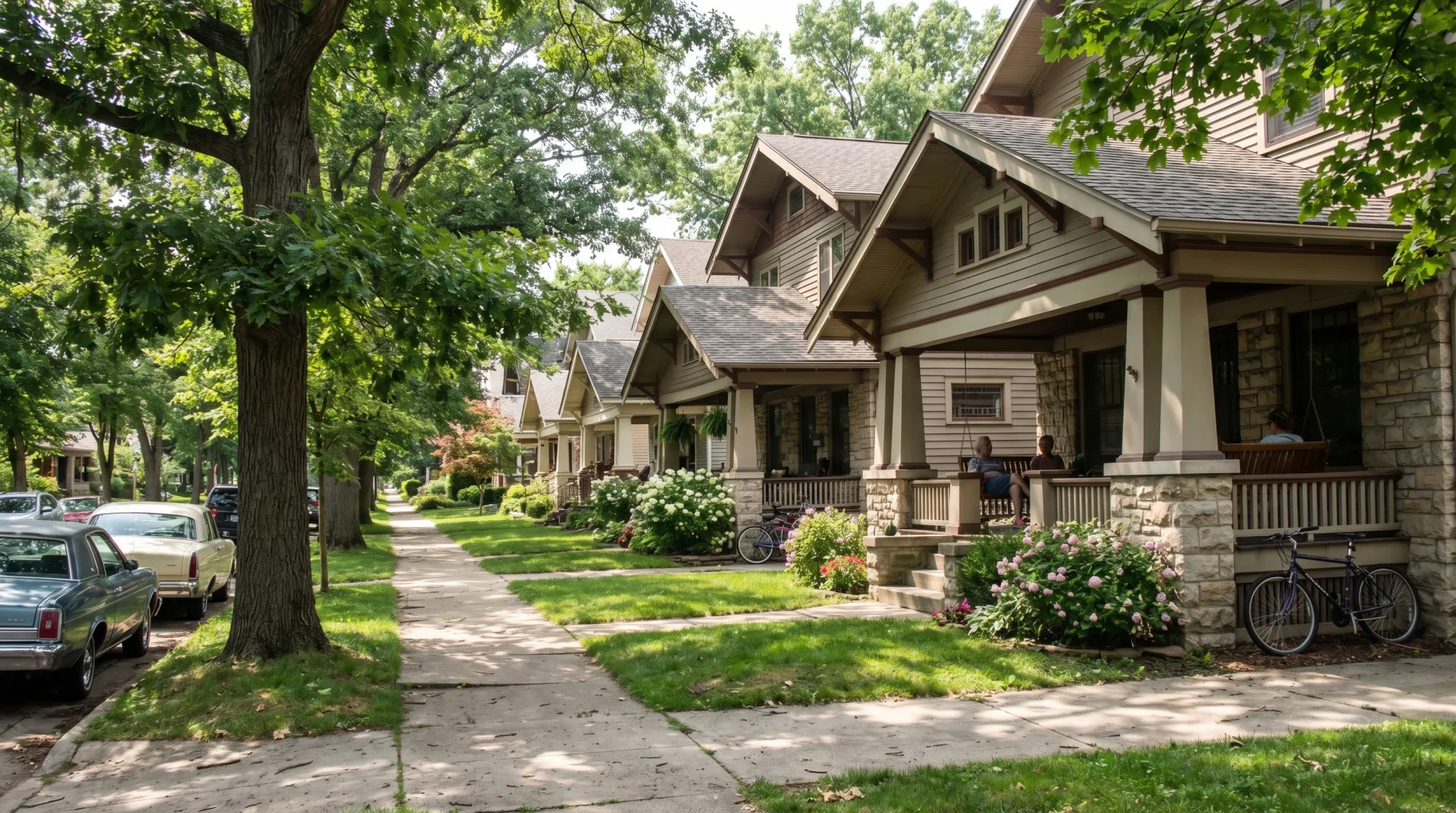
Midtown contains one of the broadest architectural ranges in Grand Rapids, reflecting continuous development from the mid-1800s through the present. Victorian styles (Italianate, Queen Anne), Craftsman, and American Foursquare homes represent the historic core. Contemporary and modern apartments near the Medical Mile add a 21st century layer. The oldest homes date to the 1860s and 1870s, with significant construction during the 1880s to 1920s. Mid-century homes fill some sections. Post-2000 construction includes The Brix at Midtown (2017) and other apartment and condo developments near Michigan Street.
Typical lots are compact urban parcels, generally ranging from approximately 3,500 to 7,000 square feet, consistent with 19th century platting patterns. Historic single-family homes range from approximately 1,200 to 2,500 square feet. Modern apartment units range from studios (approximately 500 sq ft) to 3-bedrooms (approximately 1,300 sq ft).
Midtown does not have a separately designated National Register historic district, though it is adjacent to Heritage Hill (National Register, 1971) across Fulton Street. The Fulton Street Cemetery (established 1838) is the city's oldest public cemetery and a significant historic landmark. The City of Grand Rapids developed the Brikyaat Area Specific Plan recognizing that sub-neighborhood's historic character. Victorian homes retain original woodwork, stained glass windows, spacious front porches, and decorative details. The cemetery features Victorian-era monuments, mature trees, and the oldest gravestone in Grand Rapids (Andrew Haldane, died September 6, 1838).
Schools
Schools
Midtown falls entirely within the Grand Rapids Public Schools (GRPS) district. GRPS uses an attendance-area-based assignment system; the specific school serving a Midtown address can be determined using the GRPS Attendance Area Finder tool online.
Congress Elementary (940 Baldwin St SE, approximately 182 students, PK-5) is located within or adjacent to Midtown and serves portions of the neighborhood. The school is identified as a Cultural Center within GRPS and offers an English as a Second Language program. Middle school assignment is determined by the Attendance Area Finder based on home address. GRPS high schools accessible to Midtown residents include Innovation Central High School and others. GRPS is the eighth-largest district in Michigan by enrollment.
GRPS participates in Schools of Choice, meaning residents can apply to attend theme schools and specialized programs beyond their assigned neighborhood school. Grand Rapids Community College (143 Bostwick Ave NE) and its Secchia Institute for Culinary Education are located within Midtown's western section, offering higher education and culinary training programs.
Dining
Dining
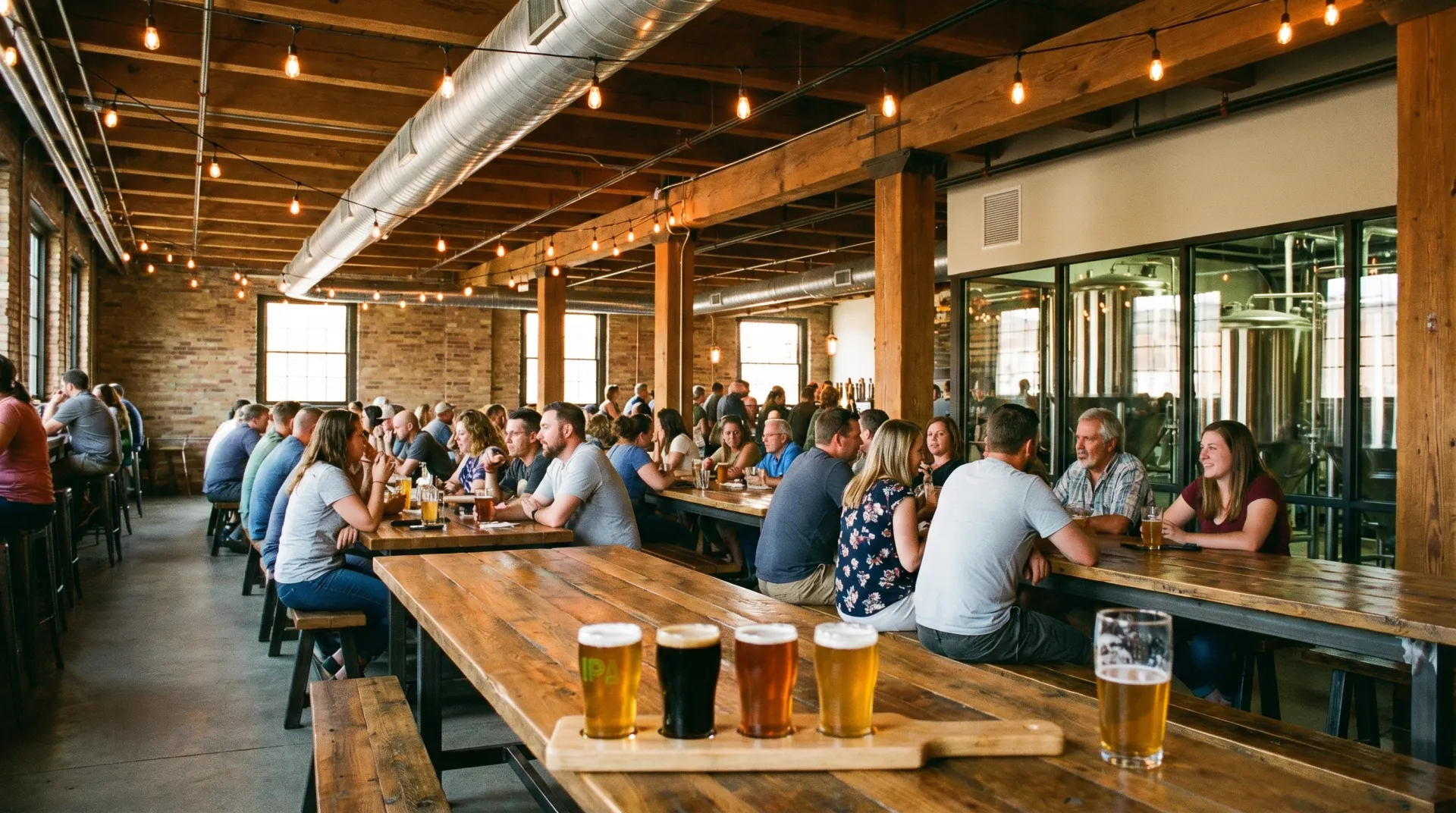
Midtown's dining options are distributed along Fulton Street at the southern boundary and in pockets throughout the neighborhood. The Michigan Street NE corridor serves the Medical Mile institutional area, and the Fulton Street Farmers Market anchors the southeastern corner.
Madcap Coffee is an artisan coffee roastery on Fulton Street with a precise, craft-focused approach, recognized as one of Grand Rapids' leading specialty coffee shops. The Friesian offers contemporary American dining in the Midtown area. Seven Monks Taproom is a craft beer bar with rotating taps and pub fare. Taco Bicho brings casual tacos, and Ginza Sushi and Ramen serves Japanese cuisine. Logan's Alley operates as a neighborhood pub, and The Cakabakery offers custom cakes and baked goods.
The Heritage Restaurant at GRCC's Secchia Institute for Culinary Education is a student-run culinary "laboratory" offering lunch ($7 to $12) and dinner ($21 to $30) Tuesday through Thursday. The Fulton Street Farmers Market (established 1922) is the primary fresh food source within the neighborhood, operating May to October (Wednesday, Friday, Saturday, 8am to 2pm) and November to April (Saturdays, 10am to 1pm), with over 200 vendors during peak season and EBT/SNAP acceptance.
Downtown Grand Rapids, approximately 0.5 to 1 mile west, provides extensive additional dining options. The Uptown Grand Rapids commercial district (Wealthy Street, Cherry Street) is accessible immediately to the south.
Parks
Parks and Recreation
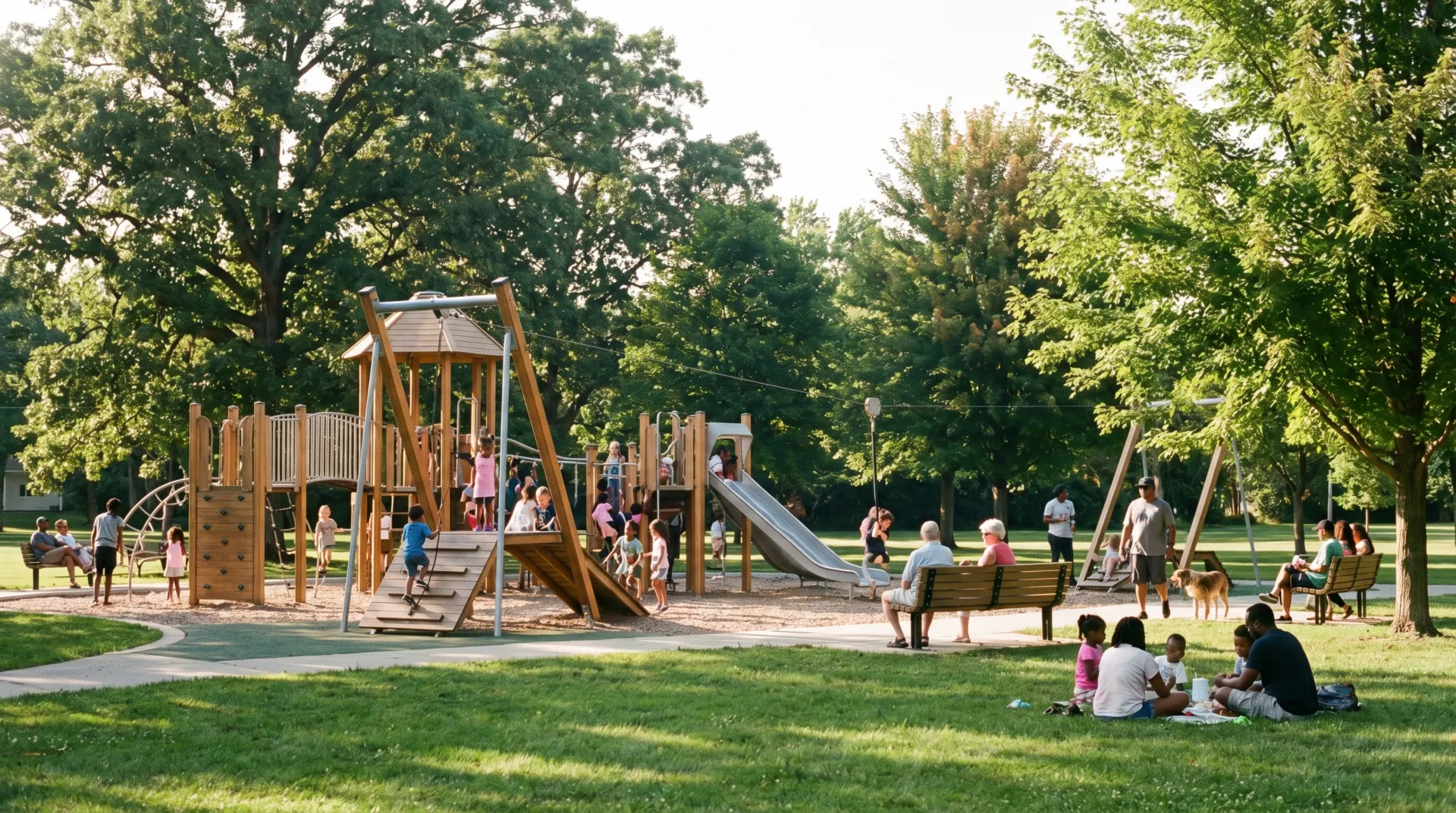
Fuller Park is the largest park in Midtown, featuring the Hillcrest Dog Park, open green space, and recreation areas. Houseman Field, located in the Brikyaat sub-neighborhood on the historic site of Grand Rapids' 19th century brickyards, provides athletic fields and open space. Midtown Green, at the corner of Fulton Street and Carlton Avenue, offers a community garden, shaded walking paths, and gathering space for neighborhood events.
Fulton Street Cemetery (approximately 10 acres, established 1838) is the oldest public cemetery in Grand Rapids. Its landscaped grounds with mature trees, Victorian-era monuments, and historic gravestones function as a park-like green space. The burial site of notable early Grand Rapids citizens including John and Mary Ball (whose legacy includes the John Ball Zoo) and William "Deacon" Haldane, known as the father of Grand Rapids' furniture industry.
The Midtown Trail Connector runs through the neighborhood and links to broader city bike routes, providing a dedicated path for cycling and pedestrian use. The Grand River is approximately 1 mile west, accessible via downtown Grand Rapids paths and parks. Grand Rapids Parks and Recreation operates additional facilities accessible from Midtown, and the downtown YMCA is a short distance.
Getting Around
Transportation
Midtown is among the best-connected neighborhoods in Grand Rapids for non-car commuters. The western edge sits approximately 0.5 to 1.0 miles from the center of downtown, a 3 to 5 minute drive or 10 to 15 minute walk.
Public transit access is excellent. Rapid Central Station (250 Grandville SW), the system's primary hub, is located directly adjacent to Midtown's southwestern edge. The Silver Line BRT (Route 90) operates at 10 to 15 minute peak headways. Additional routes serve Fulton Street, Michigan Street, and Fuller Avenue, with fixed-route buses operating at 30 to 60 minute headways depending on route and time.
Bike infrastructure includes the Midtown Trail Connector, a dedicated cycling and pedestrian path through the neighborhood connecting to broader city bike routes. Grand Rapids has over 80 miles of bike lanes citywide and holds a Bronze-level Bike-Friendly Community award from the League of American Bicyclists.
Major road access includes Fulton Street (southern boundary, connects to downtown and I-196), Michigan Street NE (Medical Mile corridor through the northern section), Fuller Avenue (eastern boundary), Union Avenue (western boundary), and I-196 (northern boundary, providing highway access to US-131 and I-96). Gerald R. Ford International Airport is approximately 13 miles southeast, a 16 to 20 minute drive. Walk Score rates the neighborhood 87 ("Very Walkable"), the 3rd most walkable neighborhood in Grand Rapids.
Community
Community
Midtown is a neighborhood within the City of Grand Rapids, which operates under a council-manager form of government. The population is approximately 4,300 to 4,600.
The Midtown Neighborhood Association (MNA) receives funding from the federal government via HUD, allocated through the City of Grand Rapids. The MNA covers the six sub-neighborhoods that compose Midtown: Brikyaat, Old East End, the Woods, Coldbrook Creek, Cegielnia Crossings, and Ashby Row. Uptown Grand Rapids is the business association covering the commercial districts adjacent to Midtown's southern boundary.
The nearest Grand Rapids Public Library branch is the GRPL Main Library at 111 Library Street NE downtown, approximately 0.5 miles from Midtown's western edge.
The Fulton Street Farmers Market (May to October, plus winter Saturdays) serves as the primary community gathering point, with over 200 vendors during peak season at the neighborhood's southeastern edge. The Midtown Neighborhood Association organizes community gatherings and neighborhood events throughout the year. The Fulton Street Cemetery hosts occasional walking tours highlighting the historic gravestones and stories of Grand Rapids' earliest settlers.
History
History
Midtown has been a residential neighborhood since the mid-1800s. The name reflects the neighborhood's geographic position between downtown Grand Rapids and the city's eastern neighborhoods, serving as a unifying label for several distinct sub-neighborhoods.
The Brikyaat sub-neighborhood takes its name from the brick factories that operated near Houseman Field beginning in 1852. Demand for bricks encouraged local clay extraction, and by 1890 three substantial manufacturers operated in the area, later consolidating into the Grand Rapids Consolidated Brick and Tile Company in 1895. Old East End, the largest sub-neighborhood, recognizes the original 1860s eastern boundary of the city.
The Fulton Street Cemetery, established in 1838, is the oldest public cemetery in Grand Rapids. It contains the graves of the city's earliest settlers, including John and Mary Ball (whose legacy includes the John Ball Zoo) and William "Deacon" Haldane, known as the father of Grand Rapids' furniture industry. The oldest gravestone in Grand Rapids marks the grave of Andrew Haldane, who died September 6, 1838. Former First Lady Betty Bloomer Ford grew up in Midtown on Fountain Street. The Fulton Street Farmers Market has operated continuously since 1922, making it the oldest and largest farmers market in Grand Rapids. Midtown's contemporary identity is shaped by the Medical Mile's expansion, overlaying 21st century institutional growth onto a 19th century residential fabric.
Investment
Investment Potential
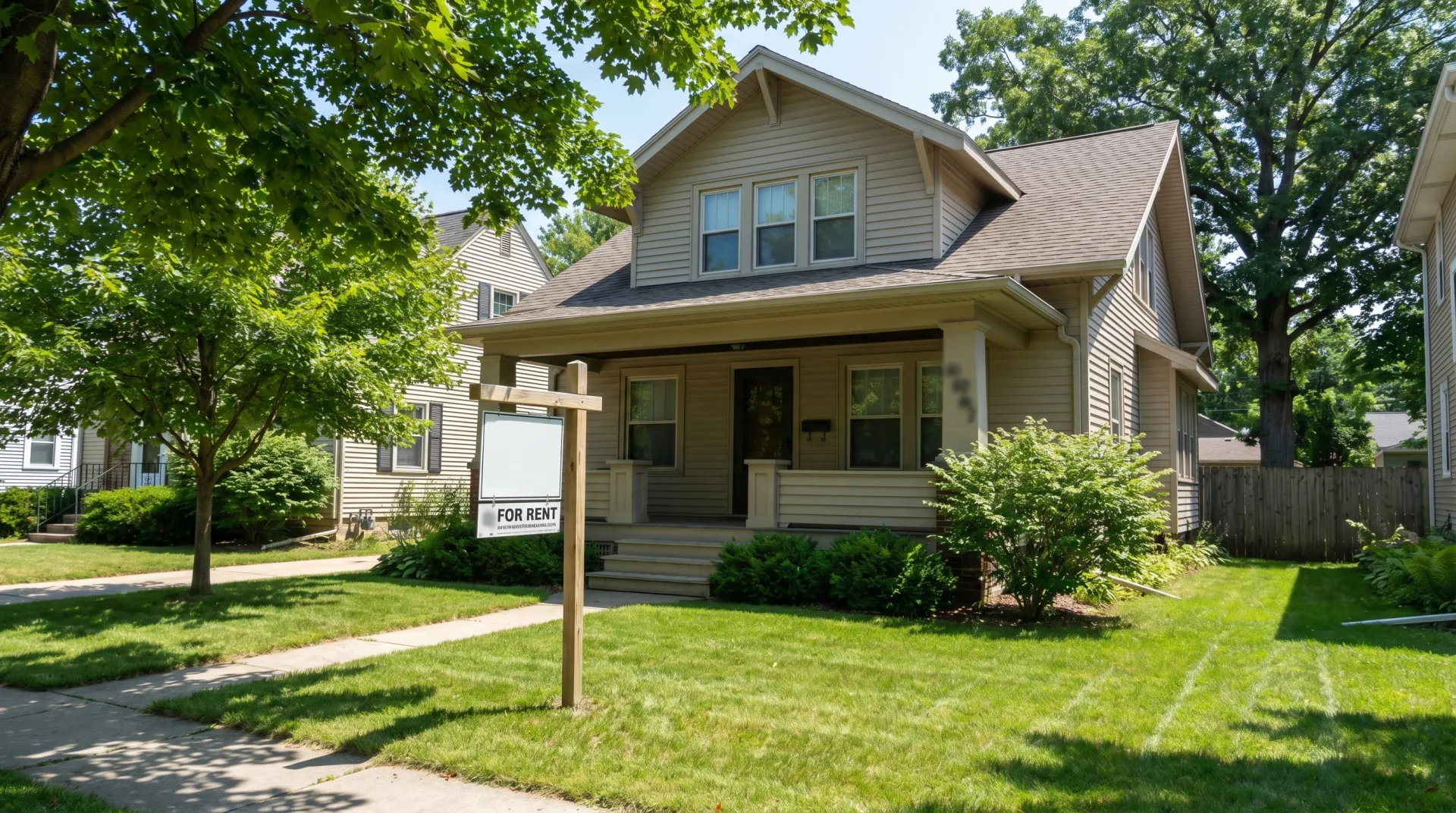
Midtown is directly impacted by the Medical Mile's expansion, making it one of Grand Rapids' most active investment environments. The Brix at Midtown ($53 million, 287 units, completed 2017) was built specifically to serve the medical campus workforce, and the massive $795.8 million Fulton and Market project (670 housing units, three mixed-use towers, luxury hotel, 2,500+ parking spaces, 68,000 sq ft greenspace, 38,000 sq ft retail) will further transform the western edge of the neighborhood. Construction begins fall 2026 with completion targeted between fall 2028 and spring 2029.
At a median sale price of $325,000 with 9.2% year-over-year appreciation and a 7-day median time on market, Midtown is one of the most competitive markets in Grand Rapids. The 93/100 competitiveness score signals that buyers face frequent multiple-offer situations.
Rental demand is strong, driven by proximity to the Medical Mile, Grand Rapids Community College, and downtown employment centers. The combination of historic multi-unit conversions and modern apartment construction creates a range of investment products and price points. The Brikyaat Area Specific Plan guides development in that sub-neighborhood to balance new growth with historic character.
Important for short-term rental investors: Grand Rapids requires a Home Occupation Class C License and Special Land Use Permit for short-term rentals, with significant restrictions: the property must be the owner's principal residence, the owner must be present during rental periods, rentals are limited to one room with a maximum of two adult guests, and entire-home rentals are prohibited. Approximately 200 STR licenses are issued citywide per year. Investors should underwrite to long-term rental income only.
Nathan's Take
The local read.
Midtown is the Grand Rapids neighborhood most directly impacted by the Medical Mile's expansion. The Brix at Midtown (287 units) was built to serve this workforce, and the $795.8 million Fulton and Market project (670 units, construction starting fall 2026) will further transform the western edge. Buyers considering Midtown should understand that the pace of change here is faster than in most Grand Rapids neighborhoods.
At $325,000 median with 9.2% year-over-year appreciation and a 7-day median time on market, this is one of the most competitive markets in the city, scoring 93 out of 100 on Redfin's competitiveness scale. Be prepared for multiple-offer situations and expect to move quickly.
Midtown's compact geography means every property is a short distance of either downtown, the Medical Mile, Heritage Hill, or the Fulton Street Farmers Market. This geographic compression is the fundamental value proposition: more employment, institutional, and cultural assets a short distance than any other Grand Rapids neighborhood. The southern blocks near Fulton Street share the same architectural character as Heritage Hill across the street, but at a lower price point.
For investors, the proximity to the Medical Mile, GRCC, and downtown creates strong long-term rental demand. The historic single-family homes in the residential sections offer a very different product than the modern apartments near Michigan Street, so visit both sections to understand the range. Underwrite to long-term rental income only given the restrictive STR ordinance.
Location
Midtown on the map
Boundary of the Midtown area. Drag to explore the surrounding neighborhoods and commute corridors.
Listings
Browse homes in Midtown.
See what is currently listed in Midtown and the surrounding area.
Resources
Helpful links
Neighborhood organization with sub-neighborhood histories, events, and community programs
District homepage, school directory, and enrollment information
Determine which GRPS school serves a specific address in Midtown
City parks, recreation programs, and trail information
Bus schedules, route maps, and fare information for public transit
Bicycle route maps for the Grand Rapids area
GRPL locations, hours, and programs including the nearby Main Library
Visitor and resident guide with dining, events, and neighborhood profiles
Official municipal site including property tax estimator and planning resources
Airport information, driving directions, and flight status
More in Grand Rapids
Other neighborhoods in Grand Rapids.
Midtown is one of several neighborhoods in Grand Rapids. Each has its own character and price range.
Questions about Midtown?
Ask Nathan.
Send a note with what you are looking for in Midtown, price range, timeline, school or commute priorities, and Nathan will follow up.
Contact
Get in touch
Send a message and Nathan will get back to you within one business day.
Message received
Thank you. Nathan will be in touch soon.
Nathan typically responds within one business day.
— Nathan Strodtbeck, REALTOR®