Holland
Dutch heritage meets lakeshore living
City · Ottawa County
Holland at a glance
Lakeshore city with Dutch heritage, a walkable 8th Street downtown, two National Register historic districts, Lake Macatawa access, and the annual Tulip Time Festival.
- Median Price
- $335,000
- Median $/sqft
- $185
- Median DOM
- 35 days
- Walk Score
- 79
- Population
- 35,023
- Median Income
- $75,865
- School District
- Holland Public Schools (primary); West Ottawa Public Schools also serves portions
- Tax Millage
- 40.21
Market data as of 2026-03. Population: U.S. Census Bureau, 2024 estimate.
Overview
Overview
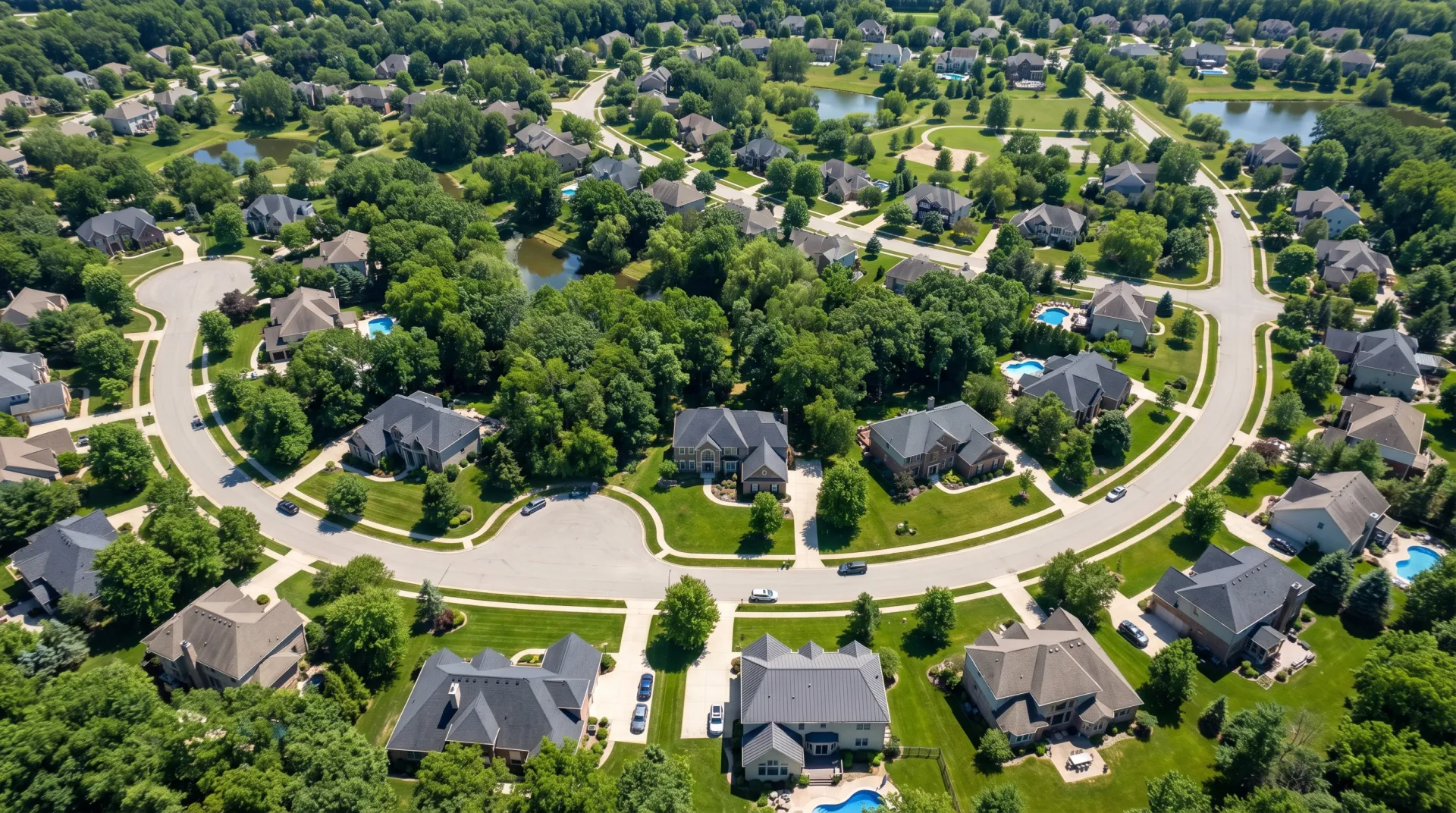
Holland is a lakeshore city in Ottawa County with a pronounced Dutch heritage identity that shapes both its built environment and its calendar of community events. The commercial center of the city is 8th Street, a walkable downtown corridor lined with two- and three-story brick commercial buildings dating to the late 19th and early 20th centuries. Storefronts house a dense concentration of locally owned restaurants, boutiques, galleries, and specialty shops alongside several craft breweries. The downtown was listed on the National Register of Historic Places in 1990 as the Holland Downtown Historic District. The corridor is notable for its seasonal plantings, including hundreds of thousands of tulip bulbs that bloom each May during the annual Tulip Time Festival, the city's signature event since 1929.
Beyond downtown, Holland's residential neighborhoods extend from the compact, tree-lined streets near the city core, where the Holland Historic District preserves 194 structures, many dating to the 1870s-1920s reconstruction era after the 1871 fire, to suburban-density developments in the surrounding townships. Lake Macatawa defines the city's western geography, with waterfront parks, marinas, and the channel connecting to Lake Michigan and Holland State Park. Windmill Island Gardens, a 36-acre city-owned park on the Macatawa River, houses the DeZwaan windmill, built in the Netherlands in 1761, disassembled and relocated to Holland in 1964, and the only authentic, operating Dutch windmill in the United States.
The city's commercial and institutional landscape extends well beyond tourism. Holland is home to significant manufacturing operations, including Haworth (office furniture), Gentex (auto-dimming mirrors), and a major LG Energy Solution battery plant. Hope College, a liberal arts institution with enrollment of approximately 3,000 students, is situated immediately south of downtown and its campus integrates with the surrounding residential grid. The Tulip Time Festival draws approximately 500,000 visitors annually over a week in early May, which significantly impacts seasonal commercial activity and short-term housing demand.
Real Estate
Real Estate
Holland's real estate market operates on two tiers: the city proper (compact lots, walkable access to downtown and Lake Macatawa, often older housing stock needing updates) and the surrounding townships (Park, Holland Charter, Laketown) where newer subdivisions, larger lots, and proximity to Lake Michigan beaches drive pricing. The median sale price sits in the $319,000 to $350,000 range depending on source and period.
What to expect:
- Price range: Approximately $180,000 to $550,000. Entry-level homes in established neighborhoods start near $180,000; newer construction and waterfront-adjacent properties reach $500,000+
- Median price per square foot: Approximately $175 to $195
- Inventory: Competitive. Homes sell relatively quickly, consistent with the broader West Michigan market
- Median days on market: Approximately 30 to 40 days
- Dominant housing types: Single-family detached homes predominate. Condominiums and townhomes represent a growing share, particularly in newer developments. Multi-family and apartment buildings are concentrated near downtown and along major corridors
- New construction: Active. Notable projects include Lakewood Place Apartment Village (190 mixed-income units on 24 acres, $40 million, phases completing 2025-2026) and HoM Flats at 24 East (202 apartments, 13,000 sq ft retail, child care facility, $60 million)
- HOA prevalence: Newer subdivisions and condominium developments typically carry HOA fees. Older neighborhoods within city limits are predominantly non-HOA
- Rental market: Average rent is approximately $1,369 to $1,600/month. One-bedroom apartments average approximately $1,385/month; two-bedrooms average approximately $1,635/month. Rents increased approximately 6.8% year-over-year
Architecture
Architecture
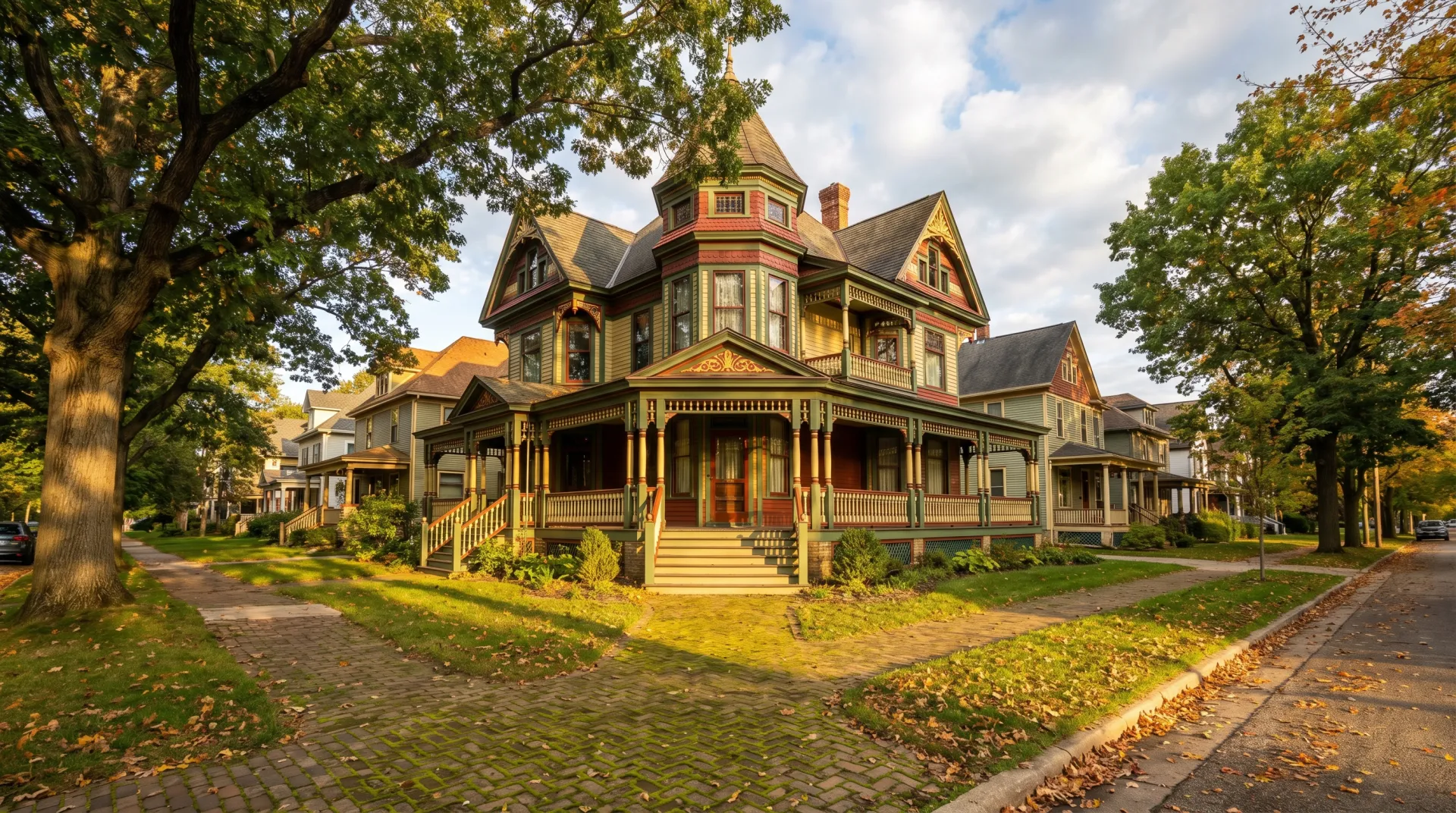
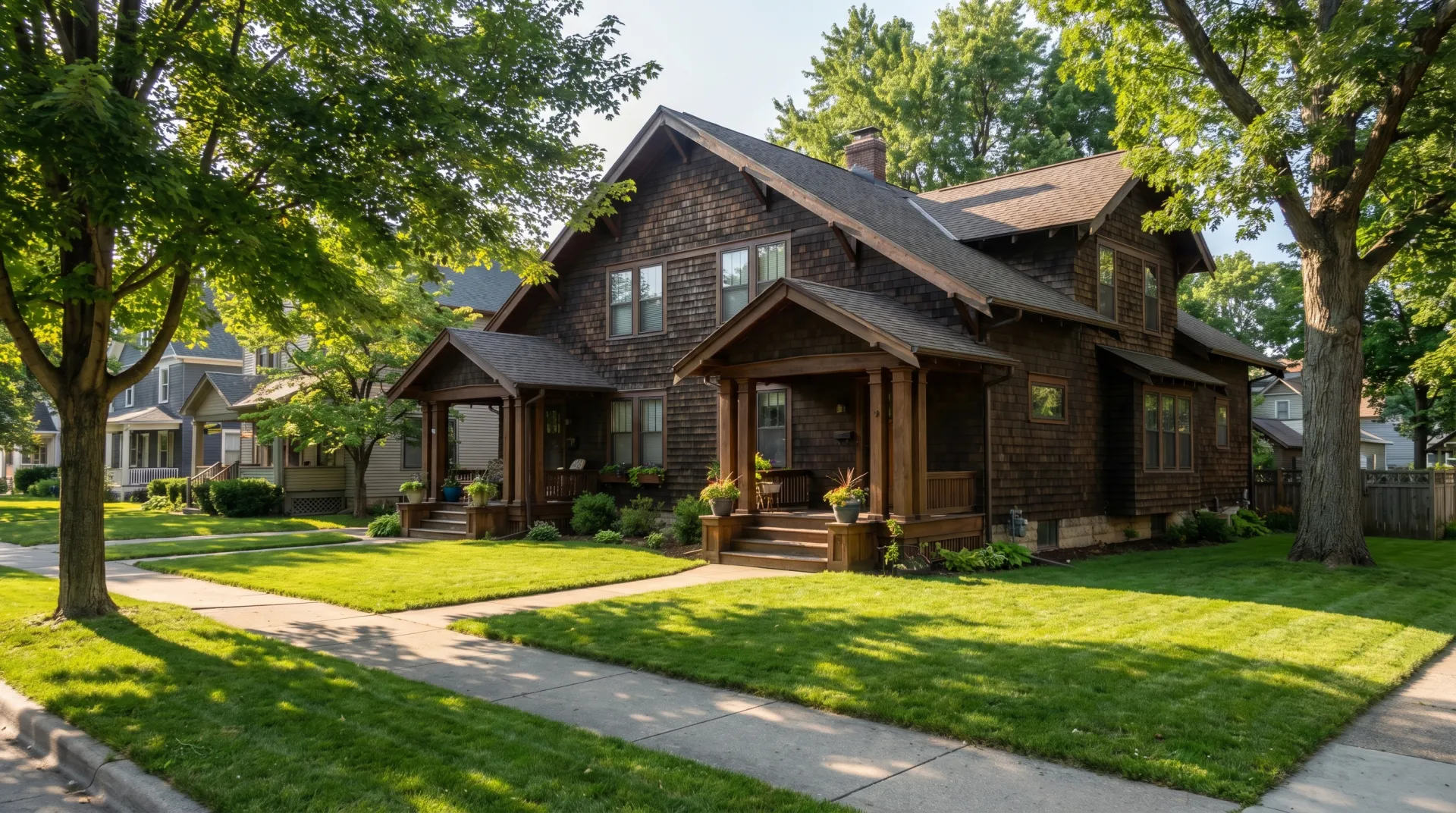
The downtown commercial district features Italianate, Late Victorian, Renaissance Revival, and Richardsonian Romanesque commercial buildings, most constructed in the late 19th and early 20th centuries after the 1871 fire that destroyed the original settlement. Residential architecture includes Queen Anne, Colonial Revival, Craftsman/American Foursquare, and Dutch Colonial styles in the historic neighborhoods near downtown. Mid-century Ranch homes are common in post-war subdivisions. Contemporary and New Traditional styles dominate recent construction.
Very little predates 1871 due to the fire that destroyed most of the original settlement. Approximately 40% of the housing stock dates from 1871-1940, 30% from 1940-1980, and 30% from 1980-present. In-city lots range from approximately 5,000 to 10,000 sq ft (0.1 to 0.25 acres). Suburban lots in surrounding townships are larger, typically 0.25 to 0.5 acres.
The Holland Downtown Historic District (listed on the National Register, 1990) encompasses 59 contributing commercial structures along 8th Street and River Avenue. The Holland Historic District (residential, listed on the National Register) covers 194 buildings with 158 contributing structures. The City of Holland maintains a local Historic Preservation program.
Notable architectural landmarks include the Hotel Warm Friend (5 East 8th Street), a six-story red brick building with Dutch gable facade details and limestone trim. Steketee's Department Store (44 East 8th Street) features a striking Art Deco terra-cotta facade. The DeZwaan Windmill at Windmill Island Gardens is a 250+ year old working Dutch windmill, the only one of its kind in the United States.
Schools
Schools
The Holland area is served by two primary school districts. Holland Public Schools (HPS) serves the city's core, with elementary schools including West Elementary, Jefferson Elementary, Holland Heights Elementary, and Holland Language Academy (a two-way bilingual immersion program in English and Spanish, TK-5th grade). Holland Middle School serves grades 6-8, and Holland High School is the district's comprehensive high school.
West Ottawa Public Schools (WOPS) serves the northern and western portions of the Holland area, including Park Township and parts of Holland Charter Township. The district operates nine elementary buildings, two middle schools (North and South), and West Ottawa High School. West Ottawa operates an Early College program and Career and Technical Education center.
Private and charter options include Holland Christian Schools (multiple campuses, K-12), Black River Public School (charter, project-based learning), and Vanderbilt Charter Academy. Hope College (private liberal arts, approximately 3,000 students) is a significant higher education institution within the city.
Both HPS and WOPS participate in Schools of Choice. Buyers should be aware that "Holland" in MLS listings may refer to properties in any of several jurisdictions, each with different school districts and tax rates.
Dining
Dining
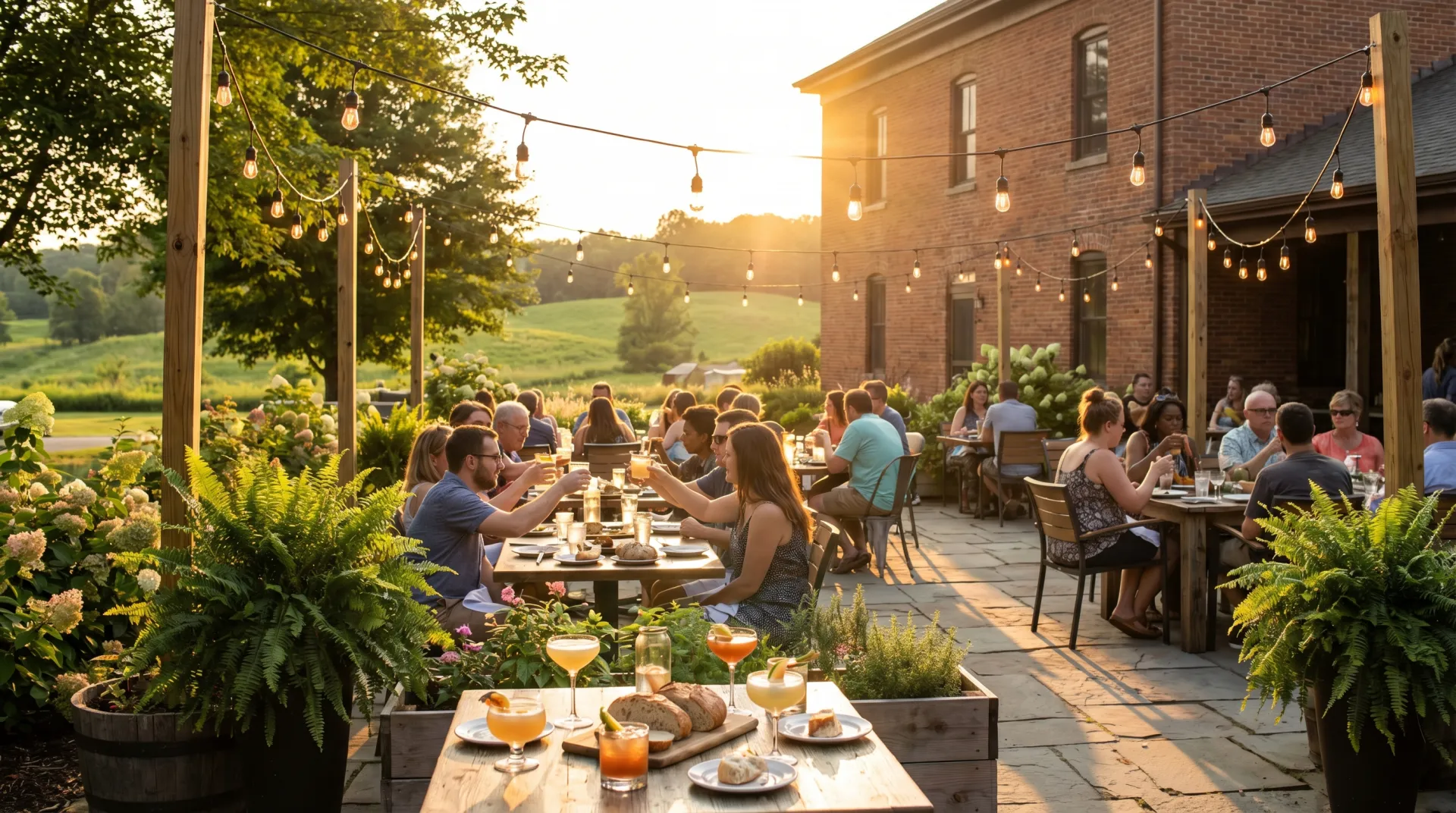
Downtown 8th Street is Holland's primary commercial corridor, featuring a dense concentration of restaurants, boutiques, galleries, and specialty retail. The US-31 / James Street corridor provides larger-format retail and national chains.
Butch's Dry Dock in downtown Holland offers formal dining upstairs and a casual pub downstairs, a local institution with an extensive menu. Waverly Stone Gastropub on 8th Street is located in a historic downtown building with seasonal menus and craft cocktails. New Holland Pub on 8th features craft beer from New Holland Brewing Company alongside pub fare. Big Lake Brewing is a local craft brewery with food and outdoor seating. Taqueria Vallarta on 8th Street serves traditional Mexican street fare. The Biscuit in Washington Square is one of the area's most established breakfast spots. CityVu Bistro offers upscale dining with seasonal menus at the Haworth Hotel.
Grocery options include Meijer (multiple locations on the US-31 corridor), Family Fare, Aldi, and Walmart Supercenter. Downtown 8th Street features locally owned boutiques, art galleries, gift shops, and specialty retail.
Holland's downtown supports several breweries including New Holland Pub on 8th, Big Lake Brewing, and Our Brewing Company. Knickerbocker Theatre (Hope College campus) screens independent and art films. The Tulip Time Festival (early May, annually since 1929) draws approximately 500,000 visitors with parades, Dutch dancing, millions of tulips, and artisan markets. Kerstmarkt (Dutch Christmas Market) is an annual holiday market with Dutch-themed gifts, food, and activities.
Parks
Parks and Recreation
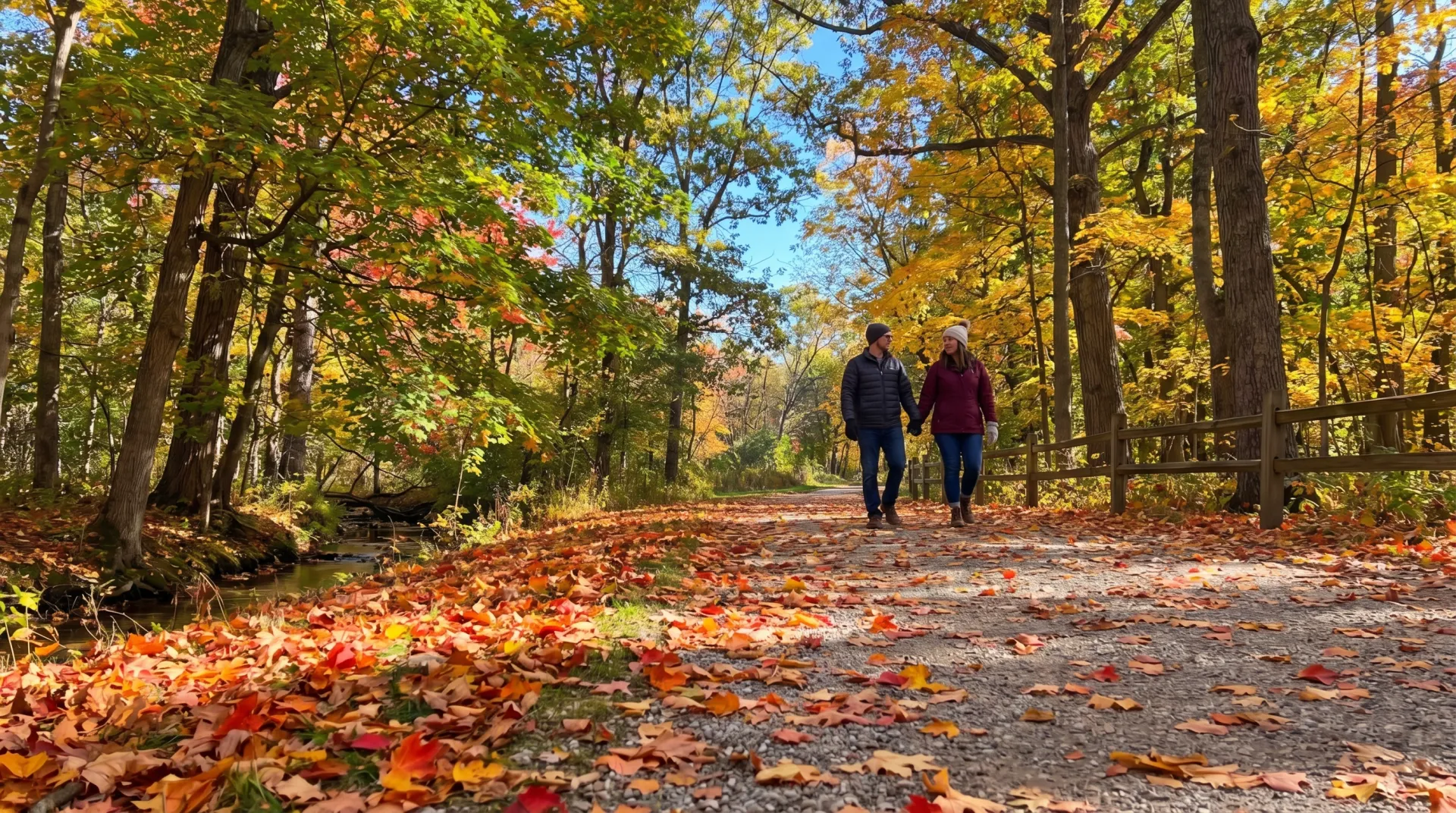
Holland's park system provides extensive waterfront access, trail connectivity, and cultural attractions.
Holland State Park (142 acres) features two campgrounds (Lake Michigan and Lake Macatawa units), a sugar-sand Lake Michigan beach, views of the "Big Red" lighthouse, playground, fishing, and paddling access. It is one of Michigan's most-visited state parks. Windmill Island Gardens (36 acres) houses the DeZwaan Windmill (1761, only authentic operating Dutch windmill in the U.S.), tulip gardens with over 100,000 bulbs, a carousel, and the DeKlomp Wooden Shoe and Delft Factory. Kollen Park on the south shore of Lake Macatawa provides a waterfront walkway, picnic areas, playground, fishing pier, boat launch, and seasonal concerts. Van Raalte Farm Park (160+ acres) offers wooded trails, a dog park, and open fields.
The Lakeshore Connector Path is a 20-mile paved trail running parallel to Lakeshore Drive from Holland State Park north to Grand Haven State Park. The Macatawa River Greenway Trail connects Laketown and Park Townships through Holland to Zeeland Township. Ottawa County maintains over 25 miles of paved roadside trails accessible from Holland State Park.
Lake Michigan is accessible via Holland State Park's beach and channel. Lake Macatawa (formerly Black Lake) offers boating, fishing, kayaking, and paddleboarding through multiple marinas and boat launches. Rental kayaks, canoes, and paddleboards are available at the Macatawa Boat House.
Getting Around
Transportation
Holland is approximately 30 miles from downtown Grand Rapids via I-196/US-31, with a typical drive time of 30 to 40 minutes.
Major road access includes I-196 (primary freeway connecting to Grand Rapids and I-94), US-31 (major north-south highway connecting to Grand Haven northbound and I-94 southbound), Chicago Drive (M-21, east-west route connecting to Zeeland and Grand Rapids), 8th Street (primary downtown east-west arterial), and River Avenue (primary downtown north-south arterial).
Macatawa Area Express (MAX) operates 11 fixed bus routes originating from the Louis & Helen Padnos Transportation Center in downtown Holland. The service area covers Holland, Holland Charter Township, Park Township, Zeeland, and parts of Zeeland Township. Fixed routes operate hourly, Monday through Friday, 5am to 7pm. No fixed-route service on weekends. RESERVE-A-MAX demand-response service operates Monday through Friday 6am to midnight and Saturday 10am to midnight.
Holland has over 150 miles of bike trails in the broader area, including the 20-mile Lakeshore Connector Path to Grand Haven and connections to the Macatawa River Greenway. Ottawa County maintains an extensive network of paved roadside paths.
Gerald R. Ford International Airport is approximately 35 miles east, with a typical drive time of 35 to 45 minutes. The citywide Walk Score is 79 ("Very Walkable"), with downtown scoring higher.
Community
Community
The City of Holland operates under a Council-Manager form of government. The City Council consists of eight elected members (six ward representatives and two at-large), plus the Mayor. The Council and Mayor appoint a City Manager responsible for all management functions.
The population is approximately 35,023 (2024 estimate). The median household income is $75,865. The property tax millage rate is 40.2085 mills (homestead/principal residence, 2025) within the Holland City School District.
Community organizations include the Holland Area Chamber of Commerce, Downtown Holland (managing the downtown business district), Holland Area Convention & Visitors Bureau, and Tulip Time Festival, Inc. (nonprofit organizing the annual festival). Herrick District Library (300 S. River Avenue) serves as the primary public library for the Holland area.
The Tulip Time Festival (early May, annually since 1929) is Holland's signature cultural event, with parades, Klompen Dancers, tulip displays, artisan markets, and live music drawing approximately 500,000 visitors annually. Named "Best Flower Festival" by USA Today. Kerstmarkt (Dutch Christmas Market, December) offers holiday shopping with Dutch-themed gifts and food. The Tulipanes Latino Art & Film Festival (April) celebrates Latin American art, film, and culture.
History
History
Holland was founded on February 9, 1847, by a group of Dutch Calvinist separatists led by Reverend Albertus Christiaan Van Raalte, who were seeking religious freedom from persecution in the Netherlands. Van Raalte selected the site for its proximity to the Black River (now Macatawa River) and its connection to Black Lake (now Lake Macatawa) and Lake Michigan. The city was settled in 1847 and incorporated on March 25, 1867, with Isaac Cappon as the first mayor.
On October 8-9, 1871, the Holland Fire (part of the same weather pattern as the Great Chicago Fire and the Peshtigo Fire) destroyed nearly the entire city, including the commercial district. Reconstruction began immediately and shaped much of the architecture visible today.
The Tulip Time Festival was established in 1929 when the City of Holland celebrated the blooming of its first 100,000 tulips. It has since grown into one of the largest flower festivals in the United States. The DeZwaan Windmill was transported from Vinkel, Netherlands to Holland in 1964 and installed on Windmill Island. Built in 1761, it remains the only authentic, operating Dutch windmill in the United States and was the last windmill permitted to leave the Netherlands.
Holland's economy transitioned from lumber and furniture manufacturing in the 19th century to diversified manufacturing in the 20th century, with companies like Haworth, Gentex Corporation, and LG Energy Solution establishing major operations. The Dutch heritage established by Van Raalte's 1847 settlement, reinforced through institutions like the Tulip Time Festival, Hope College, and the Dutch-themed built environment, continues to define the city's cultural identity nearly 180 years later.
Investment
Investment Potential
Holland's investment profile combines a stable manufacturing employment base, tourism-driven seasonal demand, and structured short-term rental regulations. The city regulates STRs through a tiered system: owner-occupied STRs are permitted in any zone district. Non-owner-occupied STRs are permitted in select commercial/mixed-use zones and in residential zones with a cap of 25 properties citywide and a 500-foot separation distance requirement. As of 2025, the city has reached its maximum of 25 non-owner-occupied STR permits. A Short-Term Rental Certificate of Compliance is required for all STRs.
Recent major developments include Lakewood Place Apartment Village (190 mixed-income units on 24 acres, $40 million) and HoM Flats at 24 East (202 apartments, 13,000 sq ft retail, child care facility, $60 million). Multiple single-family subdivisions are active in Holland Charter Township and Park Township.
Average rents increased approximately 6.8% year-over-year, reaching $1,369 to $1,600/month. The city's employment base (manufacturing, healthcare, Hope College, tourism) supports year-round housing demand, with seasonal tourism adding summer demand pressure. The surrounding townships have their own STR regulations that may differ from the city's.
Holland has been investing in mixed-use development along transit corridors and near downtown, with recent projects combining residential units with commercial space and community facilities.
Nathan's Take
The local read.
Holland's real estate market operates on two tiers: the city proper (compact lots, walkable access to downtown and Lake Macatawa, often older housing stock needing updates) and the surrounding townships (Park, Holland Charter, Laketown) where newer subdivisions, larger lots, and proximity to Lake Michigan beaches drive pricing. Buyers often do not realize that "Holland" in MLS listings may refer to properties in any of these jurisdictions, each with different tax rates and school districts.
The city's cap of 25 non-owner-occupied short-term rental permits means STR investment opportunities within city limits are essentially closed. Investors should evaluate long-term rental fundamentals: average rents are climbing (approximately 7% year-over-year), the manufacturing employment base is stable, and Hope College provides consistent housing demand. The surrounding townships have their own STR regulations that may differ.
Holland State Park is consistently one of the top three most-visited state parks in Michigan. Proximity to the park (particularly in Park Township) commands a measurable premium, but also means dealing with heavy summer traffic on Ottawa Beach Road and Lakeshore Drive. Properties within walking or biking distance of the Lakeshore Connector Path benefit from year-round recreational access without the congestion.
The 190-unit Lakewood Place and 202-unit HoM Flats developments represent significant new rental supply entering the Holland market in 2025-2026. Existing landlords should monitor whether this supply impacts vacancy rates and rent growth trajectories in the near term.
Location
Holland on the map
Boundary of the Holland area. Drag to explore the surrounding neighborhoods and commute corridors.
Listings
Browse homes in Holland.
See what is currently listed in Holland and the surrounding area.
Resources
Helpful links
Official municipal site: tax estimator, permits, construction projects, parks
Tourism, events, dining guides, and visitor information
Festival schedule, tickets, and event information
District homepage, enrollment, school directory
District homepage, enrollment, school directory
Local history museum, Cappon House tours
Bus routes, schedules, and fare information
Downtown business directory, events, dining
DeZwaan Windmill and gardens visitor info
Airport information, flight status
Questions about Holland?
Ask Nathan.
Send a note with what you are looking for in Holland, price range, timeline, school or commute priorities, and Nathan will follow up.
Contact
Get in touch
Send a message and Nathan will get back to you within one business day.
Message received
Thank you. Nathan will be in touch soon.
Nathan typically responds within one business day.
— Nathan Strodtbeck, REALTOR®